
30-Day Pinterest Posting Plan (Daily Checklist + Templates)
Ever wondered why some creators get a huge spike in traffic overnight? Success on visual platforms isn’t just luck. It’s about being consistent and having a smart vision. A good Pinterest strategy helps you connect with people who are looking for your ideas.
Many creators use a structured challenge to boost their reach. Our 30-day Pinterest posting plan gives you that edge without the stress. You’ll get daily habits and customizable design assets to help you.
Imagine waking up to lots of new engagement and followers. This journey is about more than just numbers. It’s about building a community around your passion. Get ready to change your online presence with simple steps that lead to big results.
Table of Contents
Key Takeaways
- Build a sustainable daily routine for long-term growth.
- Discover how a smart approach drives organic traffic.
- Access customizable templates for high-quality visuals.
- Gain confidence through a structured monthly approach.
- Master the art of consistent content delivery.
- Unlock secrets to improving user interaction.
Why Your Pinterest Success Starts With a Strategic 30-Day Plan
To make the most of Pinterest, you need a solid plan. It’s not just about pinning randomly. With millions of users, it’s a great place to share your products and ideas. But, to stand out, you need more than just occasional pins.
The Pinterest Algorithm Rewards Consistency Over Perfection
Pinterest’s algorithm loves content that’s posted regularly and keeps users interested. A consistent pinning schedule is key to getting seen more. It tells the algorithm your content is reliable and worth sharing.
You don’t have to post perfect content all the time. The algorithm values accounts that keep posting quality content, even if it’s not perfect. This way, you can grow and adjust your strategy based on how people react to your pins.
How a Structured Approach Transforms Random Pinning Into Exponential Growth
Using a structured Pinterest strategy can really boost your online presence. Plan your content in advance with a social media content calendar. This ensures your pins are consistent and hit the mark with your audience. It also helps create a strong brand image.
Planning ahead also saves time and reduces stress. By setting aside specific times for pinning, you can keep your content flowing without sacrificing quality.
What Makes 30 Days the Perfect Timeline for Measurable Results
The 30-day timeline is great for Pinterest because it’s easy to follow and measure. In this time, you can set up a regular pinning schedule, interact with your audience, and see real results.
Also, a 30-day plan lets you try different types of content and see how people react. This is key to making your Pinterest better and ensuring your content connects with your audience.
The Game-Changing Benefits of Following a Pinterest Posting Schedule
Following a Pinterest posting schedule can greatly increase your visibility and engagement. A consistent posting strategy is key to reaching more people on the platform.
Skyrocket Your Visibility and Organic Reach
Using a Pinterest scheduler helps you stay consistent. This consistency is rewarded by Pinterest’s algorithm, leading to more organic reach.
A good Pinterest marketing plan includes a content calendar. This ensures you post high-quality content regularly. Regular posting builds anticipation and expectation among your audience.
Build Unshakeable Authority in Your Niche
Regular posting on Pinterest makes your brand an authority in your niche. By consistently sharing valuable content, you gain your audience’s trust.
The table below shows how consistent posting affects your authority:
| Posting Frequency | Perceived Authority | Engagement Level |
|---|---|---|
| Daily | High | High |
| Weekly | Medium | Medium |
| Monthly | Low | Low |
Save 10+ Hours Weekly Through Strategic Batch Creation
Using a Pinterest scheduler saves a lot of time. By batching your content creation, you can save over 10 hours a week.
This time-saving lets you focus on other important business tasks. You can engage more and develop strategies.
Generate Data-Driven Insights That Fuel Continuous Growth
A Pinterest marketing plan with a posting schedule helps track your performance. By analyzing your results, you can make informed decisions to improve your strategy.
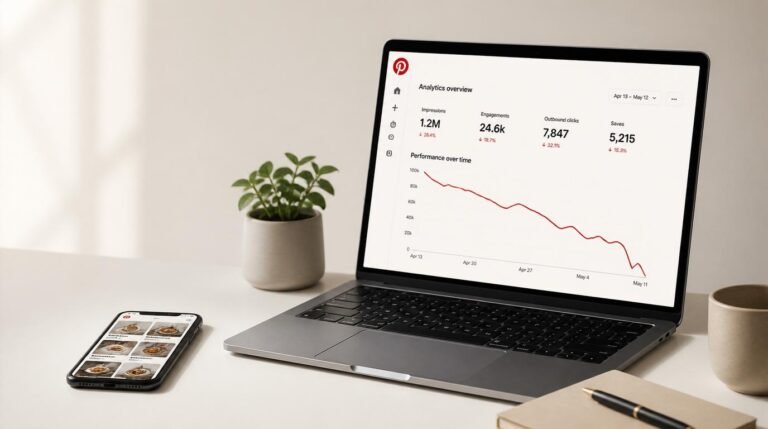
Pinterest analytics help you see what works and what doesn’t. You can adjust your content and posting schedule based on this data.
Essential Preparation: Setting Your Pinterest Foundation for Success
Success on Pinterest takes hard work and a smart plan. Before starting your 30-day posting plan, you need a solid foundation. This means setting up your account right and planning your content well.
Optimize Your Pinterest Business Account for Maximum Discoverability
First, make your Pinterest business account easy to find. This means:
- Fill out your profile with a clear business name
- Use the right keywords in your description
- Make sure your profile is public and seen by your audience
- Add a profile picture and cover image that show your brand
This way, you’ll get more visibility and attract the right people to your content. For more tips, see affiliate traffic strategies that work with Pinterest.
Conduct Keyword Research That Reveals Your Audience’s Desires
Keyword research is key to knowing what your audience wants on Pinterest. Use Pinterest’s auto-complete, Google Keyword Planner, and SEO tools to find good keywords. This helps you make content that your audience will love.
Some important steps in keyword research are:
- Find your niche and main topics
- Think of seed keywords for your niche
- Use tools to grow your keyword list and check search volume
- Refine your list for keywords that are relevant and not too competitive
Define Your 5 Core Content Pillars
Having 5 core content pillars helps you plan your content well. These pillars should come from your keyword research and understanding your audience. Focusing on 5 pillars lets you:
- Offer a variety of content to keep your audience interested
- Show you’re an expert in your field
- Make planning your content easier
Content pillars could be educational posts, product showcases, customer stories, behind-the-scenes looks, or lifestyle content related to your brand.
Choose and Configure Your Pinterest Scheduling Tools
To keep your Pinterest posts regular and efficient, pick the right scheduling tools. Popular choices are Tailwind, Hootsuite, and Buffer. When picking a tool, think about:
- How easy it is to use and schedule posts
- Its analytics and reporting features
- If it works with other social media platforms
- Its cost and if it grows with you
After choosing a tool, set it up to automate your posts, track your results, and tweak your strategy as needed.
Your Complete 30-Day Pinterest Posting Plan Blueprint
Boost your Pinterest presence with a 30-day plan. It mixes consistency, quality, and smart scheduling. A solid content calendar is essential for success.
For top visibility and engagement, a clear plan is vital. Our 30-day plan blueprint offers a detailed framework for four weeks of strategic posting.
The Four-Week Strategic Framework Overview
The four-week plan breaks into distinct phases. Each phase has its goals and strategies. This ensures your Pinterest grows steadily and engages more.
- Week 1: Focus on building a strong foundation and optimizing your profile.
- Week 2: Diversify your content and boost engagement.
- Week 3: Expand your reach and try new creative strategies.
- Week 4: Refine your approach and aim for long-term success.
Optimal Daily Posting Frequency for Different Account Sizes
Finding the right posting frequency is key. It depends on your account size and audience interaction. The right amount keeps your audience interested without being too much.
| Account Size | Daily Posting Frequency |
|---|---|
| Small ( | 3-5 pins per day |
| Medium (10k-100k followers) | 5-10 pins per day |
| Large (>100k followers) | 10-15 pins per day |
The 70-20-10 Content Mix Formula for Maximum Engagement
A mix of content keeps your audience interested. The 70-20-10 formula helps you diversify.
- 70%: Core content that matches your brand and appeals to your audience.
- 20%: Supporting content that adds value to your core themes.
- 10%: Experimental content to explore new ideas and trends.
Best Practices for Scheduling Throughout the Day
Smart scheduling boosts your Pinterest visibility. Follow these best practices:
- Post during peak hours (12 pm – 4 pm EST) for the highest engagement.
- Spread out your pins for a consistent presence without overwhelming your audience.
- Use Pinterest’s scheduling tools or third-party apps to make posting easier.
Week 1: Foundation Building and Profile Optimization Days
The first week of your Pinterest marketing plan is key. It sets the stage for your Pinterest strategy. You’ll focus on optimizing your profile and starting your content.
In Week 1, you’ll work on three main tasks. These are profile optimization, creating strategic boards, and launching your pin content. Each task is important for a strong Pinterest presence.
Days 1-2: Complete Profile Audit and Optimization
The first two days are for a detailed profile audit and optimization. You’ll make sure your profile is complete and shows your brand well. Key tasks include:
- Updating your profile picture and cover image
- Refining your bio to include relevant keywords
- Ensuring consistency across all profile elements
For more insights on optimizing your Pinterest profile, visit Affiliates Haven for expert tips and resources.
Days 3-4: Strategic Board Creation and Organization
Days 3 and 4 are for creating and organizing boards. Boards should match your niche and target audience. A good board strategy is key for visibility and engagement. Consider the following:
- Creating boards that align with your content pillars
- Organizing boards in a logical and user-friendly manner
- Optimizing board descriptions with keywords
Days 5-7: Launch Your Fresh Pin Content Strategy
The last days of Week 1 are for launching your pin content strategy. You’ll create and schedule pins that connect with your audience. Key considerations include:
- Developing a content calendar for the week
- Creating a mix of promotional and engaging content
- Scheduling pins for optimal visibility
To track your progress, here’s a sample table for Week 1:
| Day | Task | Status |
|---|---|---|
| 1-2 | Profile Audit and Optimization | |
| 3-4 | Strategic Board Creation | |
| 5-7 | Launch Fresh Pin Content |
By Week 1’s end, you’ll have a solid base for your Pinterest marketing. This will help you succeed in the weeks ahead.
Week 2: Content Diversification and Engagement Acceleration
Week 2 of our 30-Day Pinterest Posting Plan is here. It’s time to boost your Pinterest strategy with more varied content and better engagement. This week, you’ll turn your Pinterest into a standout.

By mixing up your content, you’ll keep your followers interested and attract new ones. The trick is to balance different types of content and ways to engage with your audience.
Days 8-10: Master Idea Pins and Video Content
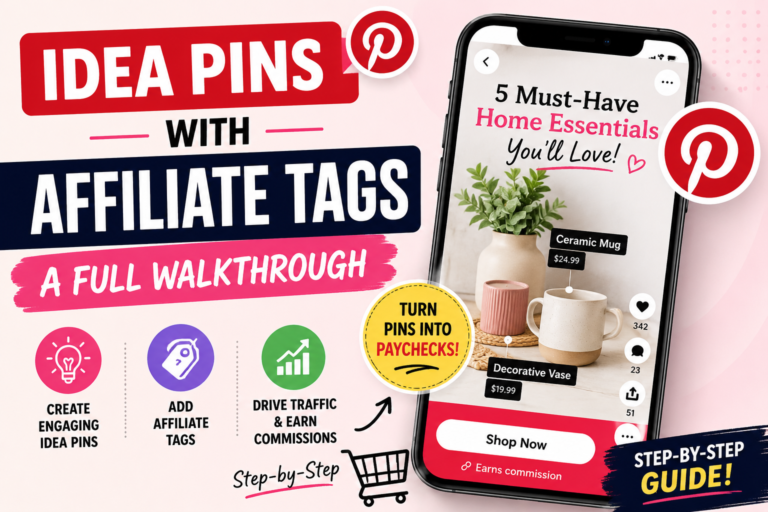
Idea Pins and videos grab attention fast. Idea Pins are great for sharing detailed content, like tutorials or recipes. Focus on making your Idea Pins engaging and relatable.
For videos, keep them brief, eye-catching, and good for watching without sound. Pinterest users often seek inspiration, so make your videos informative and fun.
Days 11-12: Implement Strategic Repinning for Authority
Repinning content from others helps build relationships and boosts your authority. Choose high-quality content that fits your brand and audience.
To repin smartly, find influencers in your niche and interact with their posts. This not only grows your authority but also widens your audience.
Days 13-14: Engage Authentically With Your Target Audience
Engagement is a two-way street. To really connect with your audience, be genuine and quick to respond. Reply to comments on your pins, ask for feedback, and join niche-related conversations.
For more on creating a solid social media content calendar, check out our resources. They’ll help you plan your content well.
By Week 2’s end, you’ll have a varied content mix and a more active audience. This is a great start for continued growth and success.
Week 3: Scaling Your Reach and Testing Creative Strategies
Week 3 is all about growing your Pinterest presence. You’ll explore new ways to reach more people and test creative strategies. This is a key time to expand your reach and try out different tactics.
Days 15-17: Experiment With Pin Formats and Design Variations
Try out different pin formats and designs to see what works best. Use standard pins, video pins, and Idea Pins to find your top performers. Pinterest experts say, “Stay ahead by testing and refining your content.” A good Pinterest strategy can really boost your visibility.
Here are some pin formats to consider:
- Standard pins with high-quality images
- Video pins that show off your products or services
- Idea Pins with valuable content or tutorials
Days 18-19: Optimize Posting Times Based on Your Analytics
Use your Pinterest analytics to find the best times to post. This can really up your engagement. Check your Pinterest analytics to see when your audience is most active. Then, adjust your pinterest scheduler to post at those times.
Here’s how to optimize your posting times:
- Find your peak hours of engagement
- Post your pins during those hours
- Keep an eye on your analytics to adjust as needed
Days 20-21: Expand Through Collaboration and Group Boards
Collaborating with others and joining group boards can expand your reach. Find group boards in your niche and ask to join. Pinterest experts say, “Collaboration can tap into new audiences and boost your authority.” Working with others can bring in new followers and increase your visibility.
Here’s how to make the most of collaborations:
- Find relevant group boards in your niche
- Engage with others’ content to build relationships
- Create valuable content for the group board
Week 4: Refinement and Building Long-Term Sustainability
As you enter the final week of your 30-day Pinterest posting plan, it’s time to refine your strategy. You need to lay the groundwork for long-term success. This week is key for analyzing your performance, setting up systems that work for you, and planning your next growth phase.
Days 22-24: Analyze Performance and Amplify What Works
Start by looking at your Pinterest analytics to see what’s working and what’s not. Identify your top-performing pins and check their characteristics. Look at impressions, clicks, and saves to see what your audience likes most.
Use this data to amplify your successful content. Make more pins like your top performers. This could mean making more video pins if they do well, or focusing on keywords that bring traffic to your site.
Days 25-27: Establish Evergreen Content Systems
Evergreen content is vital for long-term success on Pinterest. Develop a system for creating and scheduling evergreen pins. This might mean making a content calendar for the next month or quarter.
Think about repurposing existing content into Pinterest-friendly formats. For example, turn blog posts into infographics or make video pins from webinar recordings. This saves time and keeps your content fresh and relevant.
Days 28-30: Plan Your Next Growth Phase
As you near the end of your 30-day plan, look ahead. Set new goals for your Pinterest strategy based on your past month’s performance. Find areas to improve and opportunities for growth.
Consider expanding your Pinterest presence by trying new features or formats. This could mean trying shopping ads, collaborating with other creators, or optimizing your website for Pinterest traffic.
Your Daily Pinterest Posting Checklist Template
To make the most of Pinterest, a daily checklist is key. It keeps your efforts organized and consistent. This checklist helps you stick to your Pinterest strategy.
Morning Power Hour: Planning and Scheduling Tasks
Begin your day with a plan. In your morning power hour, focus on:
- Reviewing your social media content calendar to align your Pinterest posts with your overall marketing strategy.
- Scheduling your pins using a Pinterest scheduler to save time and ensure consistency.
- Creating a list of tasks for the day, including content creation, engagement, and analytics review.
Midday Engagement: Community Building Activities
Building a strong community on Pinterest requires engagement. In your midday session:
- Respond to comments on your pins and engage with your audience.
- Like and repin content from other users in your niche to foster collaboration and growth.
- Participate in group boards to expand your reach.
Evening Review: Analytics and Strategic Adjustments
The evening is perfect for reviewing your day and planning for tomorrow. Focus on:
- Analyzing your Pinterest analytics to understand what’s working and what needs improvement.
- Adjusting your strategy based on your findings to optimize your results.
- Planning your content for the next day, ensuring it aligns with your overall strategy.
Weekly Deep-Dive Activities for Sustained Growth
Set aside time each week for deeper activities that drive sustained growth:
| Activity | Description | Frequency |
|---|---|---|
| Content Audit | Review your existing content to ensure it’s fresh and relevant. | Weekly |
| Keyword Research | Conduct keyword research to stay updated with the latest trends. | Bi-Weekly |
| Profile Optimization | Check your profile for any necessary updates or optimizations. | Monthly |
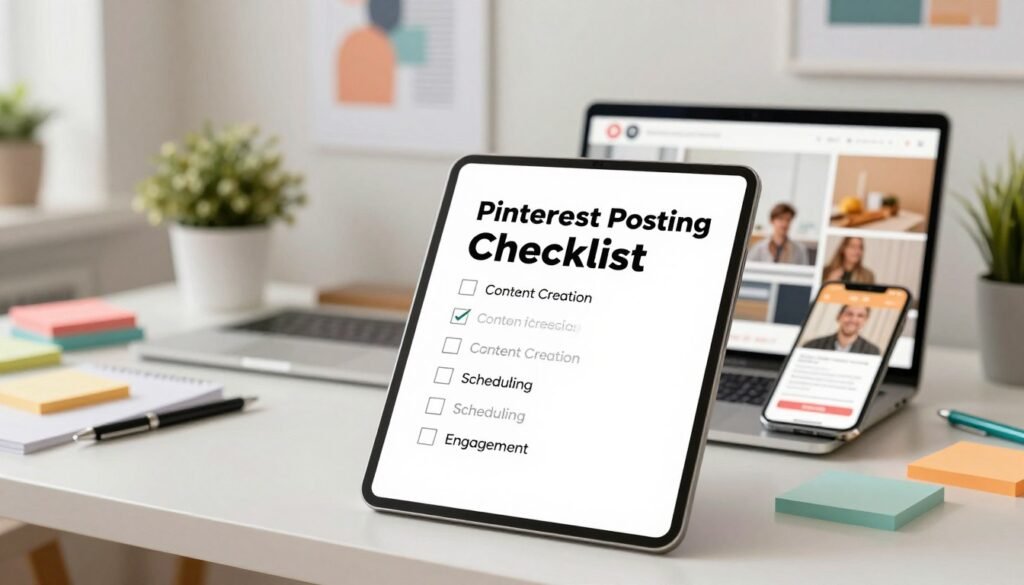
By following this daily checklist and doing weekly deep-dive activities, you’ll boost your Pinterest presence. You’ll reach your marketing goals.
Ready-to-Use Pinterest Templates for Every Content Type
Boost your Pinterest engagement with our ready-to-use templates for all content types. These templates make creating content easier and better for your Pinterest marketing plan. They help keep your pins looking consistent and professional, which is key for a strong brand.
Templates save you time, letting you focus on other parts of your Pinterest strategy. We have templates for every type of content, so you’re always ready.
High-Converting Standard Pin Templates
Standard pins are the heart of your Pinterest content. Our templates grab attention and boost engagement. They have layouts that make your pins stand out.
- Eye-catching graphics and fonts
- Clear and concise text overlay
- Call-to-action (CTA) integration
Engaging Idea Pin Story Templates
Idea Pins let you tell stories in multiple pages. Our templates help you create engaging experiences for your audience.
Key features include:
- Multi-page layout options
- Storytelling guides
- Visual content templates
Product and Shopping Pin Templates
For businesses, product and shopping pins are vital for sales. Our templates highlight your products, making it easy for customers to find and buy.
Benefits of using our product and shopping pin templates include:
- Enhanced product visibility
- Streamlined shopping experience
- Increased conversion rates
Proven Text Overlay Formulas That Drive Massive Clicks
The text on your pins is critical for success. Our formulas are proven to increase clicks and engagement.
Tips for using text overlay effectively:
- Keep it concise and clear
- Use contrasting colors for visibility
- Include a clear CTA
Tracking Your Pinterest Growth and Optimizing for Peak Performance
With your 30-day Pinterest plan in action, it’s key to track growth and optimize for peak performance. This ongoing process keeps your strategy effective and in line with your goals.
Essential Metrics to Monitor Daily for Success
To accurately measure your Pinterest performance, monitor key metrics daily. These include impressions, clicks, and engagement rates. Watching these metrics closely helps you spot trends and make smart choices.
Daily monitoring lets you:
- Understand your audience’s preferences
- Adjust your content strategy
- Boost your reach and visibility
Leverage Pinterest Analytics to Inform Your Strategy
Pinterest Analytics offers deep insights into your account’s performance. By using this data, you can fine-tune your strategy and see better results.
Use Pinterest Analytics to:
- Find out what content works best
- Learn about your audience demographics
- Track your progress toward your goals
When and How to Pivot Your Approach
Being flexible with your strategy is key. If certain content types or posting schedules aren’t working, it might be time to pivot your approach.
Consider pivoting when:
- Specific content types consistently underperform
- Your audience’s engagement patterns change
- New trends or features appear on Pinterest
Celebrate Milestones and Set Ambitious New Goals
As you track your growth, it’s vital to celebrate your milestones. Acknowledging your achievements boosts your motivation to keep striving for the best.
After celebrating, aim for new, ambitious goals. This could mean:
- Increasing your follower count
- Boosting engagement rates
- Driving more traffic to your website
Conclusion
Starting a 30-day Pinterest posting plan is key to a strong online presence. It helps you post regularly and connect with your audience better. This boosts your visibility online.
Success on Pinterest comes from knowing what your audience wants. You need to do keyword research and set clear content goals. Using the right tools for scheduling is also important.
With a good plan, your Pinterest can grow fast. Use the daily checklist and Pinterest templates to keep your content fresh. Tracking your progress and improving your strategy will help you see real results.
Stick to your 30-day plan, and your Pinterest will start to grow. With the right effort and tools, your Pinterest can drive more engagement and growth for your brand.