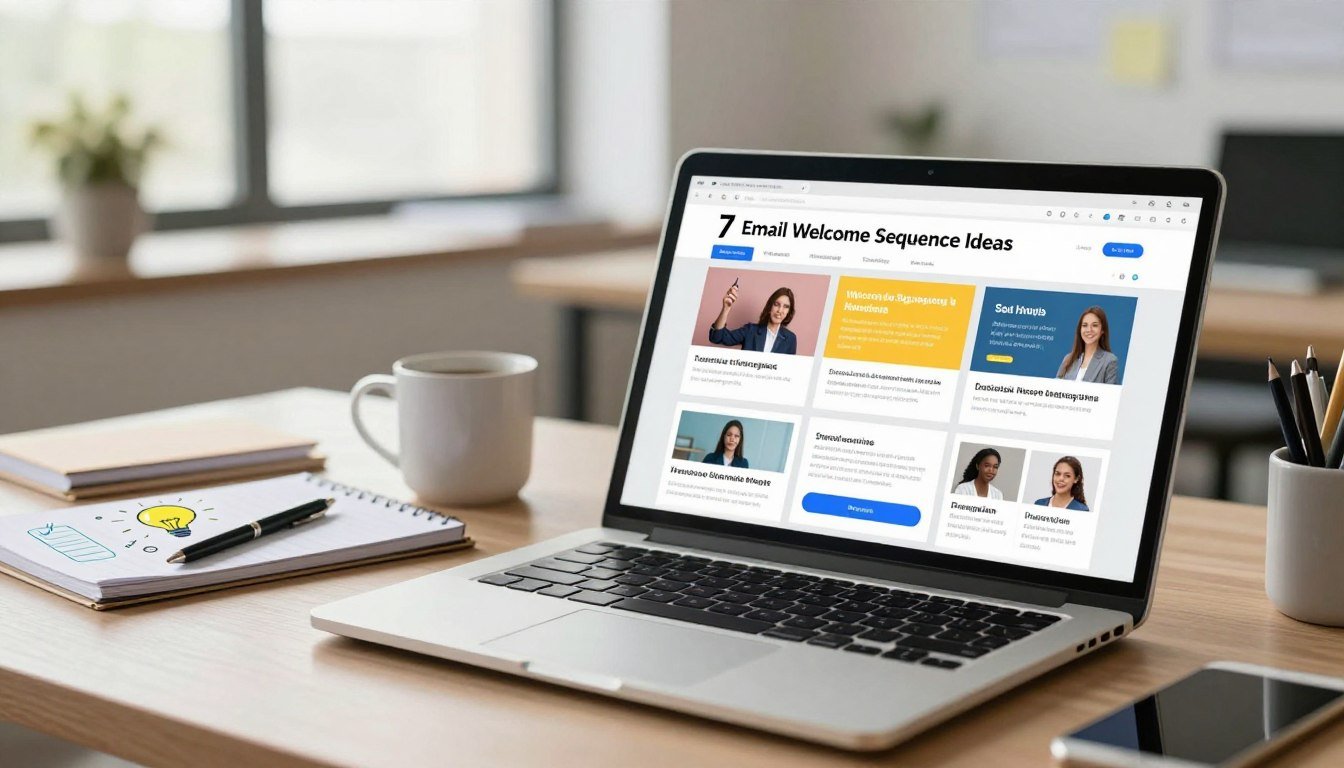
7-Email Welcome Sequence Ideas: Proven Messages That Turn Subscribers Into Buyers
Did you know welcome messages can bring up to 320% more revenue than regular emails? This is your chance to win over new customers. It’s a special time when people are most open to your brand.
Setting up an automated flow helps keep the excitement going. It makes your brand look professional and builds a strong bond with new followers. Remember, you only get one shot at making a lasting first impression.
Good email marketing is more than just saying “hello.” You need to offer value, share your story, and give clear reasons to act. Consistency is key to turning interest into sales.
Top 7-email welcome sequence ideas are all about timing and being relevant. Looking at top welcome email examples can help you create messages that hit home with your audience. A well-planned journey ensures no lead is left behind in that first week.
Table of Contents
Key Takeaways
- Welcome emails get much higher open and click rates than regular campaigns.
- The first email should confirm the subscription and offer value right away.
- Strategic sequences build trust by setting clear expectations for future content.
- Personalization and clear calls-to-action are key to getting people to act.
- Using a multi-day approach keeps your brand in mind during the most interested time.
- Mobile-responsive designs make sure your message reaches users on any device.
Why Welcome Email Sequences Matter for Your Business
Welcome email sequences are very important for businesses. They help shape how customers first experience your brand. These automated messages guide new users through setup and show them the product’s value.
Effective welcome emails are key to a good first impression. They help keep customers happy and engaged. By using welcome email sequences, businesses can make onboarding more personal and fun.
A good welcome email teaches the customer about your product. This helps them understand and value it more. It’s also important for building trust and a strong relationship with your business.
To make welcome email sequences work better, check out resources like email funnels. They offer tips on creating emails that get results.
Using a smart welcome email sequence can boost customer happiness and keep them coming back. It’s all about making the emails both useful and interesting. This sets the stage for a lasting and profitable relationship with your customers.
The Psychology Behind Effective Welcome Sequences
Understanding what makes people interact is key to a good welcome email strategy.
Great welcome sequences use psychological tricks to get people to interact and buy.
One important trick is the principle of reciprocity. When you give value first, people are more likely to be loyal and engaged.
Onboarding emails should teach something valuable. They should focus on outcomes, not just features.
Getting a quick win is also important. It builds trust and shows the value of what you offer.
| Strategy | Psychological Basis | Example |
|---|---|---|
| Lead with Outcomes | Value Perception | Highlighting how a product solves a problem |
| Deliver Quick Wins | Trust Building | Providing immediate, actionable advice |
| Use Segmentation | Personalization | Tailoring content based on subscriber interests |
Balancing timing with context is also vital. The timing and frequency of emails should match the subscriber’s behavior. This keeps them engaged without feeling overwhelmed.
By using these psychological tips, businesses can make welcome emails that not only grab attention but also lead to sales.
7-Email Welcome Sequence Ideas That Convert
A well-designed 7-email welcome sequence can boost subscriber engagement and conversion rates. It nurtures leads by providing value, building brand connection, and showing social proof.
Here are key components of an effective 7-email welcome sequence:
Email 1: The Instant Welcome and Value Delivery
The first email welcomes subscribers and gives immediate value. This can be a discount, a free resource, or exclusive content. For example, Warby Parker offers a free home try-on for glasses, giving new subscribers instant value.
Email 2: The Story and Brand Connection
The second email shares the brand’s story and connects with the subscriber. It includes the brand’s history, mission, and values. Brands like Patagonia use their story to connect with customers deeply.
Email 3: The Educational Content Showcase
Email 3 showcases educational content relevant to the subscriber’s interests. This can be blog posts, videos, or guides. For instance, Klaviyo shares valuable email marketing insights through their content.
Email 4: The Social Proof and Testimonials
The fourth email highlights social proof and customer testimonials. This builds trust with the subscriber. Using social proof effectively can greatly improve email engagement.
Some key strategies for better email engagement include:
- Personalizing content based on subscriber preferences
- Using compelling subject lines that encourage opens
- Optimizing email content for mobile devices
By using these strategies in your 7-email welcome sequence, you can enhance email automation and boost overall engagement.
Optimal Timing for Your Email Welcome Series
The success of your welcome email series depends on the right timing for each email. Sending too many emails too fast or waiting too long can lose interest. A good timing plan keeps subscribers engaged and interested in your brand.
A study by MarketingProfs shows timing is key for onboarding emails. It affects how engaged subscribers are and their long-term relationship with your brand. A smart timing plan can turn subscribers into loyal customers.
Day-by-Day Scheduling Strategy
Spreading out your welcome emails day by day is a good strategy. It lets subscribers digest each email without feeling bombarded. Here’s a sample schedule:
| Email Number | Send Day | Purpose |
|---|---|---|
| Email 1 | Day 1 | Instant welcome and value delivery |
| Email 2 | Day 3 | Share brand story and connect with subscriber |
| Email 3 | Day 7 | Educational content showcase |
| Email 4 | Day 10 | Social proof and testimonials |
As shown in the table, spreading out emails builds engagement gradually. This approach helps grow the subscriber relationship.
Adjusting Timing Based on Subscriber Behavior
Changing the timing of your welcome emails based on subscriber actions can boost engagement. For example, if a subscriber interacts with an email, send the next one sooner.
“The key to a successful email marketing campaign is not just about sending emails, but about sending the right emails at the right time to the right people.”
By watching how subscribers interact with your emails, you can adjust the timing. This personalized touch can increase conversion rates and keep subscribers more engaged.
In conclusion, the timing of your welcome email series is key to its success. Use a day-by-day schedule and adjust based on subscriber actions. This will optimize your email marketing and boost subscriber engagement.
Personalization Tactics That Boost Engagement
To boost engagement, use personalization in your email series. Personalizing customer onboarding emails can greatly impact how people interact with your brand.
Email marketing has evolved. Now, generic messages don’t cut it. Subscribers want content that speaks to their interests and needs.
Segmentation Strategies for Welcome Emails
Segmentation is key for personalizing welcome emails. It divides your subscribers into groups based on their preferences and behaviors. This way, you can create content that speaks to each group.
You can segment by where they came from, like social media or blog posts. This lets you tailor your messages to fit their context.
“Segmentation is the key to unlocking the true power of your email marketing. By knowing your audience’s unique needs, you can create content that truly connects with them.”
A simple strategy is to segment based on how they interacted with your welcome email. For example, you can have segments for those who opened it, clicked a link, or made a purchase.
| Segmentation Criteria | Description | Example |
|---|---|---|
| Source of Subscription | Segment based on how subscribers joined your list. | Social media, blog post, paid ad |
| Interaction with Initial Email | Segment based on subscriber interaction. | Opened email, clicked link, made purchase |
| Demographic Information | Segment based on demographic data. | Age, location, job title |
Dynamic Content Implementation
Dynamic content takes personalization further. It shows different content to different segments in the same email. This is done with variables and conditional logic.
For instance, you can show different product recommendations based on what someone has bought or looked at.
Dynamic content makes your emails more engaging and relevant. This boosts the chance of conversion.
Experts say dynamic content is a game-changer for email marketing. It lets marketers create targeted campaigns that get real results.
Subject Lines That Get Your Welcome Emails Opened
When it comes to email automation, a good subject line can really help. It’s the first thing your subscribers see. It decides if they’ll read your email or not.
To grab attention, use urgency or scarcity. Say your offer is only for a short time or that spots are limited. This creates a sense of urgency.
Another way is to spark curiosity. Ask a question, make a surprising statement, or hint at your content. You want to make them curious enough to open the email.
Personalization also works well. Use the subscriber’s name or tailor the subject line to their interests. For example, a personalized subject line can really grab their attention.
To show how different subject line strategies work, look at this table:
| Subject Line Strategy | Example | Open Rate Impact |
|---|---|---|
| Urgency/Scarcity | “Limited Time Offer: 24-Hour Sale” | High |
| Curiosity | “You Won’t Believe What Happens Next…” | Medium to High |
| Personalization | “John, We’ve Missed You! Exclusive Offer Inside” | High |
| Value Proposition | “Unlock Your Exclusive Content Now” | Medium |
Want to make your email campaigns better? Improve your email strategy? Feel free to contact us for advice and support.
Key Metrics to Track in Your Welcome Email Campaigns
To measure the success of your welcome email campaigns, it’s important to track key metrics. These metrics show how subscribers engage with your content and if the campaign meets its goals.
Open Rates and Click-Through Rates
Open rates and click-through rates (CTRs) are key to understanding your email’s initial success. Open rates show how many people opened your email. CTRs show how many clicked on a link in the email.
A high open rate means your subject line and pre-header text work well. A high CTR shows your email content is interesting and relevant.
Conversion Rates and Revenue Attribution
Conversion rates and revenue attribution are also vital. Conversion rates show how many subscribers took a desired action, like buying something or signing up for a webinar. Revenue attribution shows how much money your welcome emails made.
This helps you see if your welcome emails are worth the investment. It guides your decisions for future campaigns.
| Metric | Description | Importance |
|---|---|---|
| Open Rate | Percentage of recipients who opened the email | Indicates subject line effectiveness |
| Click-Through Rate (CTR) | Percentage of recipients who clicked on a link | Measures email content relevance |
| Conversion Rate | Percentage of subscribers who completed a desired action | Evaluates campaign success in driving actions |
| Revenue Attribution | Direct revenue generated from the campaign | Assesses campaign ROI |
Common Welcome Sequence Mistakes to Avoid
To make your email campaigns better, it’s important to steer clear of common mistakes in welcome sequences. A well-made welcome sequence is key for good customer onboarding. It also helps set the stage for successful email campaigns.
Common errors can make people lose interest and hurt your conversion rates. When making a welcome sequence, there are several mistakes to watch out for. These include:
- Information overload: Too much info at once can be too much.
- Lack of clear next steps: Not guiding subscribers on what to do next can confuse them.
- Poor timing: Sending emails too often or at the wrong times can annoy people.
- Generic messaging: A one-size-fits-all approach can miss the mark with individual subscribers.
To avoid these mistakes, follow these best practices:
- Segment your audience: Make your welcome sequence specific to different parts of your audience to make it more relevant.
- Provide value: Make sure each email in your sequence adds value, whether through learning content or special offers.
- Use clear and concise language: Stay away from jargon or complex language that might confuse your subscribers.
- Optimize timing: Try out different timing strategies to see what works best for your audience.
For more tips on improving your welcome emails, check out best practices for welcome emails.
Personalization is key to boosting engagement in your welcome sequence. Using dynamic content and personalization can really help improve open rates and click-through rates.

By avoiding common mistakes and following best practices, you can make a welcome sequence that turns subscribers into buyers.
Setting Up Email Automation for Your Welcome Sequence
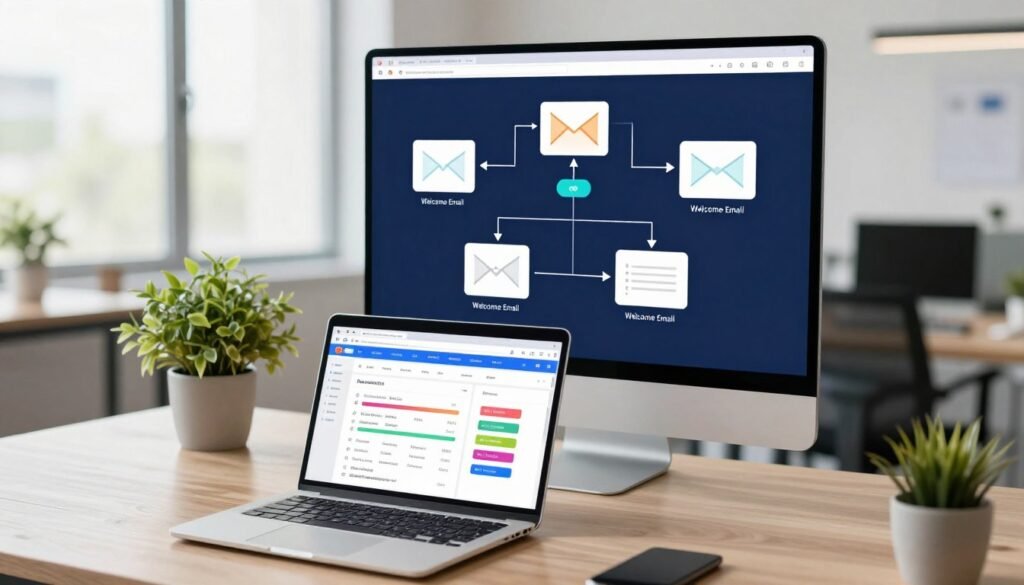
Setting up email automation for your welcome sequence is key. It makes your communication with subscribers more efficient and personal. This way, you can send messages that are both timely and relevant, improving the subscriber experience.
Email automation is vital for a good welcome sequence. It lets you send timely and personalized communication to subscribers. This means new subscribers get emails that are engaging and relevant, all without you having to do it manually.
To set up email automation for your welcome sequence, follow these steps:
- Define your welcome sequence goals and objectives.
- Choose an email marketing platform that supports automation.
- Design a series of emails that cater to different subscriber behaviors and preferences.
- Set up triggers based on subscriber actions to personalize the email sequence.
Segmentation is a big part of email automation. It lets you tailor your welcome sequence to different groups of subscribers. This makes it more likely for them to engage with your emails.
| Segmentation Criteria | Email Content | Expected Outcome |
|---|---|---|
| New Subscribers | Introductory offer and welcome message | High open rates and engagement |
| Active Subscribers | Personalized content and exclusive offers | Increased loyalty and conversion |
| Inactive Subscribers | Re-engagement campaigns with special offers | Improved re-engagement rates |
By using these strategies, businesses can make their email automation for welcome sequences more effective. This leads to better engagement and conversion rates among subscribers.
Conclusion
A well-crafted welcome email sequence is key to successful email marketing. It helps turn subscribers into buyers. By understanding the psychology behind these sequences, you can make engaging welcome emails that work.
Effective welcome emails build a connection with your audience. They help establish trust and show your brand’s value. Using personalization, timing, and compelling subject lines can boost your email marketing.
By using the 7-email welcome sequence ideas and avoiding common mistakes, you can create a strong email marketing strategy. Start building a loyal customer base today. Optimize your subscriber welcome emails and improve your overall email marketing.