Best Affiliate Programs for Beginners Without a Website
Looking for the best affiliate programs for beginners without a website? I get it—you want to make money online but you’re not ready to mess with WordPress, hosting fees, or SEO nightmares. Here’s the truth nobody tells you: some of my highest-earning affiliate months happened before I even registered my first domain name. The “you need a website” myth keeps too many smart people on the sidelines, and I’m here to bust that nonsense wide open.
The problem is real: you see everyone crushing it with affiliate marketing, but every guide assumes you’ve got a fully-optimized website with thousands of visitors. Meanwhile, you’re sitting there wondering if you can actually start without the technical headaches. The agitation? While you’re overthinking the “perfect” setup, other beginners are already cashing checks using nothing but their smartphones and social media accounts.
The solution is simpler than you think. I’m going to walk you through the exact affiliate programs that welcome beginners without websites, the platforms where you’ll promote them, and the no-BS strategies that actually generate passive income in 2024.
Table of Contents
- Why You Don’t Actually Need a Website for Affiliate Marketing
- The 7 Best Affiliate Programs for Beginners Without a Website
- Where to Promote Without a Website (Platform Breakdown)
- The 3 Biggest Mistakes I See Beginners Make
- How to Scale from $0 to $1,000/Month
- FAQ: Your Burning Questions Answered
- My Top Recommended Gear
Why You Don’t Actually Need a Website for Affiliate Marketing
Let me start with the big reveal: most affiliate networks don’t require a website. They want traffic and conversions, period. Whether that traffic comes from your TikTok account, YouTube channel, or Instagram bio link doesn’t matter to them—or to your bank account.
I started my affiliate journey posting product reviews on YouTube before I understood what SEO even meant. My first commission check came from a video shot on my phone in my living room. No website. No fancy funnel. Just authentic recommendations and a strategically placed affiliate link in the description.
The Federal Trade Commission requires disclosure of affiliate relationships, but that’s just a simple “#ad” or disclosure statement—you don’t need a dedicated website for compliance. According to FTC guidelines, transparency matters more than the platform you’re using.
Here’s what actually matters for beginners affiliate programs: engagement, trust, and targeted traffic. I’ll take 500 engaged Instagram followers over a website with 10,000 random visitors any day. If you’re just getting started with affiliate marketing, focus on building an audience where they already hang out, not where you think they should be.
The 7 Best Affiliate Programs for Beginners Without a Website
Quick answer for those skimming: The best affiliate programs for beginners without a website in 2024 are Amazon Associates, ClickBank, ShareASale, CJ Affiliate, Digistore24, Warrior Plus, and Impact. These programs accept social media profiles, YouTube channels, and email lists as your primary traffic source, making them perfect for website-free affiliate marketing.
1. Amazon Associates
Let’s start with the elephant in the room. Amazon’s affiliate program accepts YouTube channels, mobile apps, and even Instagram accounts (though you’ll need to get creative with link placement). The commission rates aren’t amazing—typically 1-10% depending on product categories—but the conversion rate is insane because people already trust Amazon.
My strategy? I create product comparison videos on YouTube and Pinterest pins showcasing “top 5” lists. The trust factor Amazon brings closes sales I could never close on my own. Just remember: Amazon requires at least three qualifying sales within 180 days of approval, so you’ll need to actually drive traffic, not just sit on your approval.
2. ClickBank
ClickBank is where I send beginners who want digital products with fat commission checks. We’re talking 50-75% commissions on info products, courses, and software. They don’t care if you have a website—just a traffic source and a way to collect payments.
The marketplace is massive (12,000+ products), though I’ll be honest: some products are garbage. Focus on the “Gravity” score (shows how many affiliates are successfully selling it) and actually test products before promoting them. Your reputation matters more than a quick commission.
3. ShareASale
ShareASale accepts social media influencers and email marketers without websites. I love them for physical products and established brands—companies like Reebok, Wayfair, and thousands of niche merchants use their network. The interface looks like it’s from 2005, but don’t let that fool you; the payment processing is solid.
Pro tip: When applying, use your most professional social media profile or create a simple landing page on Linktree. They review applications manually, so make it easy for them to say yes. For more insights on getting started with affiliate marketing as a beginner, check out my detailed breakdown.
4. CJ Affiliate (Commission Junction)
CJ Affiliate partners with major brands—we’re talking Home Depot, GoPro, and Priceline. They’ve loosened their website requirements significantly. I got approved by listing my YouTube channel as my primary promotional method and detailing my content strategy in the application notes.
The reporting dashboard is phenomenal, giving you deep insights into what’s converting. The minimum payout is $50, which is reasonable for beginners building momentum.
5. Digistore24
This European-based network is criminally underrated for affiliate programs 2024. They specialize in digital products, courses, and software with commissions ranging from 30-70%. Unlike ClickBank, they handle VAT and tax complications for international sales, which is a massive headache-saver.
I promote Digistore24 products primarily through email marketing and YouTube tutorials. The approval process is instant for most products, so you can start promoting within minutes.
6. Warrior Plus
If you’re in the “make money online” niche, Warrior Plus is your playground. It’s entirely focused on internet marketing products, software tools, and business courses. Commissions can hit 100% on front-end offers (vendors make money on upsells), which looks amazing in your earnings dashboard.
The catch? You need vendor approval for each product, and some vendors only approve affiliates with proven track records. Start with products marked “instant approval” and build relationships with vendors as you generate sales.
7. Impact (formerly Impact Radius)
Impact partners with huge brands like Airbnb, Uber, and Adidas. They’ve embraced the influencer economy and actively recruit affiliates promoting through social channels. The technology is cutting-edge—their mobile app lets you generate and track links on the go.
I use Impact primarily for travel and lifestyle content on Instagram. The ability to create custom short links makes it perfect for bio links and Stories.
Where to Promote Without a Website (Platform Breakdown)
Knowing the programs is half the battle. The real money comes from understanding where and how to promote. Here’s my platform-by-platform breakdown based on what actually works in 2024.
YouTube: The Evergreen Traffic Machine
YouTube is my favorite platform for affiliate marketing without a website, hands down. Why? Videos keep generating views (and commissions) for years. I have videos from 2021 still sending me Amazon Associate commissions monthly.
The strategy: Create “review,” “comparison,” and “how-to” videos around products you’re promoting. Put your affiliate links in the description with clear timestamps. YouTube’s algorithm loves watch time, so focus on genuinely helpful content, not 30-second sales pitches.
According to Pew Research, 81% of Americans use YouTube, making it the most universal platform for reaching audiences. The search traffic alone beats most beginner websites.
Instagram: The Bio Link Strategy
Instagram’s single bio link limitation forces you to get creative. I use services like Linktree or Beacons to create a landing page with multiple affiliate offers. My posts and Stories drive traffic to that bio link, where I segment offers by topic.
Reels are crushing it right now for affiliate traffic. I create 15-30 second product demonstrations or “before/after” transformations that hook viewers, then direct them to “link in bio” for more details. The key is providing value first, selling second.
TikTok: The Viral Wild Card
TikTok can take a complete beginner from zero to thousands of dollars overnight if a video goes viral. I’ve seen it happen. The algorithm doesn’t care about follower count—it cares about engagement in the first few hours.
The best TikTok affiliate strategy I’ve found: product demonstrations, “Amazon finds,” and problem-solution videos. Use the TikTok Creator Marketplace once you hit 10k followers, but until then, use your bio link or create simple videos saying “search [product name] on Amazon.”
Pinterest: The Passive Income Sleeper
Pinterest is criminally underrated. It’s basically a visual search engine, and pins have a shelf life measured in months, not hours like Instagram posts. I create product collages, infographics, and “inspiration boards” linking to affiliate products.
The demographics skew female (60%+ according to Statista), so it works exceptionally well for fashion, home décor, DIY, and lifestyle products. If you’re learning about affiliate SEO strategies, Pinterest SEO operates similarly to Google—keyword-rich descriptions and titles matter.
Email Marketing: The Direct Line to Sales
Building an email list without a website is easier than you think. I use free tools like Beehiiv or MailerLite, offering a free resource (PDF guide, checklist, video course) in exchange for emails. My promotion happens on social media; the email list is where I close sales.
Email converts higher than any social platform—period. My email subscribers buy at roughly 10x the rate of my social media followers. If you want to understand email funnels for affiliate marketing, start building your list today, even if it’s just 50 people.
Expert Commentary: This video breaks down real case studies of affiliates earning without websites, showing practical implementations of the strategies I’ve outlined here—worth your 15 minutes.
The 3 Biggest Mistakes I See Beginners Make
Mistake #1: Promoting Everything to Everyone
I see this constantly: new affiliates join 15 programs and promote 50 different products across every niche imaginable. Your audience gets whiplash, and nobody trusts your recommendations.
Pick ONE niche to start. Build authority. When your fitness audience trusts your supplement recommendations, they’ll buy. When you’re promoting supplements on Monday, crypto courses on Wednesday, and kitchen gadgets on Friday, you’re just noise.
Mistake #2: Hiding Your Affiliate Relationship
Some beginners think disclosure hurts conversions. Wrong. Transparency builds trust, and trust drives sales. I literally say “I earn a commission if you buy through my link, and I only recommend stuff I actually use” in my content, and my conversion rates went UP.
Plus, the FTC can fine you up to $43,280 per violation for undisclosed affiliate relationships. Not worth it, IMO.
Mistake #3: Expecting Passive Income Immediately
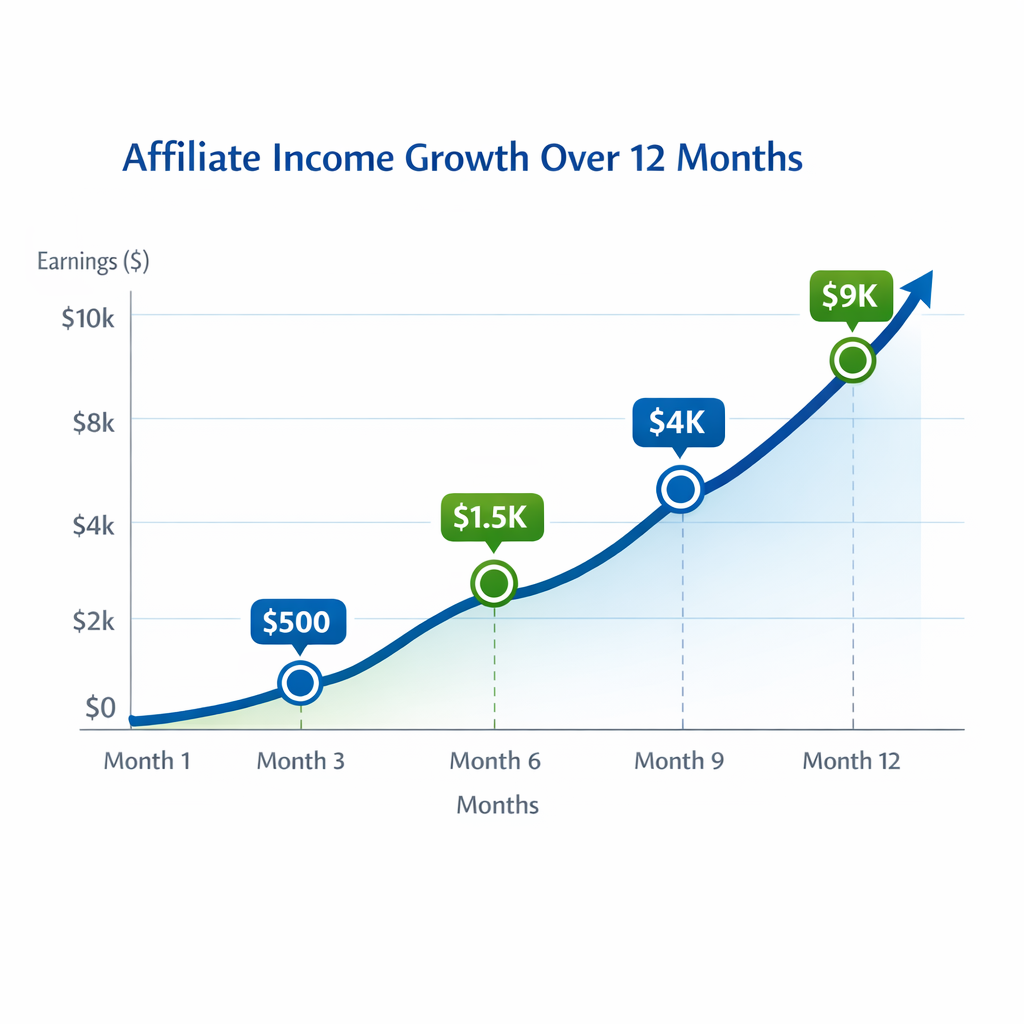
Real talk: passive income isn’t passive at first. My first three months, I made $127 total while working my butt off creating content. Month six, I hit $1,200. Month twelve, $4,800. The “passive” part comes after you’ve built the foundation.
Most beginners quit at week three when they’ve made $0. Don’t be most beginners. The people making serious money now all pushed through that initial silent period.
How to Scale from $0 to $1,000/Month
You’ve picked your programs and platforms—now what? Here’s my proven roadmap for hitting that first $1,000 month without a website.
Months 1-2: Foundation and Testing
Choose 2-3 products from ONE affiliate program in ONE niche. Create 15-20 pieces of content (videos, posts, pins) around these products. Focus on search-friendly content: “Product X review,” “Product X vs Product Y,” “How to use Product X.”
Track everything. Which content formats get engagement? Which products get clicks? Double down on what works, cut what doesn’t. I use Google Analytics UTM parameters even without a website—just tag your affiliate links to track which platform and content piece drove each click.
Months 3-4: Consistency and Optimization
Post consistently. For YouTube, that’s 2-3 videos weekly. For TikTok or Instagram, that’s daily. For Pinterest, 5-10 pins daily. Yes, daily. The algorithms reward consistency more than perfection.
Study your analytics obsessively. My breakthrough came when I noticed my “morning routine” content converted 3x better than “product reviews.” I pivoted my entire content strategy based on that data, and revenue doubled within six weeks.
Months 5-6: Expansion and Email Building
Add email to the mix. Create a simple lead magnet related to your niche—a PDF checklist, resource guide, or video tutorial. Drive your social traffic to your email signup, then nurture those subscribers with helpful content and strategic affiliate recommendations.
This is where you’ll see your first real momentum. My email list hit 500 subscribers at month five, and those 500 people generated more revenue than my 5,000 Instagram followers.
Months 7-12: Multiplication and Diversification
Now you can expand. Add 1-2 new platforms. Join 2-3 additional affiliate programs in complementary niches. Test paid traffic if you’re profitable (Facebook ads, Pinterest ads, YouTube ads).
The compounding effect kicks in here. Your old content keeps working while your new content adds to the pile. This is when make money online shifts from hustle to actual passive income.
For specific tactics on driving more targeted visitors, check out my guide on generating affiliate traffic that actually converts.
FAQ: Your Burning Questions Answered
Can I do affiliate marketing without owning a website?
Absolutely. You can promote affiliate products through social media platforms, YouTube channels, email marketing, Pinterest, TikTok, and even messaging apps like WhatsApp or Telegram. Many successful affiliates build their entire business without ever touching WordPress. The key is having a platform where you can build an audience and share links—websites are just one option among many.
Which affiliate program pays the fastest for beginners?
Amazon Associates typically pays within 60 days, but programs like ClickBank and Digistore24 often release payments within 7-14 days after the refund period ends, making them ideal for beginners who need faster cash flow. Warrior Plus can pay even faster—sometimes within days—though those programs typically require vendor approval first.
How much can beginners realistically make without a website?
Most beginners earn $100-$500 in their first three months if they’re consistent with content creation. With strategic effort and the right traffic strategies, scaling to $1,000-$3,000 monthly within 6-12 months is realistic. I’ve seen exceptional cases hit $5,000+ by month six, but those involve viral content or established social media followings. Don’t compare your beginning to someone else’s middle.
Do I need a large following to start affiliate marketing?
No. Micro-influencers with 1,000-5,000 engaged followers often convert better than accounts with 100,000+ disengaged followers. Quality and trust matter infinitely more than raw follower counts. I made my first $1,000 with fewer than 2,000 YouTube subscribers because those subscribers were highly targeted and trusted my recommendations.
Are free traffic methods enough, or do I need paid ads?
Free traffic (organic social media, SEO on YouTube/Pinterest, email marketing) is absolutely enough to build a profitable affiliate business. I didn’t touch paid ads until I was already making $3,000+ monthly. Paid traffic accelerates growth but requires testing budgets and experience. Master free traffic first, then layer in paid strategies once you’re profitable and understand your numbers.
What’s the best niche for beginners without websites?
The best niche is one you actually know something about and can create consistent content around. That said, health/fitness, personal finance, technology/gadgets, beauty/fashion, and “make money online” niches perform exceptionally well for beginners. These niches have proven buyer intent, plenty of affiliate programs, and audiences actively searching for recommendations on social platforms.
My Top Recommended Gear
You don’t need much to start affiliate marketing without a website, but these tools make the process significantly smoother:
- Smartphone Tripod with Ring Light – Essential for creating quality content on YouTube, TikTok, and Instagram. Good lighting makes you look professional even when shooting from your bedroom. I use mine daily for product demos and talking-head videos.
- Wireless Lavalier Microphone – Clear audio matters more than video quality. Seriously. A $30 wireless mic transformed my YouTube watch time because people could actually hear my reviews without straining. This one connects directly to smartphones—no fancy equipment needed.
- High-Capacity Portable Power Bank – When you’re creating content on the go (which you will be), running out of battery kills momentum. I keep a 20,000mAh power bank in my bag and never worry about my phone dying mid-shoot or while responding to comments that drive engagement.
Disclaimer: This post contains affiliate links. As an Amazon Associate, I may earn a commission from qualifying purchases at no additional cost to you.