Comparison Template: Stop Losing Sales With Weak Comparisons
Meet Dave. He’s at the end of your sales funnel, ready to buy with his credit card in hand.
But, he feels doubt. Your rival has a new button, while you offer a “bespoke solution” that sounds vague.
Without a clear best comparison template, Dave might leave. He needs a brand that explains options clearly.
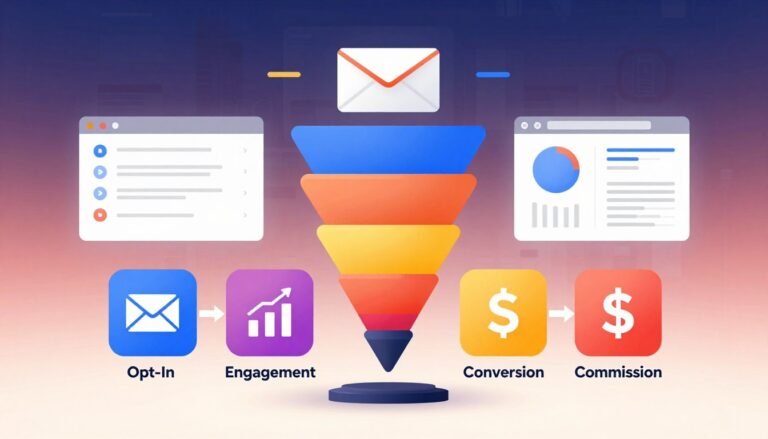
The sales funnel shows the customer’s journey from first contact to purchase. It makes the process simple and direct.
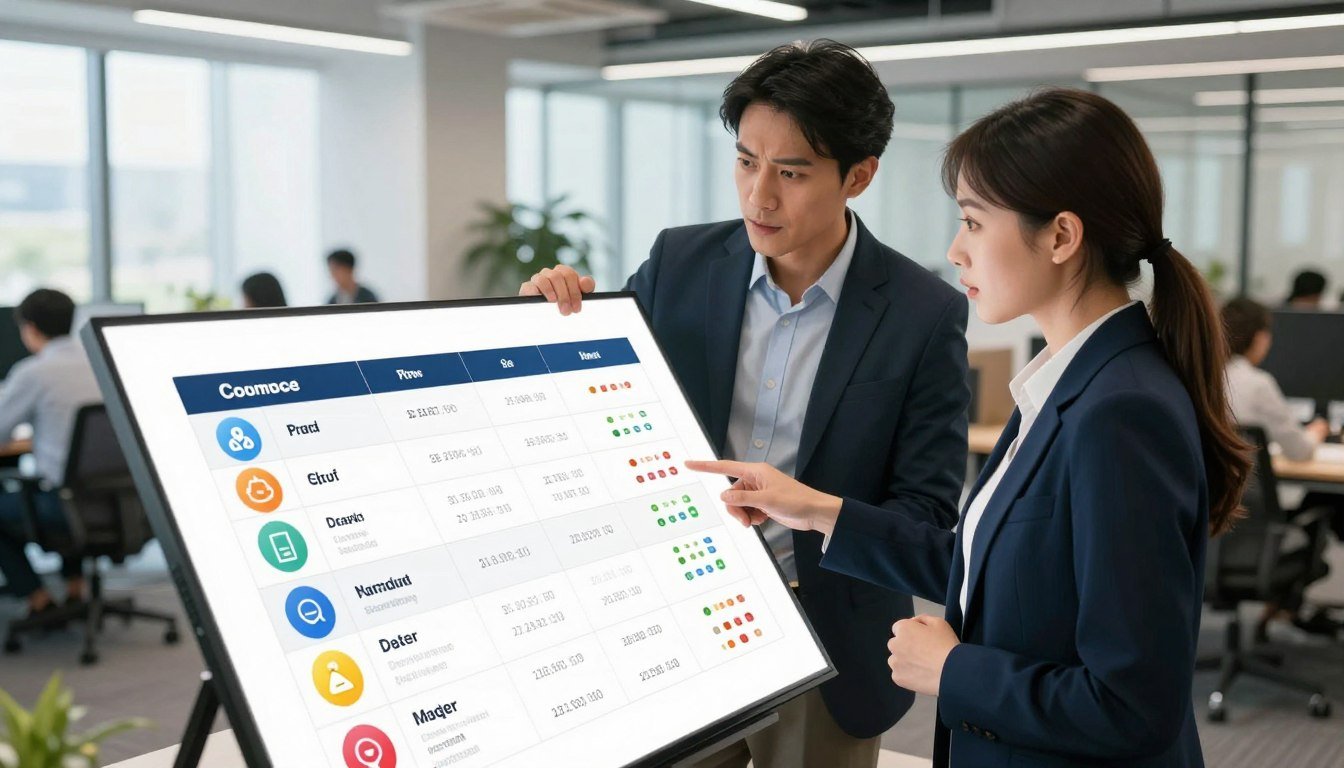
Many companies fail by being vague about their value. A factual comparison chart lets prospects see the truth without fluff.
Show differences honestly to gain trust. When you guide readers fairly, you stop guessing and start converting.
Good visuals keep your revenue where it should be. Don’t let a weak presentation lose your leads.
Table of Contents
Key Takeaways
- The sales funnel tracks the journey from initial contact to the final sale.
- Clarity prevents customers from dropping out at the decision stage.
- Honest data builds more trust than biased marketing claims.
- Visual aids help buyers quickly understand complex product differences.
- An unbiased approach helps qualify the right customers for your brand.
- Factual summaries reduce buyer friction and speed up the closing process.
Understanding the Importance of Comparisons
Comparing things is key in sales. It helps buyers make choices. In today’s market, buyers face many options. Salespeople must make their products stand out.
Comparisons are more than listing features. They tell a story that buyers connect with. Using a compare tool or a side by side comparison helps buyers decide wisely.
Why Comparisons Sell
Comparisons make complex choices simpler. Seeing differences clearly encourages buyers to buy. Sales experts say that summarizing, pivoting, and recommending next steps can boost sales.
For example, a comparison template can be very effective. The Product School blog shows how a well-made template can change sales.
- It shows the main benefits and features.
- It gives a clear, simple overview, making value easy to see.
- It tackles objections by comparing and contrasting ahead of time.
The Psychology Behind Buyer Decisions
The psychology of buying is complex. But comparisons are a big part of it. Buyers use mental shortcuts, and comparisons help them evaluate.
“People are more likely to buy when they can compare and see the value.”
Understanding what drives buyers helps salespeople. They can use visual aids like infographics and charts to make comparisons engaging and clear.
In summary, comparisons are a strong tool in sales. By using comparisons well, businesses can close more deals and make customers happier.
Crafting the Perfect Comparison Template
In the competitive world of sales, a well-made comparison template can change the game. It shows off your product or service’s best points. It also helps customers make smart choices.
Structuring Your Template for Success
A good comparison template is easy to follow. It starts by pointing out the customer’s problem. Then, it shows how your product stands out from others. Key elements to include are:
- Clear headings that outline the comparison criteria
- A concise summary of the key benefits and features
- Visual aids like charts and infographics to enhance understanding
For more tips on using comparisons in marketing, check out keyword research for affiliate marketing. It offers useful insights.
Visual Elements: Infographics and Charts
Visuals are key to making your template engaging. Infographics and charts make complex info easy to understand. Consider the following when designing visual elements:
- Use colors that align with your brand identity
- Ensure the data is accurate and up-to-date
- Keep the design clean and uncluttered
By adding these elements, you can make a template that informs and grabs attention. This can lead to more sales and growth.
Common Pitfalls in Comparisons
The art of comparison is complex. Even well-meaning businesses can fall into traps. Understanding what makes a good comparison is key.
Businesses often struggle with creating comparisons. This can lead to a high dropout rate or a long sales cycle. The main issue is including too much or too little information.
Overloading with Information
One big mistake is overloading comparison templates with too much info. The goal is to give a full view, but it can overwhelm customers. A cluttered template can cause customers to leave the sales funnel.
To fix this, focus on curating the most relevant info. Use a free comparison template to start. It helps organize data without starting from scratch.
Lack of Contextual Relevance
Another big issue is lack of contextual relevance. Businesses must make sure their comparisons meet their audience’s needs. This means understanding the customer’s perspective and addressing their specific issues.
For example, a comparison website must focus on what matters most to its users. This way, it offers a comparison that truly helps its audience.
By knowing these pitfalls and avoiding them, businesses can make better comparisons. This leads to more sales and customer engagement.
Real-Life Examples of Winning Comparisons
The power of comparison in driving sales is huge. Many brands have found success by using comparison template examples. They show their products or services in a more appealing way.
Brands That Nailed Their Comparisons
Some brands have really made comparisons work for them. For example, HubSpot and Salesforce have detailed templates. They compare their services to others, showing their benefits.
These best comparison template examples often include customer feedback and success stories. This adds trustworthiness.
Amazon is another great example. It compares products side by side. This helps customers make better choices. It also makes buying more likely.
Lessons Learned from Failure
Not every comparison strategy works. Some brands face issues with complex or irrelevant comparisons. For instance, too much info in a template can confuse people.
The main lesson is to keep it simple and relevant. Brands should make sure their comparisons are clear and meet their audience’s needs. This way, they create a best comparison template that really connects with customers.
How to Choose the Right Metrics to Compare
Choosing the right metrics is key to a good sales strategy. The right ones can show off your product’s strengths, attracting more customers.
Understanding the difference between quantitative and qualitative data is important. Quantitative data is numbers like prices and weights. Qualitative data is about feelings, like customer satisfaction.
Quantitative vs. Qualitative Data
Quantitative data is easy to compare because it’s just numbers. For example, comparing prices is simple. But, qualitative data is harder because it’s about feelings.
To compare qualitative data well, you need to turn it into numbers or use compare tools that can handle it.
A side by side comparison works well for both types of data. It makes it easy for customers to see why your product is better.
Aligning Metrics with Customer Needs
It’s important to match your metrics with what customers want. Knowing what your audience likes helps you make comparisons that matter to them.
If cost is what matters most, focus on price. But, if features or quality are key, highlight those instead.
By picking the right metrics and showing them clearly, you can make a strong side by side comparison. This can really appeal to your audience and boost sales.
Leveraging Customer Testimonials in Comparisons
Customer testimonials are powerful because they offer social proof. This proof is key in making buying decisions. Seeing others’ positive experiences with a product or service makes people trust the brand more.
The Power of Social Proof
Testimonials act as social proof, helping businesses win over customers. They show how a product or service has helped others. This makes it easier for people to trust and relate to the brand. Here are some benefits of using customer testimonials:
- Builds credibility and trust
- Provides real-life examples of product or service effectiveness
- Enhances the comparison by adding a personal touch
Where to Incorporate Testimonials Effectively
To make the most of customer testimonials, use them wisely. Here are some good places to put them:
- Comparison Tables: Add testimonials to comparison tables for extra credibility.
- Product Pages: Use them on product pages to show social proof and help with decision-making.
- Landing Pages: Include testimonials on landing pages to build trust and encourage sales.

By using customer testimonials well in comparison templates and websites, businesses can gain trust. This can lead to more sales.
The Role of Visuals in Comparisons
Visuals are key in comparisons, turning plain data into stories that grab attention. In today’s world, where we’re bombarded with info, using visuals wisely can make all the difference. A good comparison template engages, while a bad one confuses.
The brain gets visual info quicker than text. So, adding visual elements to your comparison chart makes it clearer and more impactful. This is where the skill of using images well comes in.
Using Images Effectively
Images have many roles in a comparison template. They can explain complex ideas, show off important features, or just make things look nice. Choose images that are relevant and high-quality. For example, if you’re comparing products, using actual product images helps buyers see what they’re looking at.
A well-made comparison template might have infographics or charts that summarize key points. The goal is to use visuals to help buyers quickly get the info they need.
Color Psychology in Comparisons
Colors do more than just look good; they also stir emotions and sway decisions. In a comparison template, colors can highlight key points or show differences. For instance, a bold color for your top choice can subtly nudge buyers in that direction.
Knowing a bit about color psychology helps you make a chart that looks good and gets your message across. It’s about setting up a visual order that leads the viewer’s eye through the comparison.
By picking the right images and colors, you can make a comparison template that’s both informative and persuasive. This not only helps buyers understand better but also boosts your chances of making a sale.
A/B Testing Your Comparison Template
A/B testing is a game-changer for comparison templates. It lets you refine them based on real user data. By testing different elements, you can find out what works best for your audience. This way, you can make data-driven decisions to boost your sales.
To start A/B testing, first identify the elements of your template worth testing. This could be anything from the layout and design to the metrics and data being compared.
What to Test and Measure
When A/B testing your comparison template, consider several key elements. You can test different visual elements, like images, charts, and graphs. See which ones your audience likes best.
- Test different layouts to see which one is more engaging.
- Compare the effectiveness of various metrics and data points.
- Experiment with different calls-to-action (CTAs) to see which ones drive more conversions.
Analyzing Results for Improvement
After running your A/B tests, it’s key to analyze the results. Look for significant differences between test groups. Use this data to guide your decisions.
By continuously testing and refining your template, you can create a best comparison template for your business. And the best part? You can start with a free comparison template and improve it over time.
Simplifying Complex Comparisons
Making complex comparisons simple is key to success. In today’s market, it’s vital to show products or services clearly. This section explores how to make complex comparisons easy for everyone.
Techniques for Clarity
To make comparisons simple, use clear language. Avoid terms that might confuse people.
Visual aids like infographics and charts help a lot. It’s also important to focus on the most important features and benefits.
- Use simple, straightforward language.
- Employ visual elements like charts and infographics.
- Prioritize key information.
Tools to Help You Simplify
Many tools can help simplify comparisons. Using comparison template examples can make things easier. These templates help organize and present data well.

Side by side comparison tools are also great. They show differences clearly between products or services.
By using these techniques and tools, businesses can make comparisons that are clear and engaging.
Integrating Comparisons into Your Marketing Strategy
A good comparison template is just the start. The real magic happens when it’s part of a bigger marketing plan. To really use comparisons well, you need to see how they fit into your marketing strategy.
Comparisons aren’t just for sales pages. They can be used at many points in the buyer’s journey to help make decisions. By strategically placing comparisons, you can help guide customers through the sales funnel better.
Where Comparisons Fit in the Buyer’s Journey
Knowing the buyer’s journey is key for using comparisons well. Comparisons can be used at different times:
- Awareness stage: Show what makes you different.
- Consideration stage: Give detailed comparisons to help choose.
- Decision stage: Use comparisons to show your value.
By matching comparisons with the buyer’s journey, you can make your marketing strategy stronger and more convincing.
Multi-Channel Approaches
To really make comparisons work, use them in many ways. This means using comparisons in different marketing channels, like:
| Channel | Comparison Type | Objective |
|---|---|---|
| Website | Detailed product comparisons | Inform and engage possible customers |
| Social Media | Visual comparisons, infographics | Catch attention and get people involved |
| Email Marketing | Comparative analysis, case studies | Help leads grow and get them to buy |
Using comparisons in many places helps tell a strong story that your audience will connect with.
To really make comparisons work in your marketing, you need to know what your customers want and like. By using comparison template design in many ways, you can really boost your marketing.
The Future of Comparisons in Sales
Comparisons are more than just a sales trick; they’re key to modern sales. Looking ahead, comparisons will keep being important for businesses to stand out and win over customers.
How we use comparisons in sales is changing. This is thanks to new trends and tech. We’re seeing better comparison tools and comparison charts with advanced data analytics.
Emerging Trends to Watch
Several trends are changing comparisons in sales:
- Personalization: Comparisons are now tailored to what each customer wants.
- Interactive Comparisons: Features like sliders and live updates are making comparisons more engaging.
- AI-Driven Insights: Artificial intelligence is giving deeper insights from comparison data.
For example, companies can use a comparison chart template to make comparisons that really speak to their audience.
How Technology is Shaping Comparisons
Technology is changing how we make, show, and use comparisons. Some big tech advancements include:
- Advanced Data Visualization: AR and VR are being used to make comparison experiences more real.
- Machine Learning Algorithms: These help automate comparisons and offer predictive insights.
- Cloud-Based Collaboration Tools: Help teams work better on comparison content.
By using these technologies and trends, businesses can make comparisons that really sell and engage customers.
Conclusion: Elevate Your Comparisons to Close More Sales
Making a good comparison template is key for businesses wanting to sell more. By using the tips shared, companies can make a comparison template that speaks to their audience.
Practical Insights for Comparison Templates
A good comparison template should have important metrics, customer feedback, and pictures. This makes a comparison template that grabs customers’ attention.
Putting it into Action
First, businesses can look at examples of comparison templates. They should make data easy to understand, use customer feedback, and test their templates often. This way, they can find the best ways to compare.