Email Funnel Guide: Proven Sequence Map (From Opt-In to Commission)
Imagine Sarah, a brilliant creator who launched her newsletter with high hopes. She hit “send” on her first campaign, but the only response she got was the sound of a digital cricket chirping. Her messages were not hitting the mark because she was using a script from a decade ago.
In 2025, success looks very different for modern brands. Businesses seeing 3-5x higher conversion rates are ditching those tired old playbooks. They now use AI-powered personalization and zero-party data to create experiences that adapt to every user click.
This email marketing funnel walkthrough offers a fresh map to navigate this high-tech landscape. You will learn how to treat every subscriber like a VIP guest. This strategy ensures your content resonates in real-time, not getting lost in the noise.
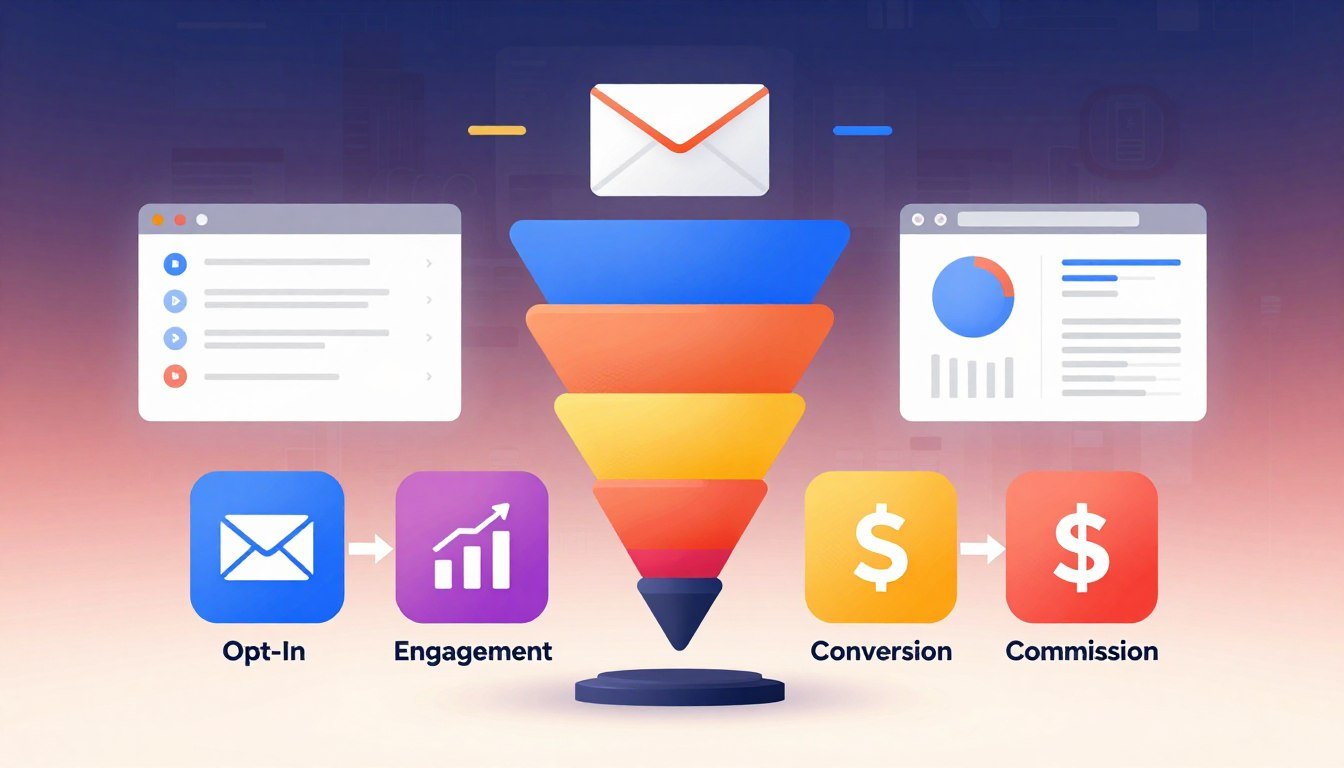
Our witty email funnel guide helps you bridge the gap between a simple opt-in and a recurring commission check. We will break down the sequence to turn silent inboxes into a roaring success story. It is time to make your automation work as hard as you do.
Key Takeaways
- Leverage AI-powered personalization to boost conversion rates by up to five times.
- Use zero-party data to create content that adapts to visitor behavior instantly.
- Ditch outdated playbooks in favor of omnichannel integration strategies.
- Master the sequence map from the initial opt-in to the final sale.
- Transform generic messaging into a personalized journey for every subscriber.
- Build a high-performing system that turns leads into loyal brand advocates.
Understanding the Email Funnel: What Is It?
In digital marketing, knowing about email funnels is key for businesses to grow online. An email funnel is a strategic way to guide people through emails. It helps them move from being aware of a product to actually buying it.
To understand email funnels, start with the basics of email marketing. It’s about sending emails that are personal and targeted to customers. It helps build relationships, keep customers loyal, and boost sales. Experts say, “A well-designed sales funnel is essential for a business to grow online.”
The Basics of Email Marketing
Email marketing is more than sending emails. It’s about creating a campaign workflow that works well. This means segmenting your audience, making content that grabs attention, and checking how well your campaigns do. This way, businesses can make their marketing better fit their audience’s needs, leading to more sales.
A good email marketing plan can really help with customer engagement and increase sales. For tips on making a strong email marketing strategy, check out Klaviyo’s guide on email marketing funnels.
Why Use an Email Funnel?
So, why should businesses use an email funnel? It makes marketing more personal and effective. An email funnel helps automate marketing, so the right message gets to the right person at the right time.
“A well-designed email funnel can be the difference between a prospect becoming a customer and a prospect becoming a lost opportunity.”
Using an email funnel has many benefits. It helps grow leads and build a loyal customer base. By guiding customers through emails, businesses can build trust and credibility. This leads to more sales.
| Benefits of Email Funnel | Description |
|---|---|
| Personalization | Tailors the marketing message to individual needs |
| Automation | Streamlines the marketing process, saving time and resources |
| Enhanced Engagement | Increases customer interaction through targeted content |
Why Your Business Needs an Email Funnel
In today’s competitive world, a well-designed email funnel is essential for growth and revenue. It’s at the core of a successful lead nurturing strategy. This strategy guides customers through a journey that meets their needs and interests.
A good email funnel helps businesses turn prospects into profits. Experts say it’s a key tool for making smart decisions and growing in the long run. This shows how important it is for business success.
Benefits of a Well-Designed Funnel
A well-designed email funnel brings many benefits. It improves customer engagement, boosts conversion rates, and increases revenue. By using email conversion tactics, businesses can sell more and build a loyal customer base.
The benefits are clear in the table below:
| Benefit | Description | Impact |
|---|---|---|
| Enhanced Customer Engagement | Personalized content and timely follow-ups | Increased customer loyalty |
| Improved Conversion Rates | Targeted messaging and offers | Higher sales and revenue |
| Increased Revenue | Strategic promotions and upselling | Boosted bottom line |
How It Enhances Customer Relationships
An email funnel improves customer relationships by organizing communication. Businesses can tailor their messages to meet their audience’s needs. This builds trust and loyalty.
For more tips on creating effective email funnels, check out Affiliates Haven. They offer strategies and tools to enhance your email marketing.
“The key to a successful email funnel is not just about sending emails, but about creating a meaningful connection with your audience.”
Crafting Your Lead Magnet: The First Step
Starting a successful email funnel needs a great lead magnet that speaks to your audience. A lead magnet is something valuable that gets people to share their contact info. This lets you guide them towards making a purchase.
Ideas for Irresistible Lead Magnets
To make a lead magnet that works, know what your audience wants and needs. Here are some top ideas:
- Informative eBooks or Guides: Share detailed info on topics your audience cares about.
- Webinars or Online Workshops: Host sessions that teach or entertain your audience.
- Templates or Checklists: Give tools that make tasks easier for your audience.
- Free Trials or Demos: Let people try your product or service for free.
- Exclusive Discounts or Offers: Give special deals that create a rush to act.
By giving value, you get visitor info and start building a connection with them.
How to Promote Your Lead Magnet
After making your lead magnet, it’s time to get it out there. Here are ways to promote it:
- Optimize Your Website: Make sure your website has clear calls-to-action to download your lead magnet.
- Social Media Campaigns: Use social media to reach more people with your lead magnet.
- Email Signature: Add a link to your lead magnet in your email signature to share with your network.
- Paid Advertising: Run targeted ads to find people who might be interested in your lead magnet.
- Collaborate with Influencers: Work with influencers in your field to promote your lead magnet to their followers.
Good promotion of your lead magnet can bring in more leads. This sets the stage for email sequences and automated marketing emails to turn these leads into customers.
Building Your Email List: Strategies That Work
Building a strong email list is key to a successful email marketing strategy. It’s not just about collecting email addresses. It’s about creating a list of people who really care about your content or products.
To get there, you need to attract the right people and get them to join your list. A good lead nurturing strategy is vital. It helps build trust and connect with your audience.
Top Tools for List Building
There are many tools to help you build and manage your email list. Some top picks include:
- Zanfia: Known for its detailed marketing automation features.
- ClickFunnels: A flexible tool for making landing pages and managing email lists.
- Leadpages: Excels at creating landing pages that grab email addresses.
These tools make your campaign workflow smoother. They automate tasks like segmenting your list, sending follow-up emails, and tracking your progress.

Techniques to Engage Subscribers
After you’ve built your list, it’s important to keep your subscribers interested. Here are some ways to do that:
- Personalization: Customize your emails based on what your subscribers like and do.
- Regular Newsletters: Keep them in the loop with updates about your products or services.
- Exclusive Offers: Give them special deals or early access to new stuff.
Using these strategies will keep your subscribers engaged. This makes your email list a valuable resource for your business.
The Opt-In Process: Making It Seamless
An effective opt-in process is key to successful email marketing. It’s the first step in building a relationship with your audience and turning them into loyal followers. A smooth opt-in process lets visitors easily join your email list, boosting the chance of converting them into customers.
To succeed, you need to know what makes a good opt-in process. This includes creating an opt-in page that looks good and is easy to use.
Designing an Effective Opt-In Page
Your opt-in page is where your brand meets new subscribers. It should be clear, concise, and compelling. Here are some important things to think about:
- Clear headline that communicates the value proposition
- Simple and short form fields to reduce friction
- Compelling call-to-action (CTA) buttons that stand out
- Relevant and engaging visuals that support your brand
For more detailed guidance on creating an effective opt-in funnel, you can refer to resources like building your first opt-in funnel. It breaks down the process into easy steps.
Tips for Increasing Conversion Rates
To boost conversion rates on your opt-in page, you need to understand your audience, test different elements, and optimize based on data. Here are some strategies to consider:
| Strategy | Description | Expected Outcome |
|---|---|---|
| A/B Testing | Test different versions of your opt-in page | Identify the most effective design and content |
| Reducing Form Fields | Minimize the number of fields to fill out | Decrease friction and increase sign-ups |
| Enhancing Visuals | Use high-quality images or videos | Improve engagement and conversion |
By using these strategies and keeping an eye on your opt-in process, you can greatly improve your email conversion tactics and automated marketing emails.
Email Funnel Blueprint: Mapping It Out
Creating an email funnel is a key step in boosting your marketing. It guides your future customers from the start to the final sale. Knowing each stage well is key to a great customer experience.
A good email funnel does more than send emails. It’s a strategic sequence that builds trust and value. It aims to engage subscribers at every step, making them feel important.
The Importance of a Clear Sequence
A clear sequence in your email funnel is vital. It makes sure subscribers get the right info at the right time. This improves their experience and boosts chances of them buying.
By planning your sequence well, you can personalize the journey for your subscribers. This makes them more likely to engage with your content and buy.
For more tips on email marketing, check out Affiliates Haven. They offer great advice on affiliate marketing and email funnels.
Common Email Funnel Stages
Every email funnel has its own stages, but some are common. These include:
- Opt-in: When subscribers join your list.
- Welcome Email: An intro email that shows your brand’s vibe.
- Nurture Emails: Emails that build trust and offer value.
- Promotional Emails: Emails that promote your products or services.
- Follow-up Emails: Emails sent after a sale to check on customer happiness.
Knowing these stages and how they fit into your strategy is key. By mapping out your funnel and ensuring a clear sequence, you can boost your sales and customer loyalty.
The Welcome Email: Setting the Tone
When someone new joins your email list, the first impression is key. That’s what the welcome email is for. It’s not just a hello; it’s a chance to connect and start your lead nurturing strategy.
A good welcome email makes your automated marketing emails better. It makes new subscribers feel valued and interested right away. It’s a key step in building trust and a good relationship with your audience.
What to Include in Your Welcome Email
Your welcome email should do more than say thanks. It’s a chance to introduce your brand, offer value, and tell subscribers what to expect. Here are some things to include:
- A warm and personalized greeting
- A brief introduction to your brand and its values
- A special offer or discount to encourage engagement
- Links to your most popular content or products
- Clear instructions on how subscribers can get in touch or opt-out
For ideas, look at effective welcome emails that have won over new subscribers.
Timing Your Welcome Message Right
The timing of your welcome email is as important as its content. Sending it right after someone subscribes can grab their attention. But, the best time can vary based on your audience.
| Timing | Effectiveness |
|---|---|
| Immediate | High engagement, capitalizes on initial interest |
| Within 1 hour | Maintains interest, shows promptness |
| Within 24 hours | Allows for planning, yet timely |
To make your email funnel better, use tools like those at Affiliates Haven. They can help streamline your process and boost subscriber engagement.
Nurturing Emails: Engaging Your Audience
The success of an email funnel depends on nurturing emails that connect with your audience. These emails aim to build a relationship by sharing valuable content. They guide leads through the buyer’s journey.
Effective nurturing emails boost email conversion tactics by keeping your audience engaged. To do this, you need to create content that converts.
Crafting Content That Converts
To craft content that converts, you must know your audience’s needs and likes. It’s about creating a campaign workflow that feels personal and relevant.
- Understand your audience’s pain points and interests.
- Create content that addresses these needs.
- Use a tone that resonates with your audience.
For more insights on lead nurturing, check out this ultimate guide on the topic.
The Role of Personalization
Personalization is key in nurturing emails. It means tailoring your content to fit your leads’ specific needs and preferences.
| Personalization Technique | Description | Benefit |
|---|---|---|
| Using the lead’s name | Addressing the lead by their name in emails. | Increases engagement |
| Segmenting your email list | Dividing your list based on lead behavior or demographics. | Improves relevance |
| Content based on behavior | Sending content based on the lead’s actions or interactions. | Boosts conversion rates |

By using these personalization techniques, you can greatly improve your email conversion tactics. This makes your campaign workflow more effective.
Promotional Emails: Sealing the Deal
Getting the most out of promotional emails takes a smart plan for timing and offers. A well-made email can turn a lead into a sale. It’s all about knowing your audience and giving them offers they can’t say no to at the perfect time.
Timing Is Everything: When to Sell
The right time for your promotional emails is key. Send too soon, and your lead might not be ready. Send too late, and they might lose interest. It’s important to know where your lead is in the buying cycle and adjust your email sequences and lead nurturing strategy to match.
For example, if you’re promoting a product with a limited-time discount, your email should create a sense of urgency. Use countdown timers or limited stock alerts to make it urgent. Creating urgency can really boost your conversion rates.
Personalization is also vital in timing your emails. Use data to understand your lead’s behavior and preferences. This way, you can tailor your messages to really connect with them. For instance, if a lead is interested in a certain product category, your email should highlight offers in that area.
Creating Compelling Offers
The offer itself is just as important as when you send it. A good offer is clear, concise, and appealing. It should add value to the customer and stand out from the competition. Exclusive deals or bundles can be very effective.
To make a great offer, know what motivates your audience. Is it a discount, free shipping, or a free trial? Use your email list data and customer feedback to create offers that speak to them. Also, make sure your offer is easy to understand and act on. Clear calls-to-action (CTAs) are essential.
Lastly, testing different offers and seeing how they do is important. Use A/B testing to find out what works best for your audience. Then, adjust your strategy based on what you learn.
Analyzing Funnel Performance: Metrics to Watch
Success in email marketing depends on analyzing and improving your funnel. A well-designed funnel can greatly increase your campaign’s success. But, without analysis, you might miss out on improvements. Analyzing your funnel helps you understand your audience, find bottlenecks, and make better decisions.
Key Metrics to Measure Success
To see how well your email marketing funnel is doing, track important metrics. Open rates, click-through rates (CTR), and conversion rates show how effective your emails are.
Also, keep an eye on your bounce rate and unsubscribe rate. These can tell you if there are problems with your list or content. By looking at these metrics, you can find ways to improve your campaign.
Tools for Funnel Analysis
Many tools can help you analyze your email marketing funnel. Mailchimp and HubSpot are great choices. They offer detailed analytics and insights into your campaigns.
These tools let you track key metrics and understand how subscribers behave. They also help you make smart decisions to improve your funnel. Plus, using them with your CRM gives a complete view of your campaign’s success.
Continuous Improvement: A/B Testing Techniques
To make your email funnel better, you need to keep improving it. A/B testing is a great way to see how different parts of your emails work. You can test things like subject lines and calls-to-action to find out what your audience likes best.
Effective Testing Strategies
When you do A/B testing, change only one thing at a time. This helps you get clear results. Use data from your automated emails to guide your tests. Focus on the things that really make a difference in how well your emails do.
Implementing Insights
After you’ve run your A/B tests, use what you learn to make your emails even better. By always trying to improve, you can get more people to engage with your emails. This can lead to more sales and growth.
Adding A/B testing to your email marketing plan helps you keep getting better. It keeps you ahead of your competitors.