

Affiliate Marketing Step by Step Proven Blueprint (2026)
Table of Contents
- What Is Affiliate Marketing and How Does It Actually Work?
- Your 7-Step Affiliate Marketing Roadmap
- 3 Myths That Keep Affiliate Marketing Beginners Broke
- Frequently Asked Questions
- My Top Recommended Gear
You searched “start affiliate marketing step by step” because you’re tired of spinning your wheels. Maybe you’ve watched forty YouTube videos, skimmed three ebooks, and still have exactly zero commissions in your dashboard. I get it — the sheer volume of contradictory advice turns what should be a straightforward business model into a frustrating guessing game.
Here’s the good news: affiliate marketing for beginners doesn’t need to be complicated. I’ve spent over a decade building affiliate income streams across multiple niches, and I’m going to hand you the exact roadmap I wish someone gave me on day one — minus the hype, minus the fluff, and with all the uncomfortable truths included.
What Is Affiliate Marketing and How Does It Actually Work?
Affiliate marketing is a performance-based business model where you earn a commission by promoting another company’s products or services. You share a unique tracking link, a customer clicks it and makes a purchase, and the merchant pays you a percentage of the sale. No inventory, no shipping, no customer support headaches on your end.
The concept has existed since the mid-1990s, when Amazon launched one of the first large-scale affiliate programs. Today, the industry generates billions in annual spending and shows zero signs of slowing down — Statista projects global spending to surpass $18 billion by 2027.
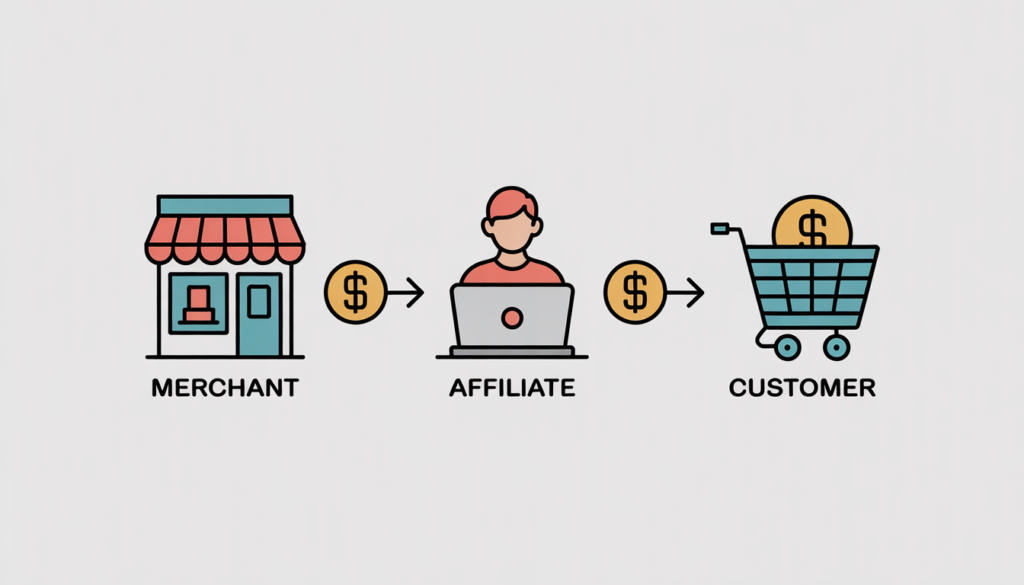
Three parties make this engine run:
- The Merchant — the company selling the product
- The Affiliate — you, the promoter who earns a commission
- The Customer — the person who clicks your link and buys
Some models add a fourth player — the affiliate network (like ClickBank, ShareASale, or CJ Affiliate) — which acts as a middleman handling tracking, payments, and merchant-affiliate relationships. If you’re completely new to this, I recommend checking out our affiliate marketing beginners guide for a deeper breakdown of these fundamentals.
One critical note: the Federal Trade Commission requires affiliates to disclose their financial relationships with merchants. Transparency isn’t optional — it’s federal law. Always disclose. Always.
Your 7-Step Affiliate Marketing Roadmap
I’ve distilled ten years of trial, error, and hard-won revenue into seven actionable steps. Follow them in order. Skip none of them.
Step 1 — Pick a Niche You Won’t Hate in 6 Months
Your niche is the specific topic your content revolves around. Don’t chase whatever pays the highest commission — pick something at the intersection of your genuine interest and proven market demand.
Good niches share three traits:
- Evergreen demand — people always search for solutions in this area
- Monetizable products — price points of $50+ help your math work
- Content sustainability — you can produce content without burning out in month three
Health, personal finance, and technology consistently perform well, but micro-niches like “home espresso machines” or “budget travel for couples” can be goldmines with significantly less competition. IMO, the best niche is one where you’d happily consume the content even if nobody paid you a dime.
Step 2 — Choose Affiliate Programs That Actually Pay
Not all affiliate programs treat their partners equally. Here’s what I evaluate before joining any program:
- Commission rate — percentage or flat fee per sale
- Cookie duration — how long after a click you still earn credit
- Payment reliability — consistent payouts and reasonable thresholds
- Product quality — if the product is garbage, refunds devour your commissions
For beginners learning how affiliate marketing works in practice, I recommend starting with Amazon Associates for physical products and ClickBank or ShareASale for digital products. Amazon commissions range from a measly 1% to 10%, but ClickBank often pays 50–75% on digital products — and that’s where the real margins live.
Step 3 — Build Your Home Base
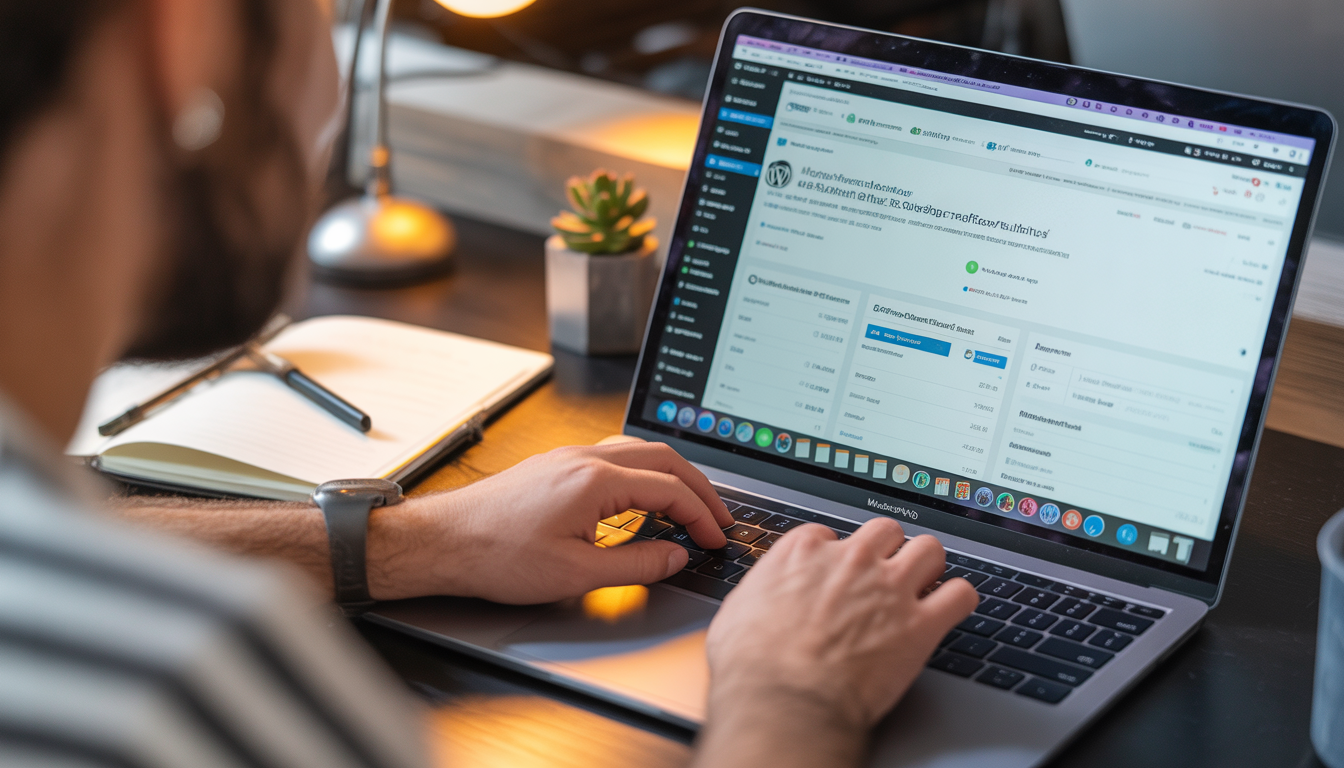
You need a platform you own. Social media accounts are rented land — one algorithm change and your entire traffic source evaporates overnight. A self-hosted WordPress website gives you full control over your destiny.
Your minimum viable setup:
- Domain name (~$12/year)
- Hosting (~$3–10/month)
- WordPress (free)
- A clean, fast theme
Your site doesn’t need to look like a Fortune 500 homepage. It needs to load fast, display properly on mobile, and make your content effortless to read. You can explore our homepage for an example of how we structure things.
🏆 Pro Recommendation: Perpetual Income 365
If you want a done-for-you system that handles the tech setup and email sequences while you learn, Perpetual Income 365 is one of the highest-rated affiliate training products on ClickBank right now. It walks you through building recurring commission streams using a proven squeeze page and email funnel model. I recommend it specifically because it focuses on recurring revenue — which is smarter than chasing one-time payouts.
Check Out Perpetual Income 365 →
Step 4 — Create Content That Ranks and Converts
Content is your 24/7 sales force. The three highest-converting content types for affiliates are:
- Product reviews — “Bluehost Review 2026: Is It Still Worth It?”
- Comparison posts — “Bluehost vs. SiteGround: Which Host Wins?”
- How-to tutorials — “How to Start a WordPress Blog in 30 Minutes”
Every piece of content should target a specific keyword. I use tools like Ahrefs, Ubersuggest, or Google’s free Keyword Planner to find terms with decent search volume and manageable competition. Write for the reader first and search engines second. Google’s helpful content system rewards pages that demonstrate first-hand experience and genuine expertise. If you’ve actually used the product, say so. If you haven’t, be honest about that too 🙂
Step 5 — Drive Targeted Traffic
You can create the best content on the internet, but it’s worthless if nobody sees it. Why spend sixty hours writing a masterpiece that collects dust on page eight of Google? Here are the three traffic channels I’d prioritize as a beginner:
- SEO — free, compounds over time, delivers the highest long-term ROI
- YouTube — the second-largest search engine on earth; video reviews convert extremely well
- Email Marketing — you own the list, and email consistently delivers the highest conversion rates of any channel
Paid ads (Google Ads, Meta Ads) absolutely work, but I don’t recommend them until you’ve validated your profit margins through organic traffic first. Burning cash on ads before you understand your conversion metrics is how beginners go broke fast.
Step 6 — Track, Test, and Optimize
What gets measured gets improved. Set up Google Analytics and Google Search Console from day one. Track which pages generate clicks, which affiliate links convert, and where visitors drop off.
A/B test your calls to action. Sometimes swapping a button color or rewriting a single headline boosts click-through rates by 30%. Small tweaks compound into massive revenue differences over six to twelve months.
Step 7 — Scale What Works, Kill What Doesn’t
Once you find a winning formula — a niche, content type, and traffic source generating consistent commissions — double down hard. Create more content in that topical silo. Build authority. Add email sequences to capture and nurture leads over time.
Don’t diversify too early. I’ve watched beginners spread themselves across five niches and three platforms simultaneously, and they all stall out. Depth beats breadth every single time. For a more detailed breakdown of scaling strategies, bookmark our start here resource page and revisit it as you progress.

3 Myths That Keep Affiliate Marketing Beginners Broke
Myth #1: “You need a massive audience to make money.”
Wrong. I’ve seen micro-sites with 5,000 monthly visitors generate $2,000+ per month because they target high-intent buyer keywords. A hundred people searching “best standing desk under $500” are worth more than ten thousand people searching “what is a desk.” Quality of traffic crushes quantity every time.
Myth #2: “Affiliate marketing is passive income.”
It’s leveraged income, not passive. You front-load the work — content creation, SEO, relationship building — and the returns come later. But you still need to update content, fix broken links, and adapt to algorithm changes. TBH, anyone who calls this “passive” is probably selling you a course about it.
Myth #3: “The market is too saturated.”
Is Google saturated? Are there too many restaurants? Competition validates demand. The affiliates who win aren’t fighting over the same ten head keywords — they’re finding unique angles, long-tail phrases, and content gaps their competitors completely overlooked. That’s your affiliate marketing roadmap to differentiation.
Frequently Asked Questions
How much money can beginners make with affiliate marketing?
Most beginners earn between $0 and $1,000 per month during their first year. Earnings depend on niche selection, traffic volume, content quality, and consistency. Top affiliates earn six or seven figures annually, but that milestone typically requires 2–4 years of relentless, focused effort.
Do I need a website to start affiliate marketing?
You don’t strictly need one, but I strongly recommend building one. You can promote affiliate links through YouTube, social media, or email lists, but a self-hosted website gives you full ownership over your content, organic search traffic, and long-term asset value.
How long does it take to make money with affiliate marketing?
Plan for 3–6 months of consistent work before you see meaningful income. SEO-driven content takes time to rank. Paid traffic can generate faster results, but it requires upfront capital and careful testing to avoid losses.
Is affiliate marketing still profitable in 2026?
Yes. The global affiliate marketing industry continues to grow year over year. As long as companies sell products online, they will pay affiliates to send them qualified, ready-to-buy customers. The model isn’t going anywhere.
My Top Recommended Gear
These are tools and resources I personally use or have thoroughly vetted. They’ll help you start affiliate marketing the right way without wasting money on unnecessary junk.
- Affiliate Marketing Books — A solid book beats a hundred random blog posts for foundational knowledge. I recommend starting with highly-rated titles on the subject.
Browse Top Affiliate Marketing Books on Amazon → - Blue Yeti USB Microphone — If you plan to create YouTube content or podcasts (and you should), this mic delivers studio-quality audio without the studio price tag.
Check Current Price on Amazon → - Budget Laptop for Blogging — You don’t need a $2,000 machine to write blog posts and manage affiliate campaigns. A reliable laptop in the $400–$600 range handles everything you need.
Browse Budget Laptops on Amazon →
Disclaimer: This post contains affiliate links. As an Amazon Associate and ClickBank Partner, I may earn a commission from qualifying purchases at no additional cost to you. I only recommend products I genuinely believe will help you succeed.





4 Comments