
Powerful Micro Niche Ideas Affiliate Marketing Examples: The Copy-and-Paste Playbook
Most micro niche ideas affiliate marketing examples you’ll find online are recycled junk — “sell yoga mats,” “promote a VPN,” “start a coffee blog.” I’ve watched beginners burn six months chasing those, publish forty posts, and earn exactly nothing. Here’s the uncomfortable part: the niche wasn’t too small. It was too big. You were shadow-boxing billion-dollar brands with a two-week-old website, and you never stood a chance.
So let me hand you the opposite. Below are tiny, painfully specific niches with real affiliate angles you can copy this weekend — the kind where a fresh site can actually rank, actually get trusted, and actually get paid. If you’ve felt that low-grade panic of “everyone says pick a niche but every niche looks taken,” this is the exit door. By the end you’ll know exactly how to spot a buyer-packed micro niche, what to promote inside it, and how to turn it into a small, boring, dependable income stream. That’s the whole game.
Table of Contents
- What a Micro Niche Actually Is
- Why Small Beats Broad: The Counterintuitive Math
- 15 Micro Niche Ideas + Real Affiliate Examples
- How I’d Pick a Micro Niche in 20 Minutes
- The Myth That Keeps Beginners Broke
- Advanced Play: The Micro-Cluster Method
- Frequently Asked Questions
- My Top Recommended Gear
What a Micro Niche Actually Is
Quick answer: A micro niche is a narrow slice of a bigger market, built around one specific audience or problem — think “gear for left-handed guitarists” instead of “music.” It has fewer searchers but far less competition, higher buyer intent, and lets a brand-new site rank fast and earn affiliate commissions sooner.
Picture a set of Russian nesting dolls. “Fitness” is the giant outer doll — impossible to lift on your own. Crack it open and you get “home workouts.” Open that and you find “resistance band training.” Open that and you land on “resistance band workouts for people recovering from knee surgery.” That innermost doll? That’s your micro niche. Small, specific, and suddenly you’re the only person in the room actually talking to that reader.
The magic isn’t the smallness for its own sake. It’s relevance density. When every article, every product, and every word on your site points at one specific person, that person feels understood — and understood readers click affiliate links. Google notices too, because your entire site reads as a coherent authority on one topic instead of a scattered hobby blog. If you’re still deciding where to plant your flag, my breakdown of beginner-friendly affiliate niches is a good companion to this piece.
Why Small Beats Broad: The Counterintuitive Math
Doesn’t a bigger audience mean bigger money? It feels obvious. It’s also mostly wrong, and here’s the tension I want you to sit with for a second: the marketers earning the most predictable affiliate income are frequently the ones talking to the fewest people. Hold that thought — I’ll resolve it in a moment.
First, the size of the prize. The global affiliate marketing industry sat around $18.5 billion in 2025 and is projected to push past $20 billion in 2026, according to industry data compiled by Publift. There is plenty of money moving. The question was never “is there room” — it’s “can a small site grab any of it.” And that’s where the math flips in your favor.
Here’s the resolution to that tension: reach is a vanity metric, trust is the currency. Analysis of affiliate creators found that on platforms like TikTok, nano and micro accounts posted engagement rates several times higher than mega-accounts with over half a million followers — and small creators in the 50k–100k range often converted clicks to sales at the highest rates. The same principle governs a blog. A page that speaks to one specific buyer out-earns a page that waves at everyone. Broad content gets skimmed; specific content gets acted on.

There’s a second, quieter advantage: your content stops sounding like a robot wrote it. When you write about something you actually understand, the jargon lands right and the recommendations feel earned. That “she’s clearly done this” signal is worth more than any keyword trick — and it’s, ngl, the single hardest thing for lazy competitors to fake.
15 Micro Niche Ideas + Real Affiliate Examples
Enough theory. Here are fifteen micro niches you can copy, each with the buyer it serves and the kind of products you’d promote. Notice the pattern: every one takes a broad category and bolts on a specific person or situation.
What are some easy micro niches for beginners?
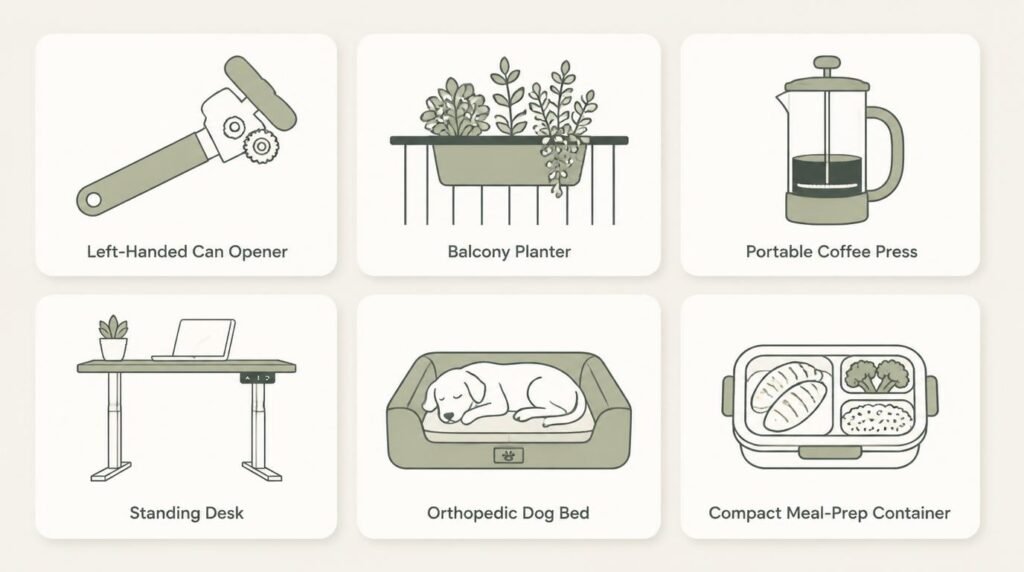
- Left-handed kitchen tools — the roughly 10% of people who fight right-handed gadgets daily. Promote can openers, scissors, and knives via Amazon Associates.
- Small-apartment container gardening — renters with a balcony and no yard. Grow lights, self-watering planters, vertical shelves.
- Home coffee for camper vans — the van-life crowd who still need a real espresso. Portable grinders, hand presses, 12V kettles.
- Standing-desk setups for tall people — the “why does everything stop at 48 inches” market. Desk risers, monitor arms, ergonomic chairs.
- Gear for left-handed guitarists — an underserved music sub-audience. Lefty guitars, straps, capos, instructional courses.
Which micro niches have strong buyer intent?
- Dog gear for senior large-breed dogs — worried owners spend freely. Orthopedic beds, mobility harnesses, joint supplements.
- Meal prep for shift workers — nurses and night crews with weird schedules. Insulated containers, compact cookers, planning apps.
- Home office setups for renters (no drilling) — damage-deposit anxiety is a real motivator. Freestanding shelving, clamp lights, cable kits.
- Travel gear for tall backpackers — specialty sizing means specialty products. Long-torso packs, extended sleeping bags, tall trekking poles.
- Sensory-friendly toys for autistic toddlers — a caring, research-heavy buyer audience that rewards genuine expertise.
What about seasonal and recurring-income micro niches?
- Cold-weather gear for people who work outdoors — landscapers, dockworkers, dog walkers. Heated jackets, insulated boots, hand warmers.
- Beginner cold-plunge and recovery setups — the wellness crowd that buys once and upgrades often.
- Budget home-studio kits for podcasters — recurring software subscriptions mean recurring commissions.
- Allergy-friendly baking supplies — gluten-free and nut-free households buy the same specialty items on repeat.
- Small-space holiday decor for apartments — a reliable Q4 spike. If timing is your edge, my guide to seasonal affiliate niche ideas shows how to stack these into a year-round calendar.
See the formula? Broad category + specific person + specific constraint. “Coffee” is a war zone. “Portable espresso for van-lifers” is a quiet street where you can be the mayor. Swap in an audience you understand and you’ve got a niche nobody’s fighting you for. Still torn? Weigh your options against the criteria in my piece on the best niche for affiliate marketing before you commit.
How I’d Pick a Micro Niche in 20 Minutes
Want to skip the three weeks of agonizing I see beginners put themselves through? Here’s the exact sequence I run. It takes about twenty minutes and it kills bad ideas before they cost you months.
Step 1 — Start with an obsession, not a keyword. List the things you already know too much about: your job, your hobbies, the problems you’ve personally solved. Deep familiarity is the moat. It’s what makes your writing sound like a human who’s been there instead of a summary of ten other articles.
Step 2 — Shrink it until it almost hurts. Take your topic and add an audience plus a constraint. “Running” becomes “running gear for people with flat feet.” Keep shrinking until you feel a flicker of “wait, is this too small?” That flicker usually means you’ve hit the sweet spot.
Step 3 — Check for buyers and products. Search your topic with buyer words — “best,” “vs,” “review.” If those searches exist and at least a handful of affiliate programs or Amazon products serve the niche, you have a business. No products, no paycheck.
Expert Commentary: Swap in a full niche-selection walkthrough from a credible SEO/affiliate channel (Ahrefs and Income School both have evergreen ones). Watch specifically for the part where they demonstrate live keyword checks — that’s the ten minutes that saves beginners from picking a niche with zero buyer intent.
Step 4 — Sanity-check competition. Search your main keyword and look at who ranks. If small, thin sites are on page one, you can win. If every result is a Fortune 500 brand, shrink the niche further and search again.
Step 5 — Map twenty articles. Write down twenty question-style titles a reader would type. If they pour out easily, the niche has room to grow. If you’re clawing for ideas at number eight, it’s too tight — widen it one notch. For the technical side of ranking those articles, Google’s own Search Central starter guide is the only “SEO advice” source I fully trust, because it comes straight from the search engine you’re trying to please.
The Myth That Keeps Beginners Broke
Here’s the lie I want to put a stake through: “You need a huge audience before affiliate marketing works.” It’s repeated everywhere, and it quietly convinces thousands of people to quit at month three because their traffic is “too small to bother.”
The data says otherwise, hard. Industry surveys consistently find that the overwhelming majority of affiliates promoting through social channels have fewer than 10,000 followers — and plenty of them out-earn accounts ten times their size. Why? Because a tiny, trusting audience that believes your recommendations is worth more than a huge, indifferent one that scrolls past. TBH, chasing follower counts is often just procrastination wearing a productivity costume. The real work is trust, and trust scales with specificity, not size.
One more myth while I’m swinging: the belief that you must disclose “as little as possible” to seem professional. Wrong, and legally risky. The U.S. Federal Trade Commission requires clear, conspicuous affiliate disclosures placed right where the recommendation appears — their Disclosures 101 guidance spells it out plainly. Readers actually trust transparent sites more, so honest disclosure is both compliant and a conversion booster. Everybody wins. 🙂
Advanced Play: The Micro-Cluster Method
Ready to go a level deeper than any “top 10 niches” listicle will take you? This is the tactic that turns a small niche site from a hobby into an asset: micro-clustering.
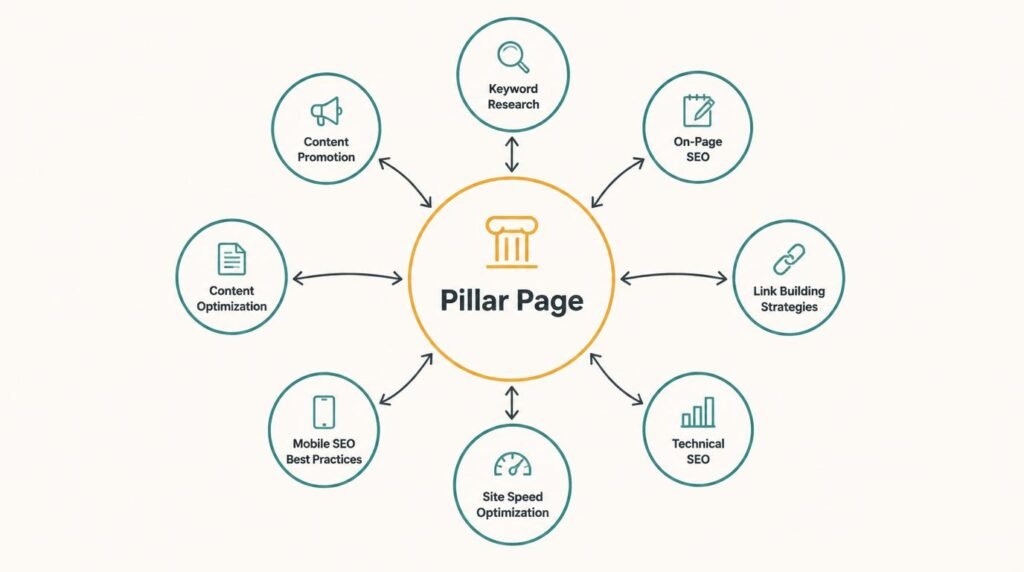
Instead of publishing random posts, you build tight “clusters” — one central pillar page targeting your main buyer keyword (say, “best resistance bands for knee rehab”), surrounded by six to ten supporting articles answering the exact follow-up questions that reader would have next: how to use them safely, which exercises to avoid, band tension by injury stage, and so on. Every supporting post links up to the pillar, and the pillar links back down. To search engines, this reads as unmistakable topical authority. To readers, it reads as “this site has thought of everything I need.”
The compounding effect is the part people miss. Each cluster you finish makes the next one rank faster, because your whole domain accumulates trust in one subject area. That’s why a focused ten-cluster micro-niche site routinely outranks a scattered hundred-post generalist blog. Depth signals expertise, and expertise is exactly what search engines reward. The channel keeps growing, too — the micro and nano segment is one of its fastest-growing corners, per recent industry size reporting. A well-clustered micro niche is how a beginner claims a piece of it.
Frequently Asked Questions
What is a micro niche in affiliate marketing?
A micro niche is a narrowly defined slice of a larger market, built around a specific audience or problem — like “left-handed guitar gear” instead of “music.” It has fewer searchers but far less competition, higher buyer intent, and lets a small site rank fast and earn commissions quickly.
Are micro niches profitable for beginners?
Yes. Micro niches are often more profitable for beginners because you compete against small sites rather than billion-dollar brands. You need less traffic to earn, your content reads as genuinely expert, and buyers arrive ready to purchase — which lifts conversion rates well above broad, generic niches.
How many products should a micro niche affiliate site promote?
Focus on a tight core of 5 to 15 products you can genuinely recommend, then expand as the site grows. Depth beats breadth: reviewing a handful of items thoroughly builds more trust and converts better than shallow lists of fifty products you have never used.
Do I need a big following to make money with a micro niche?
No. Most successful affiliates have small audiences. Industry data shows the vast majority of social affiliates have under 10,000 followers, and small creators frequently out-convert huge accounts because their audience trusts them. A focused blog ranking in search can earn without any social following at all.
How long does it take to earn from a micro niche affiliate site?
Expect three to nine months of consistent publishing before meaningful commissions arrive. New sites face a sandbox period while Google builds trust. Micro niches shorten this window because low competition lets your pages rank sooner than they would in a crowded, high-authority market.
My Top Recommended Gear
- A reliable keyword research tool — I recommend starting with one solid research suite so you can validate buyer intent before you write a single word. It pays for itself the first time it stops you from building on a dead niche. See options on Amazon.
- A comfortable content-creation headset — if you plan to add video or voice content to your clusters, clean audio is the cheapest credibility upgrade you can buy. Check current picks on Amazon.
- A hosting-and-productivity starter setup — a fast site and a distraction-free workspace matter more than any plugin. I recommend a quality laptop stand and blue-light glasses for the long publishing marathons ahead. Browse on Amazon.
Disclaimer: This post contains affiliate links. As an Amazon Associate, I may earn a commission from qualifying purchases at no additional cost to you. I only recommend products I’ve personally tested or rigorously researched.