
How AI Content Tools Are Changing (and Threatening) Affiliate Sites
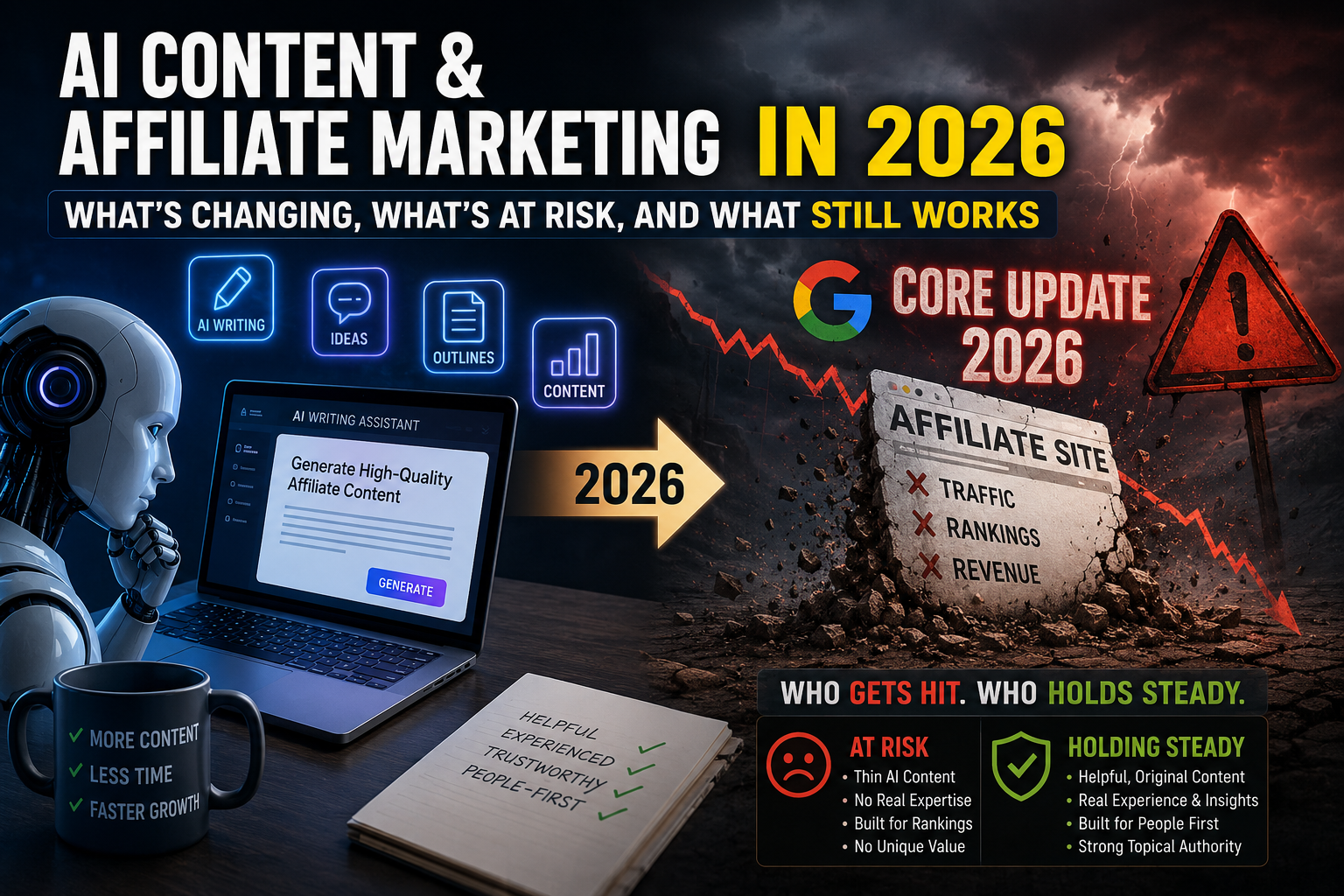
AI content tools promised affiliate marketers a shortcut: more articles, less time, faster growth. In 2026, that promise is colliding with reality. Google’s core updates this year have hit affiliate sites disproportionately hard, and a lot of the damage traces back to how those sites used AI in the first place.
This isn’t an argument to abandon AI writing tools. It’s a look at what’s actually changing for AI content and affiliate marketing in 2026, where the real risk sits, who’s getting hurt and who’s holding steady, and how to use these tools without putting your site in the blast radius of the next update.
Why AI Content Became an Affiliate Marketing Habit
The appeal was obvious. Affiliate sites live and die by content volume — more comparison posts, more “best of” roundups, more long-tail keyword coverage. AI tools made it possible to produce that volume at a fraction of the time cost, and a lot of publishers leaned in hard, sometimes publishing dozens of AI-drafted posts a week.
For a while, this worked. Search engines struggled to reliably distinguish AI-assisted writing from human writing, and thin affiliate content had already been a fixture of search results for years. AI just made it cheaper to produce more of it, faster than ever, which pushed a lot of niches into serious oversaturation.
It also changed the economics of starting an affiliate site. Where a solo publisher used to need months to build out a hundred-post site, AI tools compressed that timeline dramatically. That drew in a wave of new entrants chasing the same keywords with similar-looking content, which made differentiation harder even before the algorithm shifts hit.
What Changed With the 2026 Core Updates
Google’s 2026 core updates shifted the calculus. Many affiliate publishers reported traffic drops that lined up closely with sections of their site built on high-volume, low-effort AI content — thin comparison pages, reworded product descriptions, and roundup posts with no real testing or firsthand use behind them.
The pattern many site owners have described is not that AI content is banned or automatically penalized. It’s that content lacking genuine expertise, original insight, or evidence of firsthand experience is more exposed than it used to be, regardless of how it was produced — a distinction Google itself has spelled out in its guidance on AI-generated content. AI-generated content just happens to skew heavily toward that profile when it’s used as a volume shortcut rather than a drafting aid.
What’s notable is how uneven the impact has been. Sites that used AI tools sparingly, or that layered real editorial work on top of AI drafts, generally weathered the updates better than sites that published AI output close to as-is. That gap is the clearest signal yet about where the actual risk sits.
The Real Threat Isn’t AI Writing — It’s Undifferentiated Content
It’s worth being precise about what’s actually at risk, and Google’s own people-first content guidance is a useful baseline for that. The threat to affiliate sites isn’t “using AI” in some blanket sense. It’s publishing content that reads like every other AI-assisted affiliate post on the same topic: same structure, same generic pros-and-cons list, same absence of any sign a real person used the product.
Search engines and readers are both getting better at spotting that pattern. When dozens of sites publish near-identical AI-drafted reviews of the same product, none of them stand out, and search systems increasingly have little reason to rank any particular one of them highly. Readers notice too — generic review pages tend to get abandoned faster, which shows up in engagement signals even before rankings move.
If you want a deeper read on how to tell whether your traffic gains are the healthy kind or a warning sign, our guide on how to identify whether your increased traffic is spam walks through the signals worth watching.
How Affiliates Are Adjusting Their Use of AI Tools in 2026
The publishers holding up better this year tend to use AI differently than the ones who got hit hardest. A few patterns show up repeatedly:
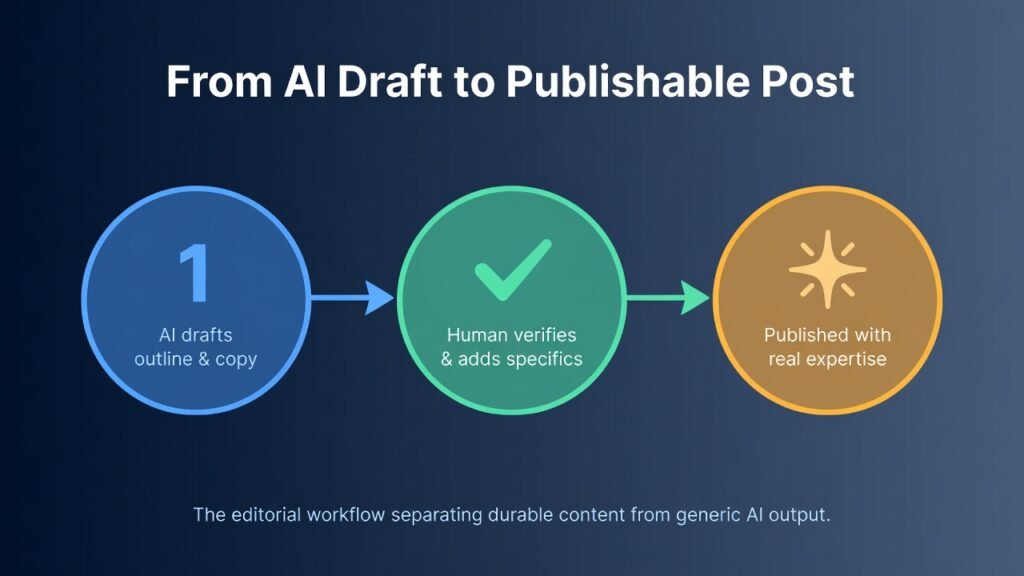
- AI drafts, humans verify. AI writes a first pass; a person who actually knows the product or niche fact-checks it, adds specifics, and cuts anything generic.
- Firsthand use is non-negotiable for reviews. If nobody on the team has touched the product, the post doesn’t go up — or it’s framed honestly as a research-based roundup rather than a review.
- Fewer, better pages instead of more, thinner ones. Some sites are consolidating overlapping AI-drafted posts into single, stronger resources rather than keeping every thin variant live.
- AI for structure and speed, not for opinions. Outlines, first drafts, and formatting are reasonable uses. Claims about performance, quality, or value are left to someone who actually has an opinion worth trusting.
- Slower publishing cadence, higher bar per post. A number of publishers have deliberately cut their weekly output to spend more time per article, betting that fewer strong pages will outperform a large volume of average ones.
What This Means for Different Types of Affiliate Content
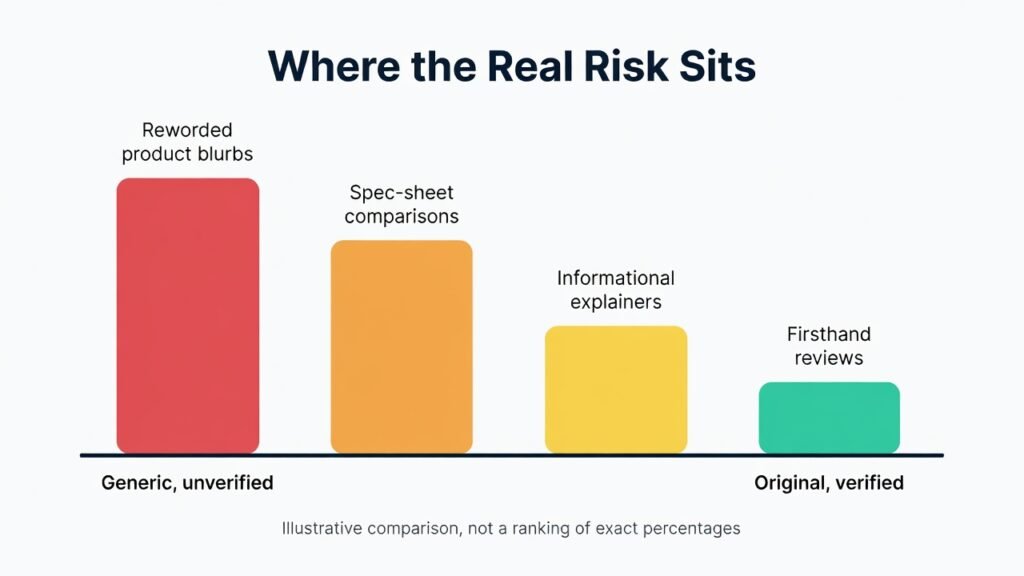
Not every content type carries the same risk. Product reviews and “best of” roundups sit at the highest end of scrutiny, since they make direct claims about quality and performance that readers and search systems both expect to be backed by real experience. Purely informational content — explainers, how-to guides, glossary-style pages — has more room for AI assistance, since the value is in clarity and accuracy rather than firsthand testing.
Comparison pages sit somewhere in between. A comparison built purely from spec sheets and manufacturer copy reads as generic no matter how it’s produced. One that includes specific tradeoffs, use-case recommendations, or details that only come from actually using the products tends to hold up better, whether AI helped draft it or not.
A Practical Filter Before You Publish AI-Assisted Content
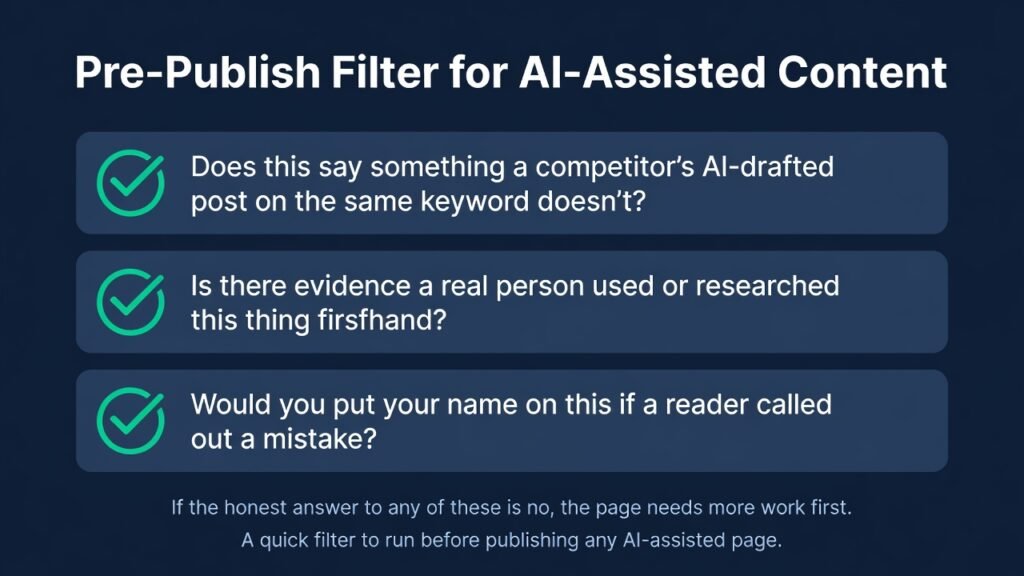
Before publishing anything that started as an AI draft, it helps to ask a short set of questions: Does this page say something a competitor’s AI-drafted post on the same keyword doesn’t say? Is there any evidence — a photo, a specific detail, a genuine opinion — that a person actually used or researched this thing? Would you be comfortable putting your name on this if a reader called out a mistake?
If the honest answer to any of those is no, the page probably needs more work before it goes live, regardless of how it was drafted. It’s a slower way to publish than pure AI output, but it’s also a filter that tends to protect a site from exactly the kind of content that’s been most exposed in 2026’s updates.
Where This Is Likely Heading
It’s reasonable to expect the gap between “content that happens to be AI-assisted” and “content that reads as generic and interchangeable” to keep widening. Many sites have seen that the ones recovering fastest from 2026’s updates are treating AI as a tool inside an editorial process, not as a replacement for one. That’s a trend worth planning around rather than fighting, and it points toward a simple long-term bet: build fewer pages that are harder to copy, rather than more pages that look like everyone else’s.
FAQ
Does Google penalize AI-generated content on affiliate sites?
Google has stated directly that its systems focus on content quality rather than how content was produced. In practice, though, AI content that lacks originality, expertise, or firsthand experience is more likely to underperform, especially on affiliate sites competing on commercial keywords.
Is it safe to use AI tools for affiliate content at all?
Yes, when AI handles drafting, outlining, or formatting and a knowledgeable person adds real specifics, verifies claims, and edits for originality before publishing.
Should I remove old AI-generated posts from my affiliate site?
Not automatically. Start by identifying which pages are thin, generic, or duplicative, and prioritize rewriting or consolidating those rather than deleting everything wholesale.
How can I tell if my AI content is hurting my rankings?
Watch for traffic drops concentrated on specific content types (like reviews or roundups) after a core update, and compare engagement metrics between AI-assisted and fully human-written pages on your site.
AI content tools aren’t going away, and they don’t have to be a liability. The sites that treat them as one part of a real editorial process — not a replacement for expertise — are the ones positioned to hold up through whatever comes next.