Re-Engagement Email Sequence for Affiliate Lists: How to Save a Dying List
A re-engagement email sequence for your affiliate list is the fastest way to stop a dying list from quietly wrecking your deliverability. If it’s been months since anyone clicked a link, your list isn’t just dead weight — it’s actively hurting the emails going to people who still want to hear from you. Here’s how to win back who you can and clean up the rest.
Table of Contents
- Why a Re-Engagement Email Sequence Matters More Than Ever
- How to Spot a Dying Affiliate Email List
- The Re-Engagement Email Sequence, Step by Step
- List Hygiene Habits That Prevent the Next Die-Off
- What to Do With Subscribers Who Don’t Come Back
- Common Mistakes That Kill Re-Engagement Email Sequences
- Tracking Whether Your Re-Engagement Email Sequence Worked
- FAQ: Re-Engagement Email Sequences for Affiliate Lists
Why a Re-Engagement Email Sequence Matters More Than Ever
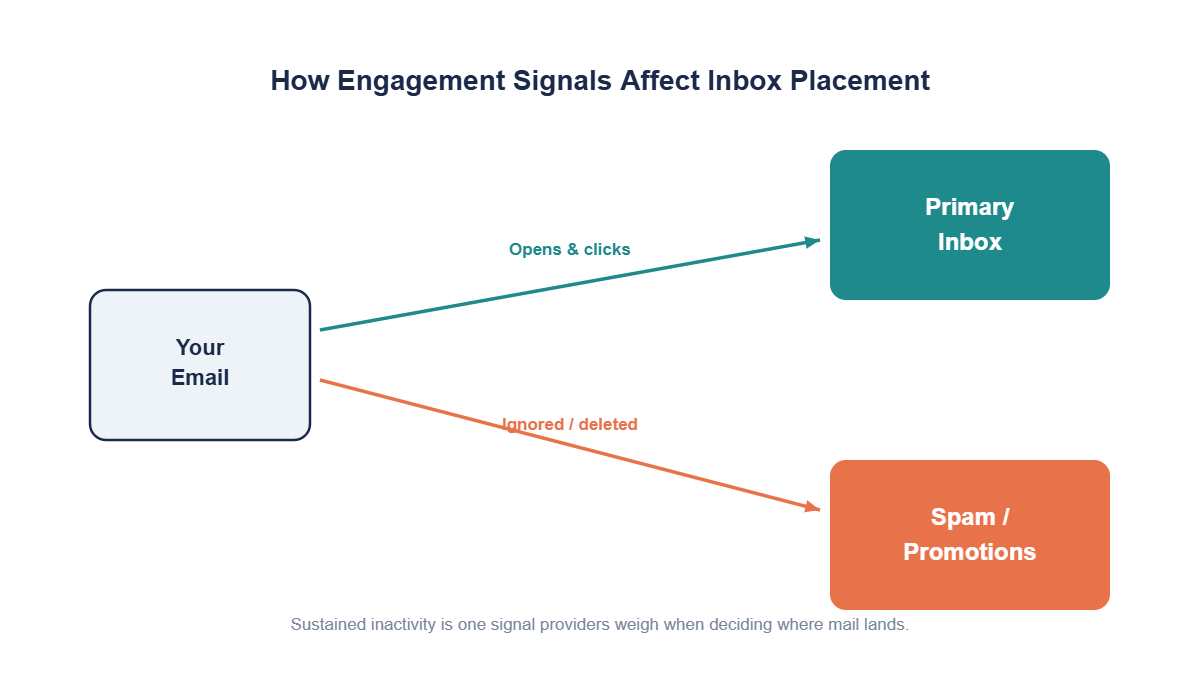
Inbox providers don’t just check whether your emails are authenticated anymore. They watch how people actually behave when your mail lands — whether they open it, click something, or delete it without a glance. If a big chunk of your list has gone quiet, that inaction reads as a signal that your mail isn’t wanted, and it can drag down deliverability for your whole list, including the subscribers who are still engaged. Google spells this out directly in its own bulk sender guidelines, which tie inbox placement to engagement and spam-complaint rates, not just authentication.
This is why list hygiene and win-back sequences aren’t optional housekeeping anymore — they’re core to keeping your affiliate emails out of spam. Many senders have found that trimming a list down and focusing on engaged subscribers actually increases revenue, even though the subscriber count drops.
How to Spot a Dying Affiliate Email List
Before you build a re-engagement sequence, figure out how bad the problem actually is. Pull your email platform’s engagement report and look at:
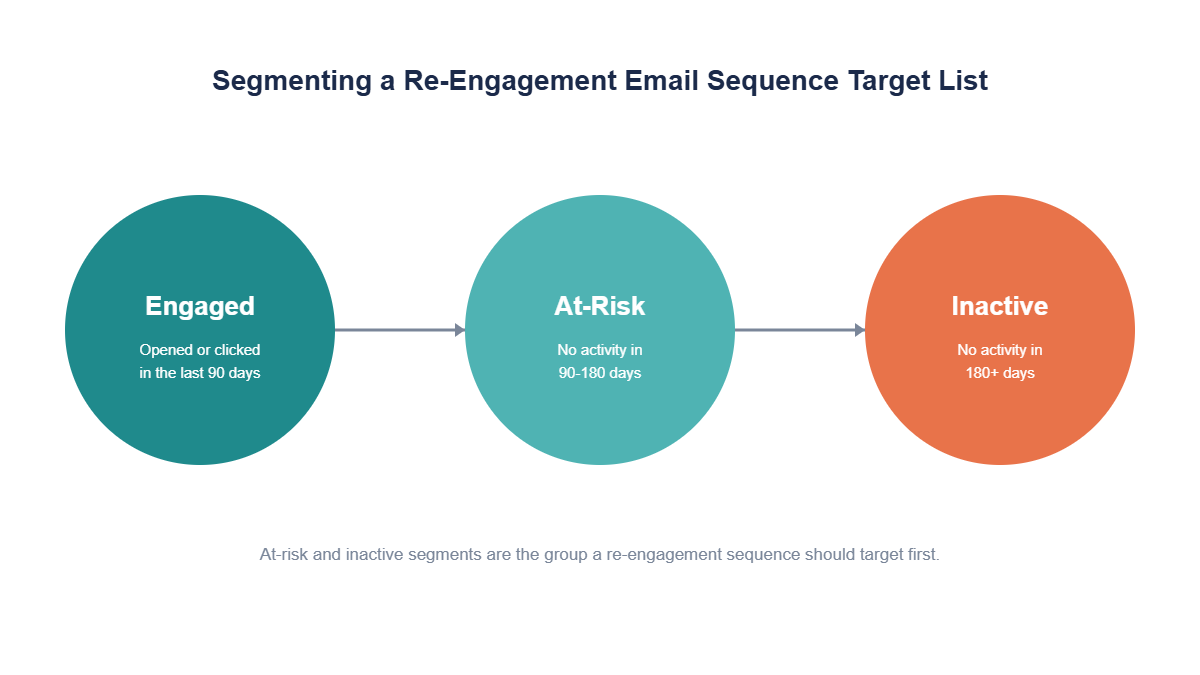
- Subscribers who haven’t opened anything in 90, 180, or 365 days
- Your overall open rate trend over the last six months (a slow decline is a warning sign)
- Your spam complaint rate and unsubscribe rate per send
- Bounce rates, especially soft bounces that keep repeating
If a meaningful share of your list falls into the “no activity in 6+ months” bucket, that’s your re-engagement target group. Don’t delete them yet — give them one real shot at coming back first.
The Re-Engagement Email Sequence, Step by Step
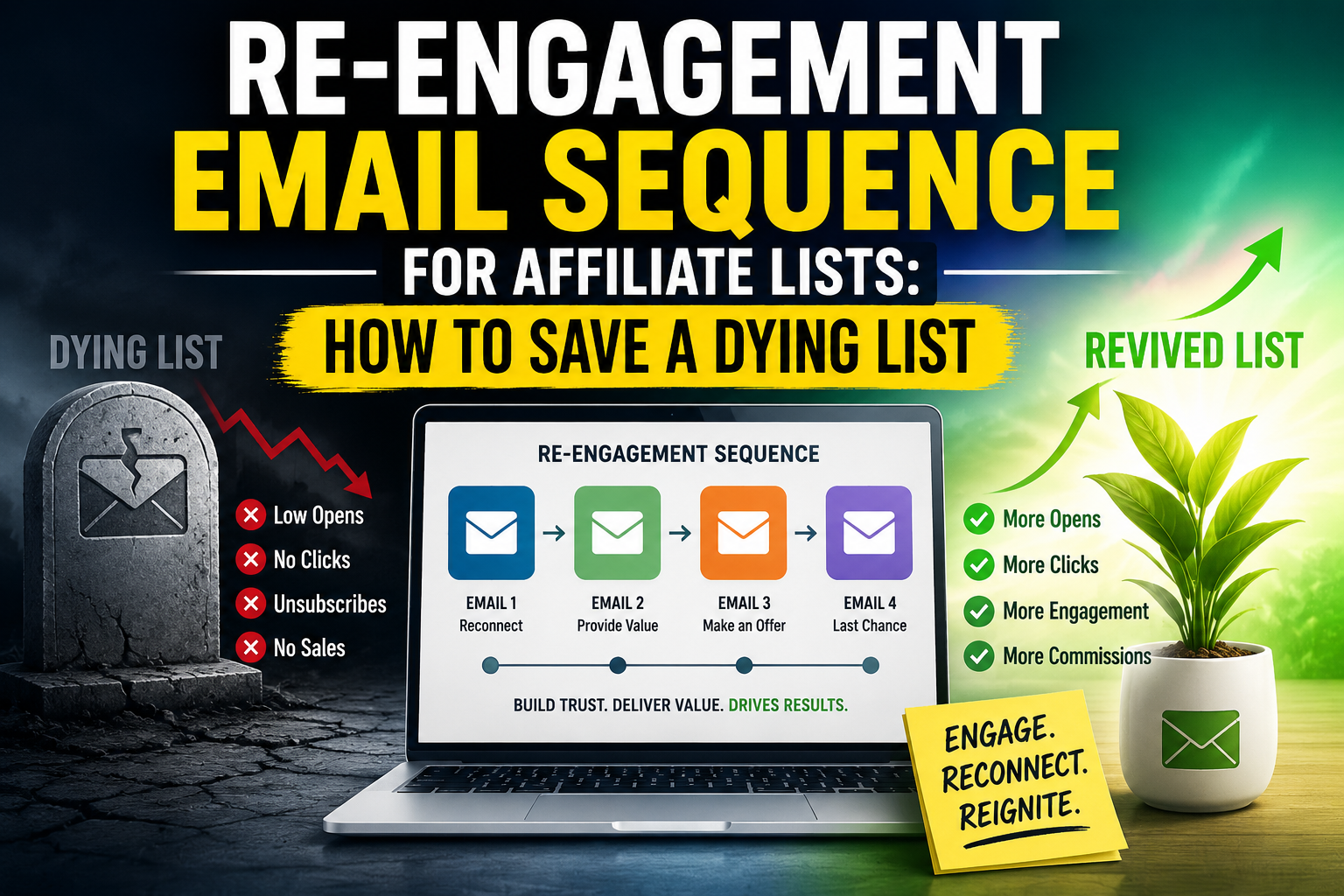
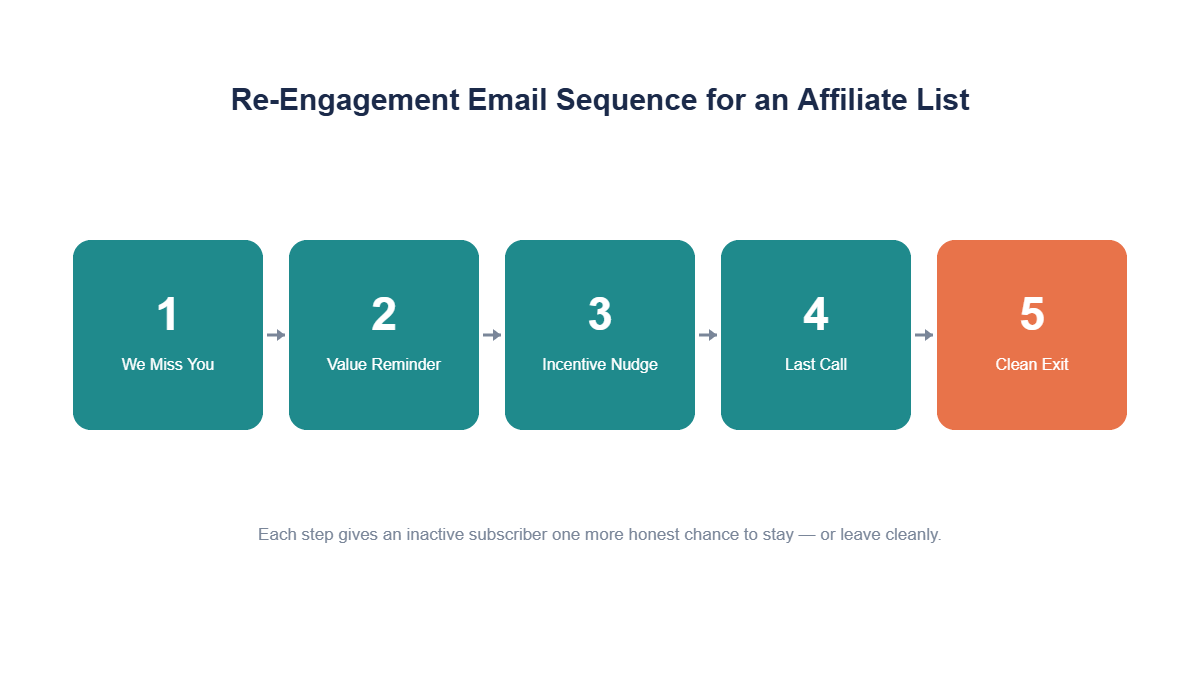
A re-engagement email sequence for an affiliate list doesn’t need to be complicated. It needs to be honest, short, and give the subscriber an easy way to either recommit or leave cleanly.
Step 1: The “We Miss You” Email
Keep this one simple and warm, not desperate. Remind them why they signed up, mention what they’ve been missing, and ask a direct question: are they still interested? Avoid guilt-tripping language — it doesn’t win people back, it just annoys the ones still reading.
Step 2: The Value Reminder
A few days later, send your single best piece of content or most useful resource — something that reminds them why they subscribed in the first place. If you sell affiliate recommendations, this is a good place to highlight a genuinely useful guide rather than a hard pitch.
Step 3: The Incentive Nudge
Offer something small to re-engage: an exclusive checklist, an updated resource, or early access to new content. The goal isn’t to bribe people into opening — it’s to give genuinely hesitant subscribers one more reason to stick around.
Step 4: The Last Call
Be direct: tell them you’re about to clean up your list and they’ll be removed if they don’t take action. Include a clear one-click option to stay subscribed, and make the unsubscribe link just as visible. This isn’t just good practice — one-click unsubscribe and clear opt-out mechanics are baked into the CAN-SPAM Act’s compliance requirements, so it should already be built into every commercial email you send.
Step 5: The Clean Exit
Anyone who doesn’t open, click, or confirm interest after the sequence gets removed or suppressed from your regular sends. This step is the one people skip, and it’s the one that actually protects your deliverability. Holding onto unengaged addresses “just in case” does more harm than good.
List Hygiene Habits That Prevent the Next Die-Off
A re-engagement sequence is a one-time fix. List hygiene is what keeps you from needing another one in six months. Industry groups like M3AAWG’s sender best practices treat ongoing list hygiene as a baseline requirement, not an optional extra. A few habits worth building in:
- Segment by engagement level and adjust send frequency for less-active subscribers instead of blasting everyone the same way
- Set a standing rule — like 120 or 180 days of no activity — that automatically triggers a re-engagement flow
- Watch your welcome sequence closely, since new subscriber engagement in the first few emails often predicts long-term engagement
- Regularly review your complaint rate per send, not just your overall average, since one bad send can quietly hurt your reputation for weeks
If your welcome flow isn’t pulling its weight, it’s worth revisiting how you’re introducing new subscribers to your list — a strong welcome email sequence sets the tone for engagement from day one and reduces how many people go quiet later. It also helps to check the front door itself: if your lead magnet delivery email flow is clunky or slow, subscribers can go cold before they ever see a second email from you.
What to Do With Subscribers Who Don’t Come Back
Not everyone responds to a re-engagement sequence, and that’s fine. Move unresponsive subscribers to a suppressed or inactive list rather than deleting their data outright, in case you want to run a one-off win-back campaign later or need the records for compliance reasons. Just make sure they’re excluded from your regular sends going forward. A smaller, more engaged list will almost always outperform a larger, unresponsive one when it comes to actual clicks and affiliate revenue.
It also helps to look at why people went quiet in the first place before you write them off. Sometimes it’s simple — they signed up for a lead magnet, got what they wanted, and never had a reason to stick around. Other times it’s a mismatch between what you promised at signup and what you’ve actually been sending. If you notice a pattern, like a big drop-off after a specific type of email or a particular point in your funnel, that’s worth fixing before you run the next re-engagement push, or you’ll just be back here again in a few months.
Common Mistakes That Kill Re-Engagement Email Sequences
Even a well-intentioned win-back sequence can backfire if it’s built the wrong way. A few mistakes that show up often on affiliate lists:
- Sending it to your whole list, not just the inactive segment. Engaged subscribers don’t need to be asked if they still want your emails — doing so anyway just adds noise and risks annoying your best readers.
- Making the sequence too long or too apologetic. Groveling for attention rarely works. A clear, confident tone that respects the subscriber’s time performs better than a sequence that reads like it’s begging.
- Skipping the actual cleanup step. Running the sequence and then never following through on removing non-responders defeats the purpose. The whole point is to protect your sender reputation, and that only happens if you follow through.
- Not testing subject lines on the first email. Your “we miss you” email is competing with everything else already ignoring your list, so it’s worth treating the subject line with the same care as a cold outreach message.
- Forgetting to check deliverability after the cleanup. Give it a few sends before assuming the problem is fully solved — reputation recovery with inbox providers can take a little time even after you’ve cleaned house.
Tracking Whether Your Re-Engagement Email Sequence Worked
Once the sequence finishes and you’ve suppressed the non-responders, keep an eye on your metrics for the next several sends. Open rates and click rates should trend upward simply because you’ve removed the dead weight, but the more meaningful signal is whether your emails start landing in the primary inbox more consistently instead of promotions or spam folders. If you have access to inbox placement or spam-rate reporting through your email provider, that’s a better long-term indicator than open rate alone, since open rate tracking has become less reliable across the board.
FAQ: Re-Engagement Email Sequences for Affiliate Lists
How long should a re-engagement email sequence be?
Four to five emails is the sweet spot for a re-engagement email sequence spread over one to two weeks. Longer than that and you risk annoying the very people you’re trying to win back.
Should I remove inactive subscribers or just stop emailing them?
Suppress them from regular sends rather than deleting them immediately. This protects your deliverability without permanently losing the data, and you can always re-attempt a win-back later.
Will a re-engagement sequence hurt my open rate in the short term?
It might dip slightly during the sequence itself, but your overall open and click rates typically improve afterward once unengaged addresses are removed from your regular sends.
How often should I run a re-engagement sequence?
Many senders build this into an ongoing rule rather than a one-time event — for example, automatically triggering it for anyone inactive for 120 to 180 days, so list health stays consistent instead of needing a big cleanup once a year.
A dying list is fixable, but only if you’re willing to actually remove the people who aren’t listening anymore. Run the sequence, be honest about who’s still engaged, and treat list hygiene as an ongoing habit instead of a once-a-year scramble. If you want the fuller picture of how email fits into your funnel, see our email marketing for affiliate marketing guide.