
7 Brutal Truths About Old Blog Posts Killing Your 2026 Rankings
Disclosure: Some links on this page may be affiliate links. If you buy through them, I may earn a commission at no extra cost to you. I only recommend what I’d use myself. Read the full disclosure.
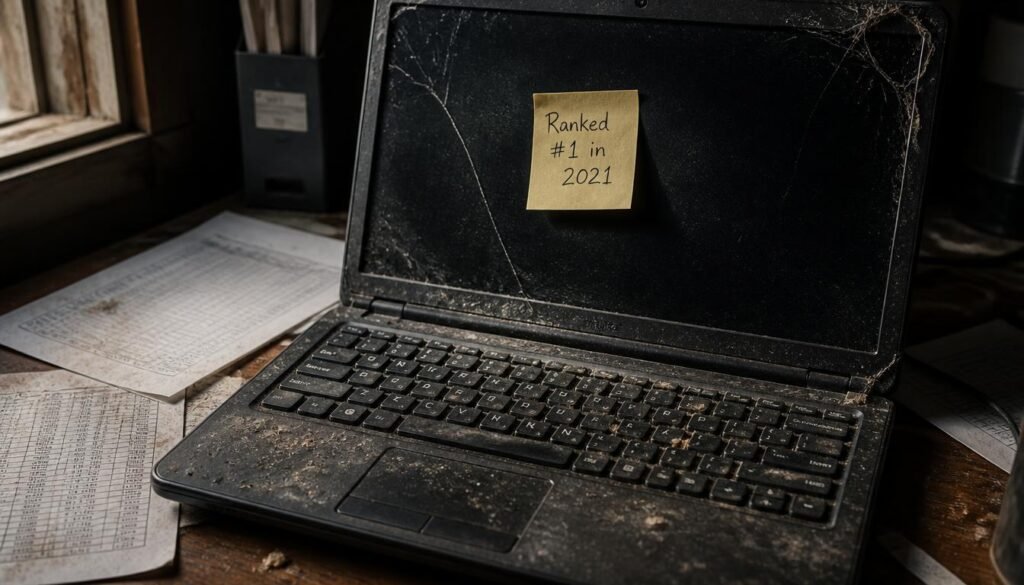
You have a graveyard on your website. It is not visible. But it is there.
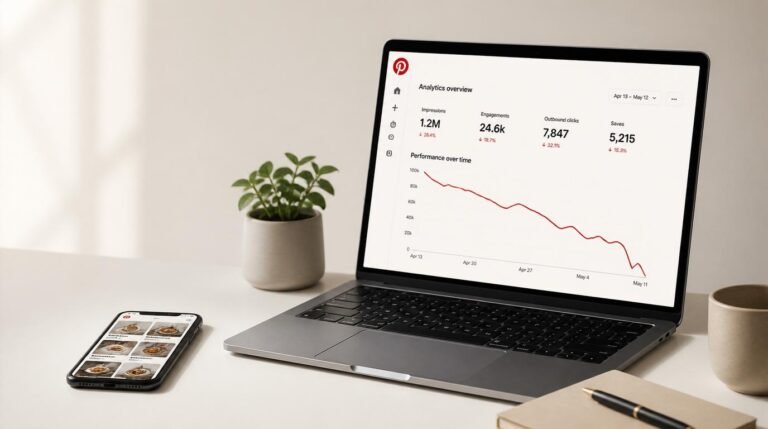
Hundreds of posts. Some are five years old. Some are eight. They used to rank. They used to earn clicks. Now they just sit there. Silent. Buried under a pile of fresher, flashier competitors.
You have two choices. You can keep writing new posts. You can feed the beast. More words. More keywords. More hope. Or you can dig up the dead and make them walk again.
Here is the hard truth nobody wants to say out loud. In 2026, the smartest affiliate marketers are not writing more. They are refreshing more. Because the algorithm changed. And if you do not change with it, you lose.
This is not theory. This is math.
Table of Contents
Old Blog Posts Are the Silent Ranking Killer You Already Own
You have posts losing traffic right now. Not because the content is bad. But because the world moved on.
Prices changed. Products got discontinued. Statistics went stale. Screenshots show an old user interface. A competitor updated their post with a new section. Google noticed. You did not.
Google uses a thing called “query deserves freshness.” It means some searches need current information. If someone searches “best budget laptops 2026,” Google does not want a post from 2023. It wants a post that breathes. That shows new dates. New data. New recommendations.
Here is the trap. You write a new post about budget laptops. It takes 20 hours. You wait 6 months for rankings. Meanwhile, an old post on your site about budget laptops from 2022 sits at page 4. It has backlinks. It has authority. It has age.
You ignore it.
That is the mistake. You already paid for that real estate. You earned those backlinks. You built that trust. And now you let it rot while you start from zero again.
If you are unsure where to start, our affiliate content strategy guide walks you through the exact process of auditing what you already own before creating anything new.
Here’s a video that explain exactly why old content decays and how to fix it.
How to update old blog posts for SEO
What Does a Content Refresh Actually Do?
Critics say refreshing is just changing a date and hoping for the best. That is lazy. That is not a refresh. That is a lie.
A real content refresh is a structural overhaul. You treat the old post like a house with good bones. You keep the foundation. You rip out the kitchen.
Here is what a real content refresh includes.
Rewrite the Introduction to Match Current Search Intent
The old hook is dead. People search differently now. Write a new one that matches what readers actually want in 2026.
Update Every Factual Claim in Old Blog Posts
Prices. Dates. Specs. Names. If a statistic is from 2021, replace it with a 2025 statistic or delete it. Old data is a trust killer.
Add New Sections Based on “People Also Ask” Data
Google literally tells you what people want. Steal those questions. Answer them better than anyone else.
Remove Fluff and Cut Dead Weight
Cut paragraphs that do not answer the query. Short posts beat long rambling posts in 2026. Every sentence must earn its place.
Improve Internal Links to Money Pages
Point the refreshed post to your newer money pages. Point newer posts back to it. This builds topical authority. For a deep dive into structuring your site for maximum authority, see our topical authority explained guide.
Compress Images and Update Alt Text
Old screenshots with old dates scream outdated. Fresh visuals signal relevance.
One content refresh can take four hours. A new post can take twenty. The refreshed post has existing domain authority. The new post has none.
That is not even a contest.
Does Refreshing Old Content Actually Improve Rankings?
Here is where the skeptics squirm.
A well-known SEO study from Backlinko found that updating old content can boost organic traffic by over 100%. Sometimes more. One case study showed a 260% traffic increase just from adding new examples and removing dead links.
Think about that. You do not need a viral hit. You need a mechanical improvement.
Google’s own documentation talks about “content freshness” as a ranking factor for certain queries. This is not a secret. It is public.
But the biggest proof is boring. It is in your Search Console right now.
Go look at a post that has lost impressions over 12 months. Look at the queries it still ranks for. Then look at positions 11 to 20. Those are queries where you are almost ranking.
One good refresh pushes you from page 2 to page 1. That is not magic. That is leverage.
New content has no leverage. Old blog posts have leverage. Why would you ignore leverage?
We cover the full data behind this in our post on why old content loses rankings, including real traffic charts from sites we manage.
The 2026 Algorithm Rewards Content Maintenance, Not Volume
Google has said it wants to reward “helpful content.” That is vague. But the 2026 updates made it less vague.
They are punishing sites that publish thousands of thin pages. They are rewarding sites that maintain a smaller set of genuinely useful pages.
That is a massive shift.
For years, the game was volume. Publish more. Cover every keyword. Build a content fortress. Now the game is quality over time. A post that survives for five years and gets updated every six months is a signal of quality. Google sees that.
A brand new post that gets no clicks for three months is a signal of failure.
Think about it from Google’s perspective. You have a page that answered a question in 2021. People clicked it. They stayed. They did not bounce back to search. Now it is 2026. If you take that page and make it better, Google has a history of positive signals to lean on.
If you write a brand new page, Google has zero history. It has to guess. And Google is a gambling machine. It bets on proven horses. It does not bet on unknown colts.
Your old post is the proven horse.
According to Search Engine Journal, Google’s helpful content system now runs continuously, meaning every page on your site is evaluated on an ongoing basis. Stale pages drag down the entire domain.
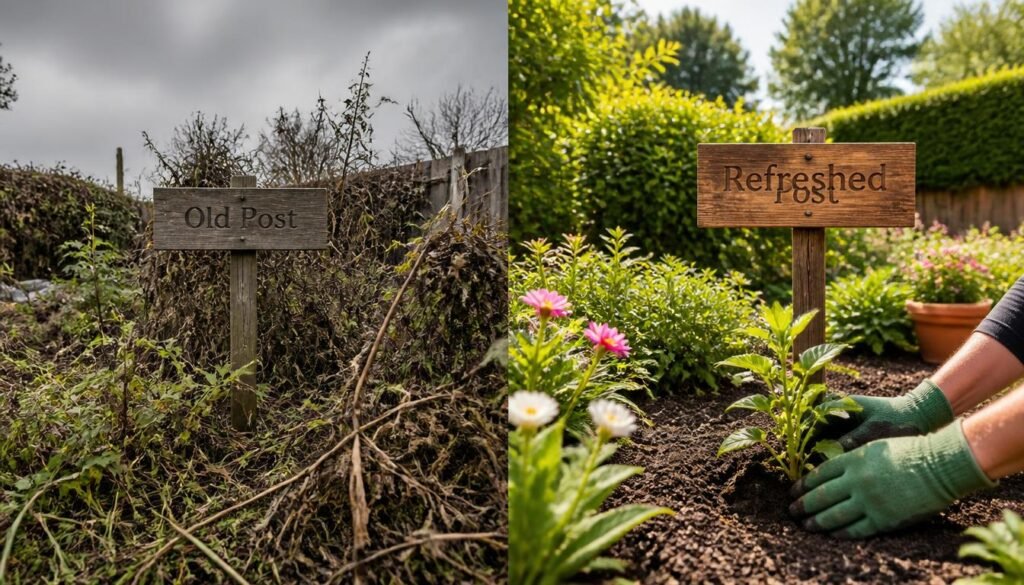
How to Refresh Old Blog Posts Without Getting Burned
Here is the part where the skeptical reader thinks: “Sure, I refreshed a post once. It did nothing.”
That happens. But it happens because people refresh wrong. They change a date. They add one paragraph. They hit save. Then they wonder why traffic does not spike.
That is like replacing one shingle on a roof and calling it a renovation.
A real content refresh follows a brutal audit.
Find Your Zombie Pages in Search Console
Go to Google Search Console. Filter by pages with impressions in the last 28 days. Sort by largest drop compared to the previous period. Those are your zombies. They still get seen. They just do not get clicked.
If you need help interpreting Search Console data, our Search Console tutorial for affiliate sites breaks down exactly which reports to pull and what the numbers mean.
Do a 5-Minute Hate Read of Your Old Post
Open the page and pretend you are the reader. Be mean. Is the answer immediate? Is the first paragraph boring? Is the product you recommend still the best? Did a new product come out that you ignore? Is the writing too long? Too short? Too vague?
Compare Your Old Blog Post Against Top 3 Results
This is the fastest shortcut. Search the target keyword. Look at the top 3 pages. Count their headings. Look at their formatting. Do they have a comparison table? A video? A FAQ section? A calculator?
Whatever they have, you must match or beat it. This is not optional.
Rewrite the Skeleton, Not Just the Skin
Do not just add a table. Change the structure of the post. If the old post was a list of 10 laptops, make it a list of 5 with a clear winner. If it was a “how to” guide, add step-by-step screenshots. The refresh must change the shape of the content.
We show exactly how to do this in our on-page SEO checklist for 2026, including the formatting elements Google currently favors.
Update the Date Only After Real Changes Are Made
Google does not hate date changes. Google hates date changes with no content changes. Make the changes first. Then update the date. Then request indexing in Search Console.
One Content Refresh Case Study That Silences the Room
Let me tell you about a niche site. It sold affiliate products in the home office category. The owner had 300 posts. Traffic was flat. He was about to quit.
He stopped writing new posts for 90 days. Instead, he refreshed 12 old blog posts.
He did not pick random posts. He picked the 12 posts with the most backlinks and the steepest traffic drops.
For each one, he did the following:
- Rewrote the title to include the current year.
- Added a comparison table. Just a simple one. Four columns. Product name, price, rating, best for.
- Updated every product price and link.
- Added three new FAQ questions at the bottom based on “People Also Ask.”
- Removed any sentence with “in 2021” or “in 2022.”
- Added internal links to his newer buying guides.
That is it. No new backlinks. No new domain authority. No new fancy tools.
He spent about 5 hours per post. 60 hours total.
Three months later, those 12 posts were getting 40% more organic clicks. Combined. One of those posts went from page 3 to position 2 for a high-volume keyword. It had been stuck for two years.
He did not earn a single new backlink. He just fixed what was already earning trust.
That is the power you are leaving on the table.
This mirrors what we have seen across our affiliate site case studies, where refreshed content consistently outperforms new content in the first 90 days.
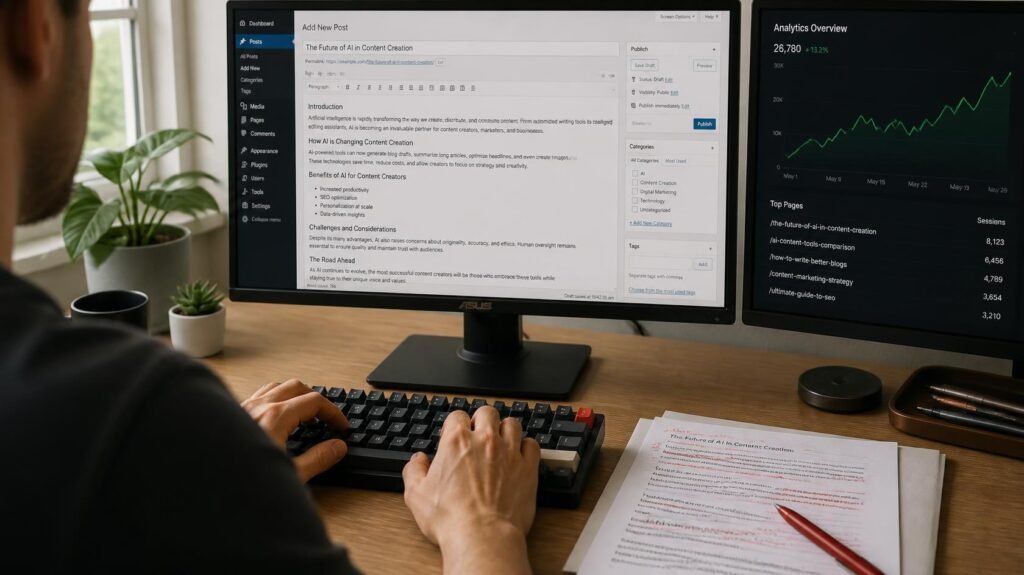
The Emotional Truth About Content Maintenance Nobody Acknowledges
Here is the ugly part. Most affiliate marketers do not refresh because refreshing is boring.
Writing a new post is fun. It feels productive. You get a dopamine hit. You get to say “I published 20 posts this month.” You get to feel like a growth hacker.
Refreshing an old post feels like maintenance. It feels like cleaning the garage. It feels like admitting your old work was flawed.
But the metrics do not care about your feelings.
The emotional truth is this. You are afraid of the old posts. You are afraid to open them and see how bad they are. You are afraid the refresh will not work. You are afraid it will work and then you have to do it for 200 more posts.
So you write new content instead. Because new content is a fresh gamble. And gamblers love fresh bets more than they love fixing old debts.
That is not a strategy. That is avoidance.
The best affiliate marketers in 2026 are not the most prolific. They are the most disciplined. They have a maintenance calendar. They audit old posts every quarter. They treat decline as an assignment, not a shame.
We built a free content maintenance calendar template you can copy and use to schedule your refreshes across the quarter.
The 2026 Ranking Formula Nobody Wants to Admit
The formula is simple.
Old post + domain authority + backlinks + content refresh = ranking.
New post + zero authority + zero backlinks + hope = waiting.
Which one would you bet your rent money on?
The algorithm in 2026 is not a mystery. It rewards pages that satisfy the query. Old pages that are refreshed satisfy the query faster because they already have trust signals.
A backlink from a finance site to your 2021 post about credit cards does not disappear when you refresh the post. That backlink now points to a better page. The backlink gets stronger because the page is more helpful.
You do not need more links. You need better pages.
This is not a hack. It is not a loophole. It is the actual job. You are a content manager. Not a content factory.
For the complete system behind this approach, read our affiliate SEO strategy for 2026, where we map out the full maintenance-first framework.
Tools That Make Content Refreshing Faster
You do not need a pile of expensive software to refresh old blog posts. But a few solid tools will save you hours of manual work. I have used all of these on client sites and on my own affiliate projects.
The right keyboard alone can make a four-hour refresh session feel less like a slog. When I switched to a mechanical keyboard with tactile switches, my editing speed went up because I stopped second-guessing every keystroke. It sounds small. It is not.
Here are the tools I actually recommend for content refresh work.
Best Keyboard for Long Editing Sessions
Logitech MX Keys S Wireless Keyboard
This is the keyboard I use every day. The keys are quiet but tactile. The backlighting auto-adjusts. Battery lasts weeks. If you are refreshing posts for four hours at a stretch, this keyboard keeps your hands from feeling like you punched a wall.
Keychron K2 Wireless Mechanical Keyboard
If you prefer mechanical switches and a compact layout, this is the one. It connects to three devices. I use it when I am toggling between my desktop and a laptop. The tactile feedback makes editing long posts feel more deliberate.
Best Monitor for Side-by-Side Content Audits
Dell UltraSharp U2723QE 27″ 4K Monitor
You need to see your old post next to the top 3 competitors. A single screen makes that miserable. This monitor gives you enough real estate to have your editor open on one side and competitor tabs on the other. The color accuracy also helps when you are checking old screenshots.
Best Ergonomic Chair for Long Refresh Sessions
A content refresh is a desk job. If your chair hurts your back after hour two, you will rush the work. This chair is affordable and supports your lower back properly. I sat in a cheap dining chair for years. Do not do that.
Best Notebook for the 5-Minute Hate Read
Moleskine Classic Notebook, Hard Cover, Large
I keep a physical notebook next to my keyboard during every refresh. I write down every flaw I find during the hate read. Dead stats. Weak headings. Missing FAQs. Writing it by hand forces me to slow down and actually see the problems instead of skimming past them.
Frequently Asked Questions About Content Refreshing
How often should I refresh old blog posts?
Every six to twelve months, depending on the niche. Posts about fast-moving topics like software, finance, or health need updates every six months. Posts about evergreen topics like “how to boil an egg” can go twelve months. Check your Search Console data quarterly. If impressions are slipping, refresh sooner.
Does changing the publish date help SEO?
Only if you made real changes first. Google does not penalize date changes. Google penalizes date changes with no content changes. Update the facts, add new sections, remove dead fluff. Then update the date. Then request indexing.
How long does a content refresh take?
A proper refresh takes four to six hours for a standard 2,000-word post. That includes the hate read, competitor audit, rewriting, and formatting. Longer posts with more products may take eight hours. Still faster than the twenty hours a new post takes.
Can I refresh a post that has no backlinks?
Yes. The refresh still works because you are improving relevance and freshness signals. But the biggest wins come from posts that already have backlinks and authority. Those posts have trust built up. A refresh turns that trust into rankings.
Should I delete old blog posts that get no traffic?
Not immediately. First check if the post has backlinks or ranks for any keyword on page 2 or 3. If it does, refresh it. If it has zero backlinks, zero impressions, and no value, consider merging it into a stronger post or deleting it. But do not mass-delete. That can hurt your site.
What is the first thing I should update in an old blog post?
The introduction. It is the first thing Google reads and the first thing visitors see. Rewrite it to match current search intent. Put the answer in the first two sentences. Kill the fluff. Then update any outdated facts in the body.
Refresh Your First Old Blog Post This Week
Stop reading. Go do this.
Open Google Search Console. Find one post with high impressions and low clicks. Open that post and read it like a stranger. Find one thing that is outdated. Fix that one thing. Add one new section that the top competitor has but you do not. Hit update. Request indexing. Wait one week. Check impressions.
That is the entire framework. You do not need a course. You do not need a mastermind. You need to do the boring thing that works.
I have watched a single refreshed post pull a site out of a six-month traffic slide while the owner was still drafting new articles that would not rank for eight months. The new articles eventually helped. The refreshed post saved the quarter.
The affiliate content refresh framework is not sexy. It is not a growth hack. It is not a secret. It is simply the most reliable way to grow rankings in 2026 with the assets you already own.
And if you ignore it, your competitors will not. They will refresh your old keywords. They will steal your rankings. They will win.
Pick one old post. Refresh it this week. Watch the data.
Then come back and tell me I was wrong. You will not be able to.
Niche → offer → SEO cluster → Pinterest pins → first clicks. No fluff.