
TikTok Shop Affiliate Commission Cuts: Is It Still Worth It in 2026?
TikTok Shop affiliate commission cuts landed in June 2026 with no warning and no transition window, and a lot of creators are now asking whether the program is still worth the effort. The honest answer is: it depends on what you were using it for in the first place, how diversified your income already was, and how much of your content strategy was built around numbers that no longer exist.
Table of Contents
- What Actually Changed in June 2026
- Why the Cuts Happened
- Is TikTok Shop Affiliate Commission Still Worth It in 2026?
- What This Means If You Were Relying on TikTok Shop Alone
- How to Adjust Your Strategy Now
- Should Beginners Still Start With TikTok Shop Affiliate?
- FAQ
What Actually Changed in June 2026
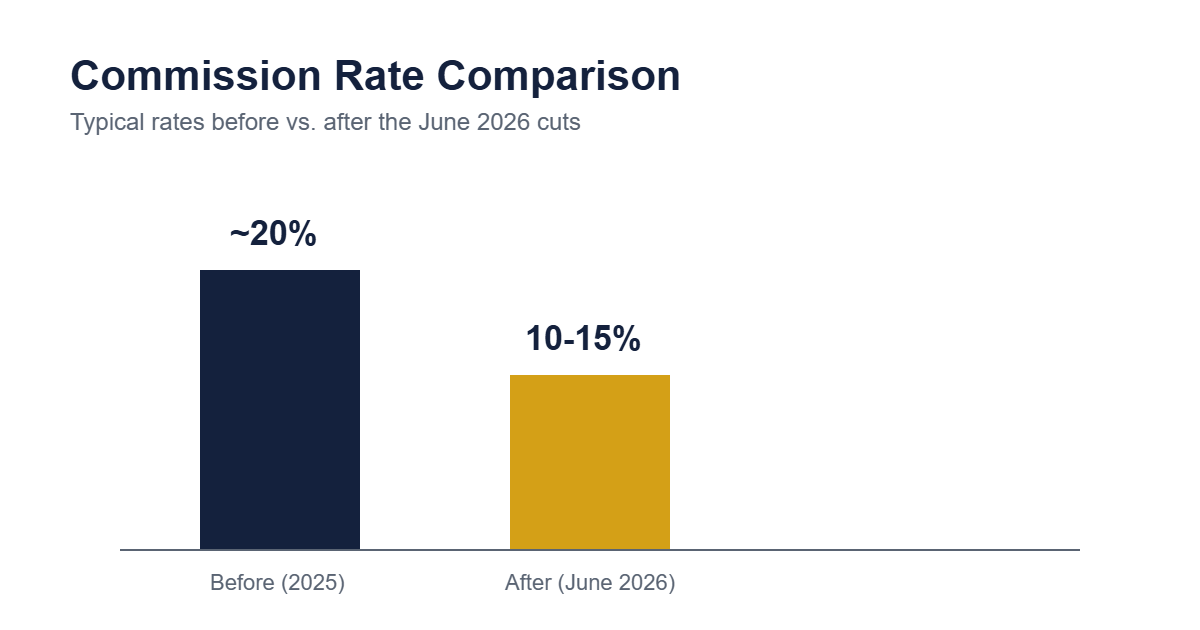
TikTok Shop reduced the maximum commission rates sellers could offer affiliates across several product categories. Where many creators were used to seeing commission offers in the 20% range on popular categories, a good chunk of those same offers now sit closer to 10-15%. The change rolled out fast, with no grace period for creators who had built content calendars and income projections around the old rates. If you want to check current rates for your own categories rather than relying on secondhand numbers, TikTok’s own Seller Center is the source of truth.
This wasn’t a gradual drift either. It was a platform-level policy shift, the kind that reminds you a commission rate on someone else’s marketplace is never really yours to count on long-term. One month the math worked for a given product; the next month, the same product paid out meaningfully less for the same amount of effort. Nobody got a heads-up email explaining the reasoning or offering time to adjust.
For creators who track their numbers closely, the drop was noticeable within days. For those who weren’t watching commission rates line by line, it showed up more slowly as a dip in monthly totals that took a bit of digging to explain.
Why the Cuts Happened
Platforms adjust commission structures when their own margins get squeezed, when seller complaints pile up, or when they decide affiliate payouts were simply too generous during a growth phase designed to attract creators. TikTok Shop spent its early years paying out aggressively to build its creator base and seller catalog. That’s a common pattern: subsidize the early days to get supply and demand both flowing, then tighten once the ecosystem is self-sustaining. If you’re new to how affiliate arrangements work in general, Investopedia’s overview of affiliate marketing is a useful primer on the underlying mechanics.
Once that base was established, tightening payouts is a predictable next move. It’s not personal, and it’s not unique to TikTok Shop — Amazon, various SaaS affiliate programs, and plenty of other platforms have done versions of the same thing over the years. But it does land hard on anyone who built a chunk of their income around it, especially if that income felt stable enough to plan around.
Is TikTok Shop Affiliate Commission Still Worth It in 2026?
For some creators, yes. For others, the math has changed enough that it’s worth stepping back and reassessing from scratch. A few things determine which camp you’re in:
- Your traffic cost. If you’re spending real time or money creating content specifically to drive TikTok Shop sales, a lower commission rate means each piece of content has to work harder to pay for itself. Content that barely broke even before may now be a net loss once you account for your time.
- Your niche. Some categories took a bigger hit than others. If your niche happens to be one where rates fell furthest, the program may no longer clear the bar it used to. If your category was affected less, the picture looks different. This is also a good moment to revisit whether your niche choice itself still makes sense — our guide to beginner-friendly affiliate niches covers categories that tend to hold up regardless of any one platform’s policy changes.
- Your diversification. If TikTok Shop was one channel among several, a rate cut is annoying but survivable — you adjust and move on. If it was your main income source, this is a bigger problem that needs a real plan, not just patience.
- Volume versus margin. Lower percentage commissions can still work if volume is high enough, especially on higher-priced items where even 10% is meaningful in dollar terms. A $200 product at 10% still beats a $20 product at 20%.
The program isn’t dead. It’s just no longer the easy, high-margin channel it was a year ago, and treating it that way going forward will lead to disappointing numbers and a lot of wasted content effort.
What This Means If You Were Relying on TikTok Shop Alone
If a big share of your affiliate income came from TikTok Shop specifically, this is a good moment to look at your overall setup rather than just this one channel. Affiliate programs live and die by decisions made in a boardroom you have no visibility into, which is exactly why spreading your income across multiple affiliate networks and partner programs tends to hold up better over time than betting everything on one platform’s goodwill.
That doesn’t mean abandoning TikTok Shop. It means treating it as one revenue stream among several, so that when — not if — another platform makes a similar move, it doesn’t take your whole income down with it. Diversification isn’t a growth hack, it’s basic risk management, and 2026 has been a good year for reminding affiliates why that matters. One way to smooth out this kind of shock long-term is leaning more on recurring commission niches, where a single sale keeps paying out monthly instead of depending entirely on fresh traffic every day.
Publishers who came into this year already spread across a few networks and channels absorbed the TikTok Shop cuts as a bump in the road. Those who were fully dependent on one platform are having a much harder conversation with themselves right now.
How to Adjust Your Strategy Now
A few practical moves make sense if you’re staying on the platform:
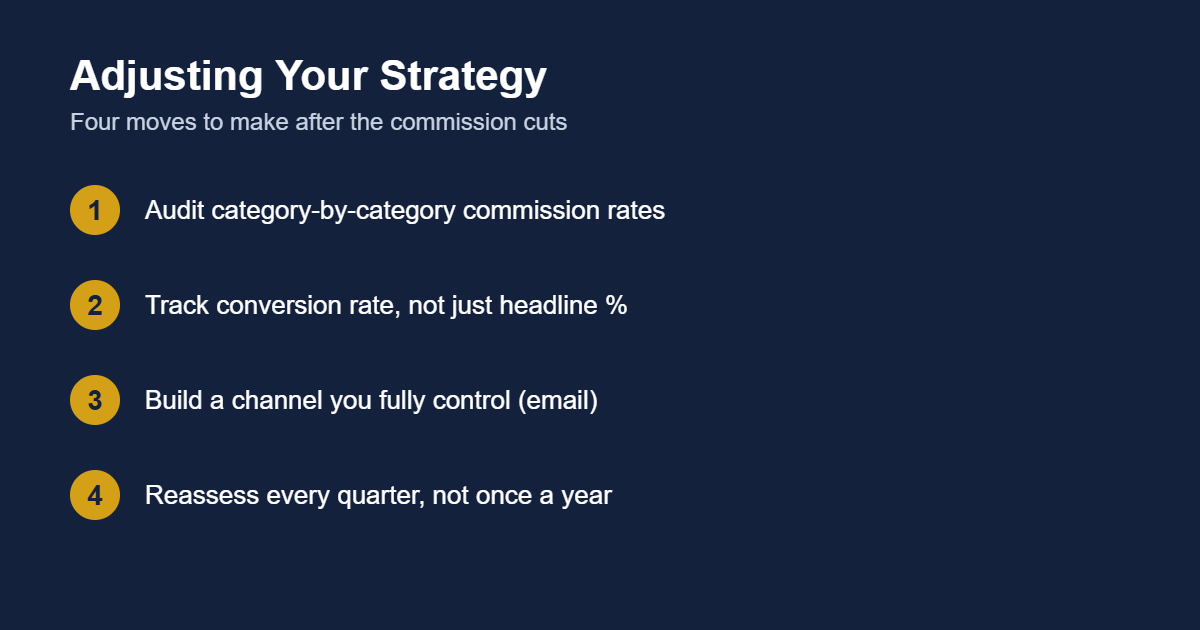
- Audit which products and categories still offer commission rates that make sense for the effort you’re putting in, and shift content toward those rather than the ones that used to work.
- Track your actual conversion rate and average order value rather than just the headline commission percentage — a lower rate on a higher-converting product can still outperform a higher rate on something nobody buys.
- Build at least one channel you fully control, like an email list, so your audience doesn’t disappear if a platform changes its rules again without warning.
- Reassess quarterly instead of assuming today’s rates are permanent. Platforms that cut once are more likely to adjust again, and you want to catch the next change early rather than discovering it a month into a slump.
- Test a handful of categories you haven’t tried before. The commission landscape shifted unevenly, so there may be pockets that are actually more attractive now than they were before the cuts.
Should Beginners Still Start With TikTok Shop Affiliate?
It’s still a reasonable place to learn the basics of short-form video and product promotion, since the audience and discovery mechanics are genuinely useful skills that carry over to other platforms. Just go in with realistic expectations about payout rates rather than the numbers that circulated when the program was newer and more generous. Treat it as one part of a broader affiliate strategy from day one instead of the whole plan, and you’ll avoid the shock that hit creators who had nothing else to fall back on when the cuts landed. Whatever platform you promote on, make sure your disclosures follow the FTC’s endorsement guidelines, since those rules apply regardless of which affiliate program is paying you.
Beginners actually have one small advantage here: there’s no adjustment period needed, because there’s no old income level to mourn. You’re building your strategy around current reality from the start, which puts you ahead of anyone still trying to recreate 2025 numbers on a 2026 rate card.
FAQ
Did TikTok Shop cut commissions for every category?
No, the cuts varied by category. Some saw sharper reductions than others, so it’s worth checking current rates for your specific niche rather than assuming a blanket cut applies evenly across the board.
Will TikTok Shop raise commissions back up later?
There’s no way to know that in advance, and betting your strategy on a reversal isn’t a solid plan. It’s safer to build your business assuming current rates are the new normal and treat any future increase as a pleasant surprise rather than something to count on.
Should I stop posting TikTok Shop content entirely?
Not necessarily. If it still generates meaningful income relative to your effort, keep going. Just avoid making it your only channel going forward, and keep an eye on whether the math still works as you refine your content.
What’s a good alternative if TikTok Shop no longer pays enough?
Look at established affiliate networks and direct partner programs in your niche, along with platforms like Pinterest or email marketing where you own the relationship with your audience instead of renting it from a platform that can change the rules overnight.
The TikTok Shop commission cuts sting, especially if they landed without warning in the middle of your content calendar and your income projections. But they’re also a useful reminder that no single platform should hold your entire income hostage. Adjust your numbers, diversify where you can, and keep building the pieces of your business that don’t depend on one company’s next policy decision.