Start Affiliate Marketing With No Money 2026: What’s Actually Free
Disclosure: Some links on this page may be affiliate links. If you buy through them, I may earn a commission at no extra cost to you. I only recommend what I’d use myself. Read the full disclosure.
Every “start affiliate marketing with no money” guide seems to assume you’ll figure out the free tools yourself, then quietly recommends three paid subscriptions by paragraph two. It doesn’t have to work that way. You can genuinely start affiliate marketing with no money in 2026 — you just need to know what’s actually free right now, not what used to be free two years ago.
That’s the part that trips people up. Free tiers, platform rules, and beginner-friendly programs shift constantly. A guide written even a year ago might point you toward a tool that’s since added a paywall, or skip a genuinely free option that didn’t exist yet. This one is a straight, current rundown of what you can use to start affiliate marketing with a $0 budget, and where the real costs tend to sneak in later.
In This Article
- Why “Free” Looks Different Every Year
- What You Actually Need to Start
- Free Content and Publishing Platforms
- Free Traffic Channels
- Free Tools Worth Using Right Now
- What’s Not Really Free — Watch for This
- A Realistic $0 Budget Starting Path
- Frequently Asked Questions
- Can I really start affiliate marketing with $0 in 2026?
- When should I start spending money?
- Do free affiliate programs pay less than paid or premium ones?
- Is it worth using a free blog platform instead of paying for hosting right away?
- Closing Thoughts
Why “Free” Looks Different Every Year
Platforms change their free tiers constantly. A tool that let you do everything for free last year might cap you at a handful of posts or contacts this year, and a platform that used to require a paid plan for basic features might have opened things up. If you’re following advice that hasn’t been checked recently, you’re likely planning around tools that no longer work the way the guide assumes.
The safest approach is to treat any “best free tool” list, including this one, as a starting point rather than gospel. Check the current pricing page before you commit time to setting something up, since a five-minute check can save you from building a workflow around a feature that quietly moved behind a paywall.
What You Actually Need to Start
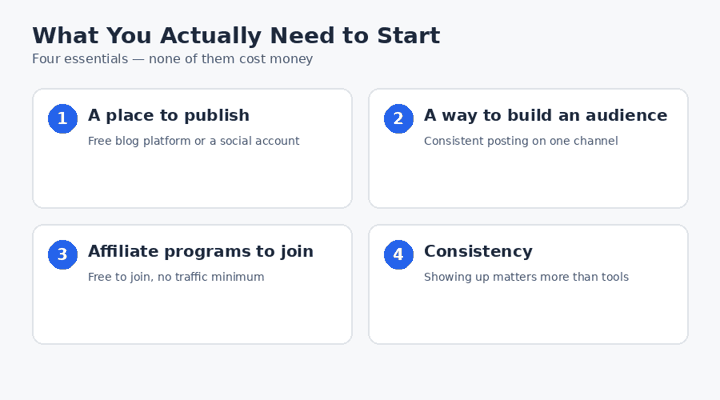
Stripped down to the essentials, starting affiliate marketing with no money requires four things: a place to publish content, a way to build an audience, affiliate programs to join, and enough consistency to keep showing up. None of these strictly require spending money on day one.
What you don’t need at the start is nearly as important. You don’t need paid ads, a premium theme, expensive keyword research software, or a fancy logo. Every one of those can wait until you have some traction and can justify the cost with actual results, rather than hoping the investment pays off before you’ve proven the concept works for you.
It also helps to separate “nice to have” from “actually blocking you.” A custom logo is nice to have. A place to publish and a couple of affiliate programs to link to are the things that are actually blocking you from starting. If you catch yourself researching logo design before you’ve published a single piece of content, that’s usually a sign of stalling rather than preparing.
Free Content and Publishing Platforms
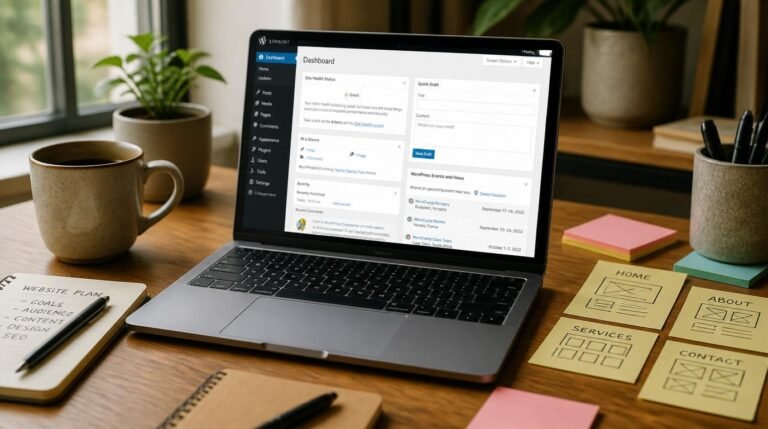
WordPress.com’s free tier, along with free blogging options on platforms like Medium, still lets you publish real content without paying for hosting. The tradeoff is limited customization and, in some cases, ads you don’t control. If you eventually want your own domain and full design control, that’s a reasonable first upgrade to pay for, but it’s not required to publish your first pieces of content.
Social platforms themselves double as publishing platforms now. Pinterest, TikTok, Instagram, and YouTube all let you publish content and include affiliate links (subject to each platform’s own linking rules) at no cost. For a lot of beginners, starting on a social platform is actually faster than setting up a blog, since there’s no setup step between having an idea and publishing it.
Free Traffic Channels
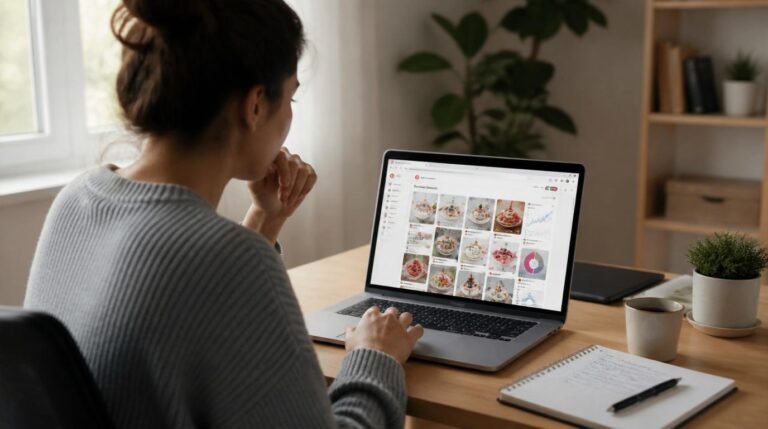
Organic search, organic social posting, and Pinterest are the three channels that don’t require an ad budget to reach people. Each has a different learning curve: search takes patience and consistent content, social platforms reward frequency and hook quality, and Pinterest rewards fresh, well-designed pins posted steadily over time.
Email is technically free to start too, since most providers offer a free tier up to a certain subscriber count. The catch is that email only works once you already have some traffic sending people to your opt-in, so it’s less of a starting channel and more of a retention layer you add once one of the other channels is working.
Free Tools Worth Using Right Now
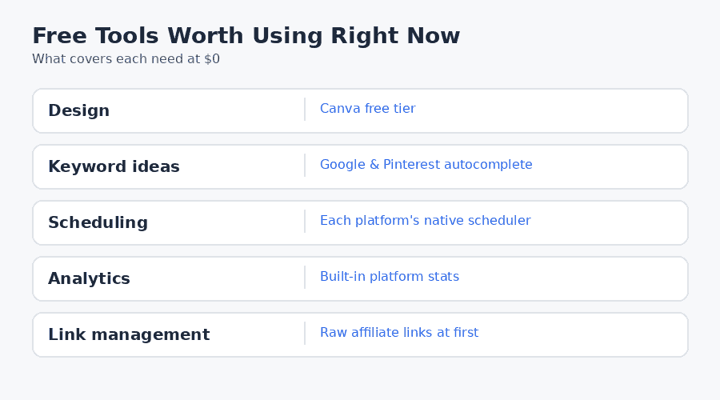
For design, free tiers of Canva remain solid for pin graphics, social graphics, and simple blog images. For basic keyword ideas, the free autocomplete and “related searches” data baked into Google and Pinterest search themselves gets you further than people expect before you need a paid keyword tool. For scheduling, most platforms’ own native schedulers are free and, since they’re the platform’s own product, they’re always fully compliant with however that platform’s algorithm currently works.
For tracking what’s working, free analytics built into each platform (Pinterest Analytics, YouTube Studio, your blog host’s built-in stats) are enough in the early stages. You don’t need a paid analytics suite to tell you that one post is getting more clicks than another.
For link management, most beginners can get by without a dedicated link tool at first, simply using the raw affiliate links each program provides. A link management tool becomes worth paying for once you’re juggling enough programs and posts that manually updating broken or changed links everywhere becomes a real time sink, not before.
What’s Not Really Free — Watch for This
The most common trap is the “free trial” that quietly becomes a paid subscription once you’re dependent on it. Plenty of tools offer a generous free trial specifically because they’re betting you’ll build your workflow around it and not want to switch once the trial ends. Read the actual terms before connecting a tool to anything important.
The second trap is time cost disguised as a free option. Some “free” paths require significantly more manual work than a paid alternative, and if that time cost is eating into hours you’d otherwise spend creating content, it’s not actually free — it’s a different kind of expense. Weigh both before assuming free is always the better choice.
A Realistic $0 Budget Starting Path
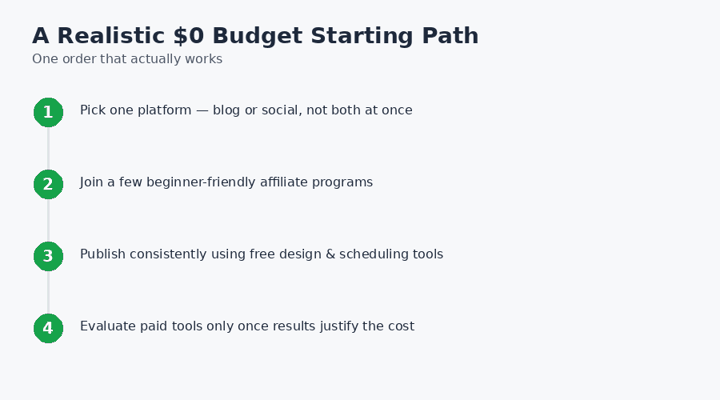
A workable order for a genuinely $0 start looks like this: pick one platform (blog or social) rather than trying to do everything at once, join a small number of beginner-friendly affiliate programs that don’t require existing traffic, publish consistently for a few months using free design and scheduling tools, and only then evaluate whether a specific paid tool would meaningfully speed things up. If you’re not sure which programs to start with, our guide to affiliate programs for beginners without a website is a good next step once you’ve got a platform picked.
Reinvesting the first bit of affiliate income you earn, rather than spending your own money upfront, is generally the more sustainable path. It also naturally paces your spending to match what the business is actually generating, instead of front-loading costs before you know what’s working.
Frequently Asked Questions
Can I really start affiliate marketing with $0 in 2026?
Yes, using free publishing platforms, free design tools, and organic traffic channels. The tradeoff is more manual effort and a slower ramp-up than a paid setup, but it’s a genuinely viable starting point.
When should I start spending money?
Generally once a free tool’s limitations are actively slowing you down, or once you’ve got early results and want to reinvest affiliate earnings into scaling what’s already working, rather than spending speculatively before you have any data.
Do free affiliate programs pay less than paid or premium ones?
Not necessarily. Program cost to join and commission structure are unrelated. Plenty of free-to-join programs offer solid commissions; the “paid” tools in this conversation are your marketing tools, not the affiliate programs themselves.
Is it worth using a free blog platform instead of paying for hosting right away?
For testing whether you’ll stick with content creation, yes. Once you’re consistently publishing and want more control over design and monetization, moving to self-hosted WordPress becomes a reasonable next investment.
Closing Thoughts
Starting with a $0 budget in 2026 is realistic, but only if you’re working from a current picture of what’s actually free right now, not a list that was accurate a couple of years ago. Pick one platform, use the free tools that are genuinely free today, and let your own results tell you when it’s time to spend money instead of guessing upfront.
Niche → offer → SEO cluster → Pinterest pins → first clicks. No fluff.