Why Affiliate Marketers Need an Email List in 2026: Essential and Costly
Disclosure: Some links on this page may be affiliate links. If you buy through them, I may earn a commission at no extra cost to you. I only recommend what I’d use myself. Read the full disclosure.
Why affiliate marketers need an email list 2026 comes down to one blunt reality: platforms change the rules whenever they want, and your income shouldn’t live or die by their decisions. If you watched a platform update quietly tank your traffic or cut your commissions this year, you already know the feeling. This is exactly why an email list matters — it’s the one channel where the rules are still yours to set.
Table of Contents
- Why 2026 Made This Urgent
- What “Owning the Channel” Actually Means
- The Cost of Not Having One
- How to Start Without Overengineering It
- What to Actually Send
- Deliverability Is Part of the Strategy Now
- The Bigger Picture
- FAQ
Why 2026 Made This Urgent
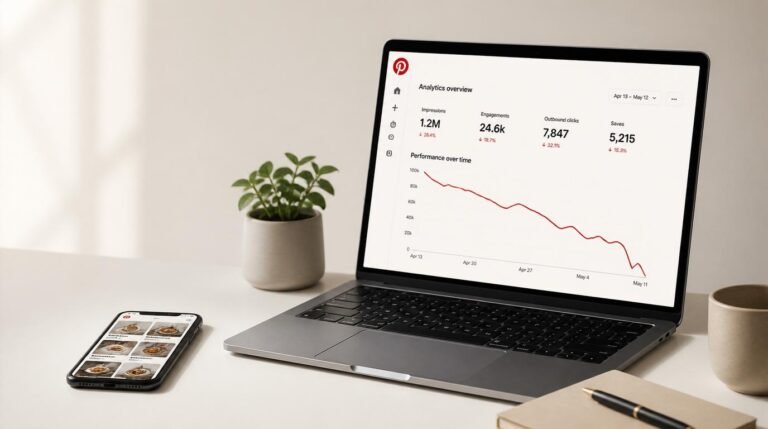
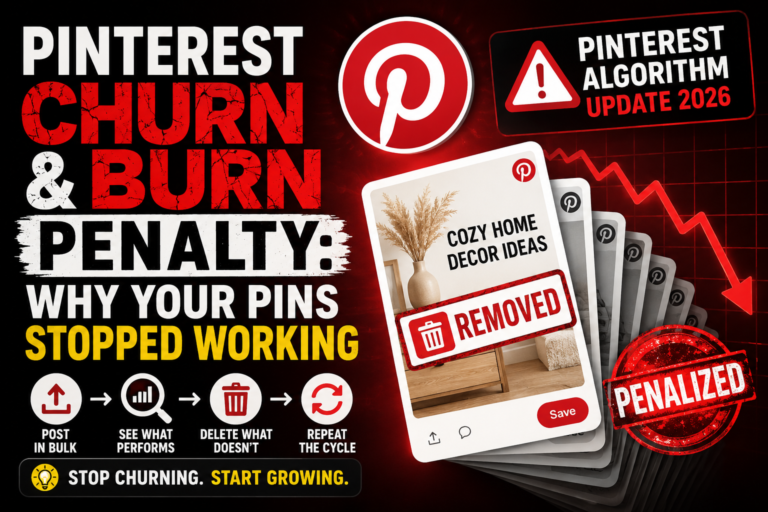
This year has been a string of reminders that rented land can be repossessed at any time. Search algorithms shifted more than once, Pinterest tightened how it treats repetitive or churned-out content, and social commerce platforms adjusted commission structures with little warning. None of that is unusual by itself — platforms have always changed. What’s different is how often it’s happened in the same year, and how directly it’s hit affiliate income.
An email list doesn’t insulate you from every risk. But it does give you a channel that isn’t subject to someone else’s algorithm update on a Tuesday morning. The people on your list chose to hear from you. That relationship doesn’t disappear when a platform tweaks its ranking factors.
What “Owning the Channel” Actually Means
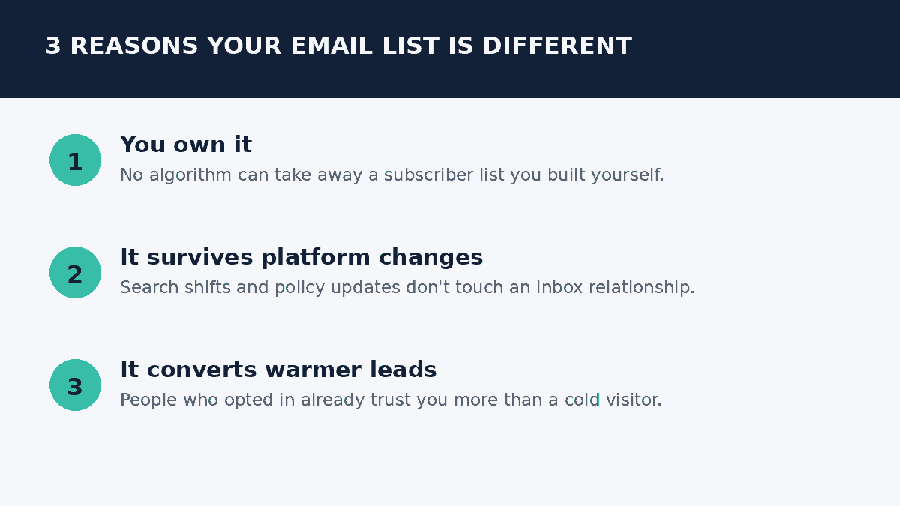
When you build traffic on a platform you don’t control, you’re borrowing attention. You can lose access to that attention through a policy change, an algorithm shift, a shadowban, or even just a slow decline in reach that nobody explains to you. An email list flips that arrangement. You have the subscriber’s address, and — as long as you’re following basic deliverability and consent rules — you can reach them whenever you have something worth saying.
This isn’t a reason to abandon Pinterest, search, or social platforms. Those channels are still where most new people will discover you. The point is that discovery and ownership are two different jobs, and right now, too many affiliates only have the first one covered.
Think of it as a distribution portfolio rather than a single bet. Search traffic can bring you a steady baseline of visitors who are actively looking for answers. Pinterest and social platforms can introduce you to people who weren’t searching for anything in particular but got curious. Email is the layer that turns a one-time visitor from any of those channels into someone you can reach again without paying for the introduction twice. Each channel does a different job, and none of them should be asked to carry the whole business alone.
The Cost of Not Having One
It’s easy to underestimate what you’re giving up by skipping email, mostly because the cost is invisible until something goes wrong. Picture a post that’s been quietly sending you steady traffic and commissions for a year. Then a core update reshuffles rankings, or a platform changes how it distributes content, and that traffic drops by half in a matter of weeks. If your only relationship with those readers was through that one piece of content on someone else’s platform, they’re simply gone. There’s no way to reach them again.
With an email list, even a partial one, that same scenario looks different. You still lose some traffic and some income, but you retain a direct line to everyone who subscribed while that content was performing well. You can tell them what happened, point them to updated resources, or simply keep the relationship warm until your traffic recovers. That difference — between losing an audience completely and just losing a traffic source — is the entire argument for building a list before you need it, not after.
How to Start Without Overengineering It
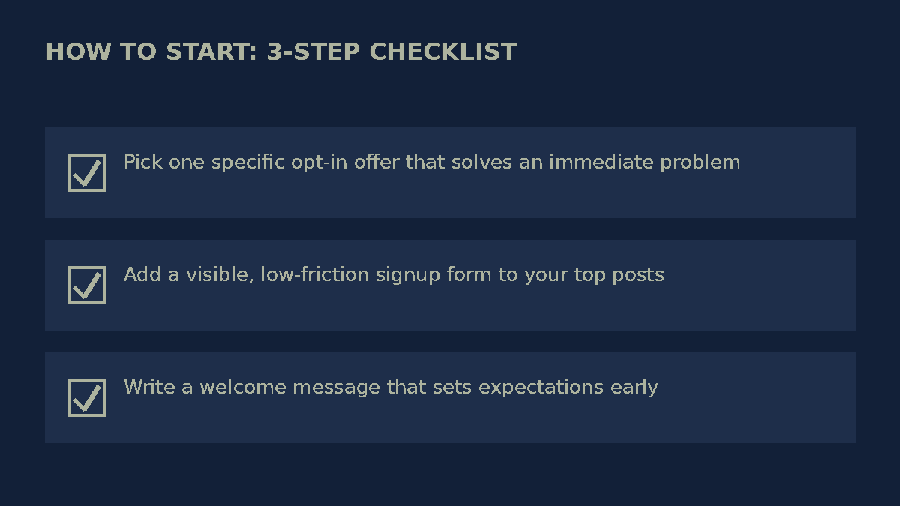
You don’t need a twelve-email automation sequence and a fancy lead magnet on day one. You need three things working together: a reason for someone to subscribe, a simple way for them to do it, and a plan for what you’ll send once they’re on the list.
- A specific opt-in offer. “Join my newsletter” converts poorly. A short checklist, a comparison sheet, or a resource list tied to the content someone is already reading converts better because it solves an immediate problem. If subscribers aren’t receiving what they signed up for reliably, check your lead magnet delivery flow before assuming the offer itself is the problem.
- A visible, low-friction signup. A form embedded in your highest-traffic posts will usually outperform a generic sidebar widget that visitors tune out.
- A welcome message that sets expectations. Tell new subscribers what they’ll get and how often. This alone improves long-term engagement, because people aren’t surprised later by emails they don’t remember signing up for.
If you want a more detailed walkthrough of the technical setup, our step-by-step email funnel guide covers the tools and sequencing in more depth.
One thing worth deciding early is what your opt-in offer is actually for. A checklist works well when your content is instructional and readers want the steps in one place. A comparison sheet works well in review-heavy niches where people are choosing between options. A short resource list works well almost anywhere, because it’s low effort to create and genuinely useful. Whatever you pick, keep it narrow. A lead magnet that tries to help with everything usually ends up helping with nothing in particular, and that vagueness shows up later as low engagement.
What to Actually Send
A lot of affiliates stall out here because they assume every email needs to be a hard sell. It doesn’t. A workable rhythm is mostly useful, relevant content with the occasional relevant recommendation woven in naturally — the same trust-first approach that works in your blog content applies just as much in the inbox. If you’re still working out your first few sends, a welcome sequence framework gives you a structure to start from instead of a blank page.
Some formats that tend to hold up over time include a short roundup of what’s new in your niche, a personal take on something you tried or tested, or a direct answer to a question your audience keeps asking. Consistency matters more than frequency. A monthly email you actually send beats a weekly plan you abandon after three weeks.
It also helps to think of your email content on a spectrum rather than as a binary choice between “helpful” and “promotional.” Most of your sends can sit somewhere in the middle — a genuinely useful piece of advice that happens to reference a product you use, or a quick update on your own results that naturally includes a recommendation. Readers can tell the difference between a recommendation that’s embedded in real experience and one that’s bolted on just to hit a quota. The former builds trust over time; the latter erodes it, even if it produces a short-term click.
A simple planning habit that works for a lot of small publishers is keeping a running list of email ideas as they come up, rather than trying to invent a topic the day you sit down to write. Reader questions, new products you’ve tried, seasonal angles tied to your niche, and updates to older content you’ve already published are all fair game. Over a few months, that running list becomes more than enough material to keep a modest, sustainable sending schedule going without it feeling like a scramble every time.
Deliverability Is Part of the Strategy Now
It’s worth saying plainly: having a list doesn’t help if your emails land in spam. Inbox providers have gotten more aggressive about filtering based on engagement, not just technical authentication. Google’s own email sender guidelines spell out what bulk senders are expected to do around authentication and complaint rates, and it’s worth a skim even if you’re a small publisher, because the same filtering logic trickles down to everyone.
Consent matters here too. Under the CAN-SPAM Act, commercial emails need accurate sender information, a truthful subject line, and a working way to unsubscribe. None of that is complicated to comply with, but it’s easy to overlook when you’re focused on growth. Getting it right from the start avoids headaches later, and it also tends to correlate with better engagement, since honest, well-labeled email builds more trust than anything trying to sneak past a spam filter.
Practically, this means it’s fine — even smart — to periodically clean your list of subscribers who haven’t opened anything in months, and to segment so you’re not sending everyone the same blast regardless of their interests. Mailchimp’s deliverability basics guide is a reasonable starting point if you want a deeper look at how sending reputation works. It’s a small amount of extra effort that protects the channel you’re trying to build.
A basic version of segmentation is easier than it sounds. You don’t need a complex tagging system on day one — even splitting your list into “new subscribers still in a welcome sequence” and “everyone else” is a meaningful improvement over sending identical content to both groups. As your list grows, you can add more granular segments based on what people clicked or which lead magnet brought them in, but that’s a refinement to add later, not a prerequisite for getting started.
The Bigger Picture
None of this means email is magic or that it replaces the other channels driving traffic to your site. What it does is give you a fallback that doesn’t depend on someone else’s roadmap. In a year where several platforms have changed the deal mid-stream, that’s not a nice-to-have — it’s basic risk management for an affiliate business.
FAQ
Do I need a large list before it’s worth the effort?
No. Even a few hundred engaged subscribers can produce meaningful, repeatable results if the content is relevant and the list is healthy. Size matters less than engagement.
What email platform should I start with?
Most beginner-friendly platforms with a free tier will work fine for your first few hundred subscribers. The specific tool matters less than actually setting up the opt-in and sending consistently.
How often should I email my list?
Pick a cadence you can sustain — weekly, biweekly, or monthly all work. A realistic schedule you keep is better than an ambitious one you abandon.
Will building an email list slow down my other traffic efforts?
It shouldn’t take much time away from content creation if you keep the opt-in simple. The setup is mostly one-time work; ongoing effort is just writing the emails themselves.
Platforms will keep changing — that’s not going to stop in 2026 or any year after it. Building an email list now is one of the few moves that makes your affiliate business a little more resilient to whatever comes next.
Niche → offer → SEO cluster → Pinterest pins → first clicks. No fluff.