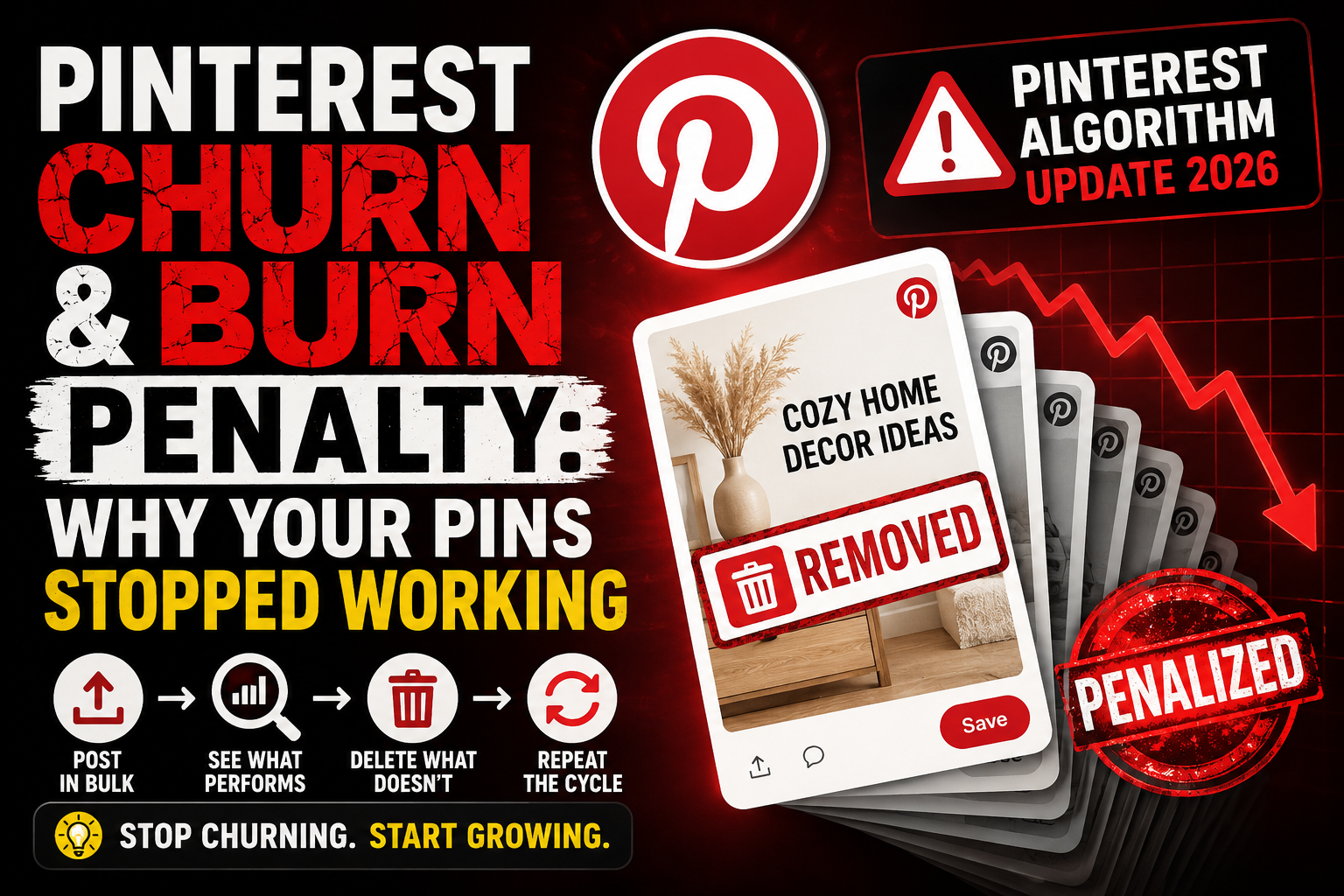
Pinterest Churn and Burn Penalty: Why Your Pins Stopped Working
The Pinterest churn and burn penalty is why pins that used to get steady traffic now barely move the needle. Pinterest tightened its algorithm in 2026, and this old growth habit — posting a batch of pins, then deleting whatever didn’t catch on — is exactly what’s being penalized now.
Table of Contents
What “Churn-and-Burn” Actually Means on Pinterest
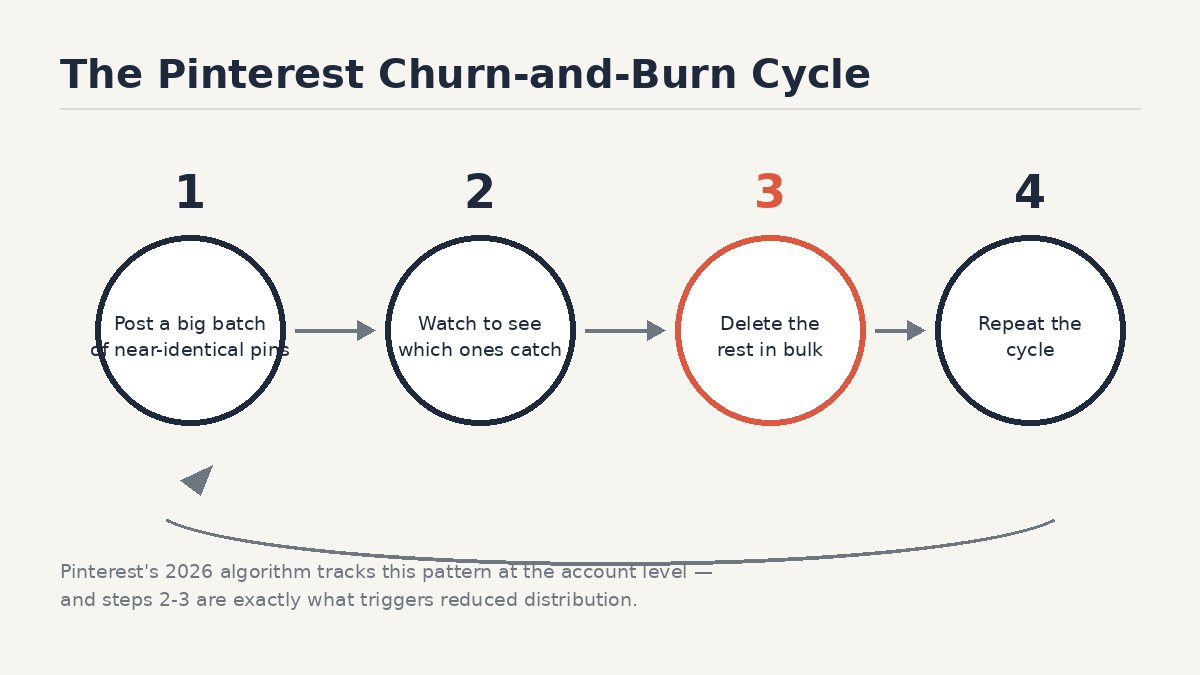
Churn-and-burn is what Pinterest calls the pattern of posting a large batch of near-identical pins, watching to see which ones catch, then deleting the rest and repeating the cycle. For a while this was a common growth tactic: throw a dozen variations at the wall, keep the winners, dump everything else to keep your profile looking “fresh.”
Pinterest never loved this behavior, but in 2026 the platform started actively penalizing it. Accounts that post in bulk and then delete pins frequently are now less likely to get distribution on new content, even content that has nothing to do with the pins that got removed.
Why Pinterest Cracked Down on This in 2026
Pinterest’s newer algorithm leans more heavily on entity recognition — understanding what a pin is actually about, who it’s for, and how it fits into a longer content history from your account. Deleting pins in bulk disrupts that history. It also floods the platform with low-effort duplicate content, something Pinterest’s own community guidelines call out directly as spam, which works against Pinterest’s push to be a place people trust for original ideas rather than recycled clickbait.
The update also introduced a fresh-content boost that rewards genuinely new pins in their first day or two after posting. That sounds like it would reward churn-and-burn, but it’s paired with account-level signals that track deletion frequency and duplication. Post-then-delete behavior now works against you instead of for you.
Signs Your Account Might Be Flagged
There’s no public dashboard that tells you “you’ve been penalized,” so you have to read the signals yourself:
- New pins get little to no impressions in the first 48 hours, even on boards that used to perform well.
- Older, established pins keep working fine, but nothing new gains traction.
- Your outbound clicks have dropped even though your pin count and posting frequency haven’t changed.
- Pins with near-identical images or titles posted the same week all underperform together.
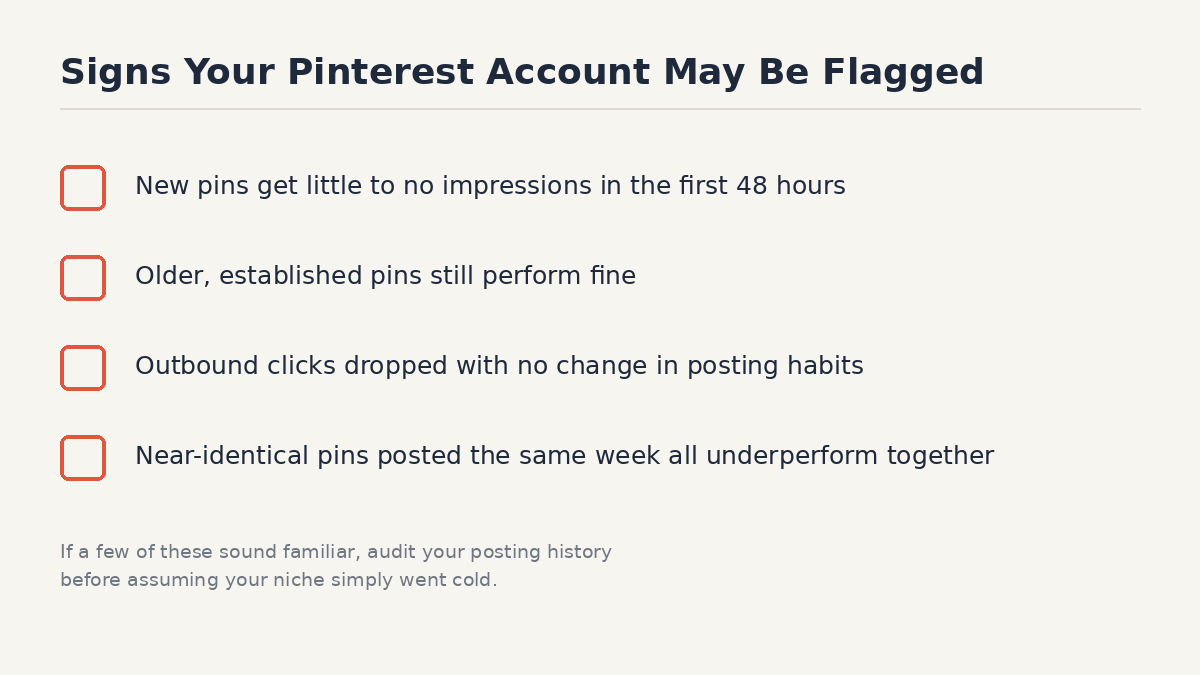
If several of these sound familiar, it’s worth auditing your posting history rather than assuming your niche just went cold.
How to Fix a Churn-and-Burn Pattern
1. Stop batch-deleting
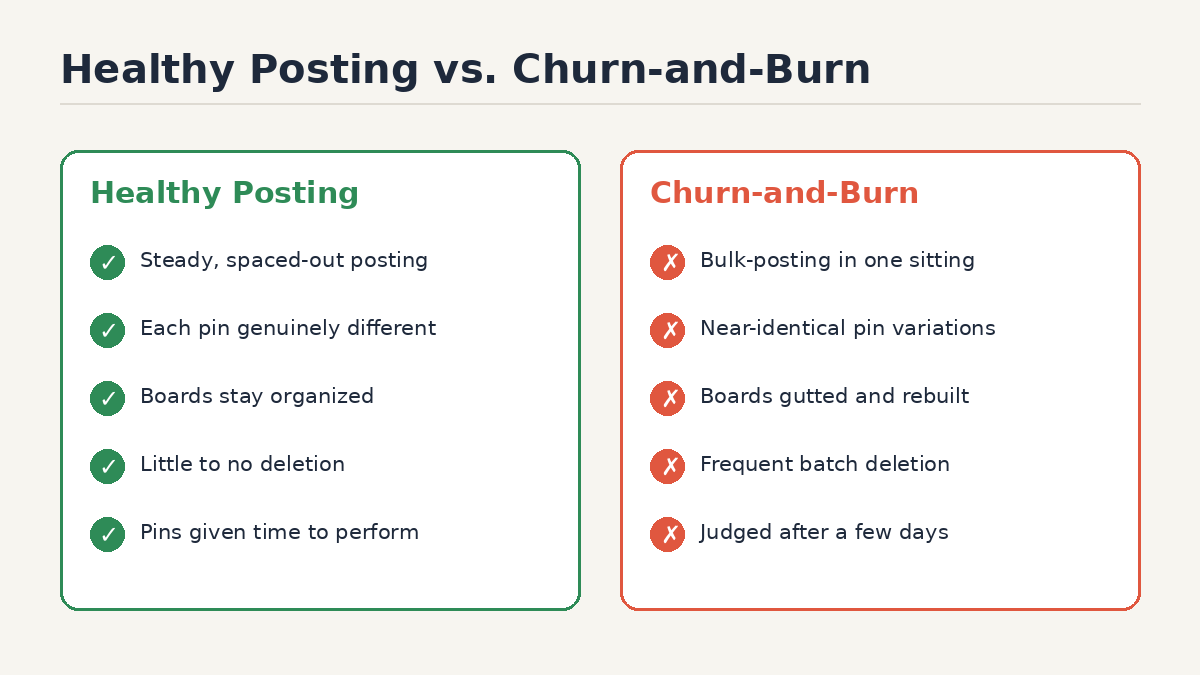
Resist the urge to clean house every time you post a new batch of pins. If a pin genuinely underperforms after a couple of weeks, it’s fine to remove it eventually, but doing this constantly is exactly the pattern Pinterest is watching for.
2. Slow down your posting cadence
Instead of dumping ten pins in one sitting, spread them out. A steady, spaced-out schedule signals a real account being actively maintained, not a bot farming for winners. This is also where having a set posting plan helps — following a 30-day Pinterest posting plan gives you a rhythm to stick to instead of posting in unpredictable bursts.
3. Make each pin genuinely different
Small text swaps on the same template don’t count as new content in the way they used to. Vary the imagery, the framing, and the headline angle so each pin earns its own audience instead of just being a copy competing with your other copies.
4. Let pins run their full course
Pinterest content has a long tail. Pinterest itself notes that there’s no fixed engagement window for pins, so a pin that looks dead at two weeks can still pick up traffic months or even years later. Give pins real time before deciding they’ve failed, and judge performance over a longer window than you would on a platform like TikTok or Instagram.
What Healthy Posting Looks Like Now
The accounts holding up well in 2026 tend to share a few habits: consistent (not sporadic) posting, genuinely varied pin designs, boards that stay organized instead of getting gutted and rebuilt, and very little deletion activity. None of this is exciting advice, but it matches what the platform is actually rewarding right now. Many creators who slowed down and diversified their pins have reported traffic stabilizing again after a rough patch — treat that as a general trend to learn from, not a guarantee.
FAQ
Will deleting old, low-performing pins hurt me?
Deleting a handful of pins occasionally isn’t the issue. The penalty targets frequent, bulk deletion tied to a post-and-purge pattern. Occasional cleanup of genuinely outdated content is normal account maintenance.
How long does it take to recover from the penalty?
There’s no fixed timeline, and Pinterest hasn’t published one. Based on how the algorithm weighs account history, it’s reasonable to expect gradual improvement over weeks rather than an overnight reset, especially if you stay consistent with healthier posting habits.
Does this affect Idea Pins too, or just standard pins?
The account-level signals around deletion and duplication apply broadly, so both standard pins and Idea Pins can be affected if your overall posting pattern looks like churn-and-burn.
Is it still okay to repurpose one piece of content into multiple pins?
Yes, as long as each pin offers a genuinely different angle, image, or headline. The problem isn’t repurposing — it’s posting many near-identical copies and then deleting most of them.
None of this means you need to overhaul your entire Pinterest strategy overnight. Start by cutting the batch-delete habit, spread your posting out, and give your pins room to breathe. Small, consistent changes here tend to matter more than any single trick.